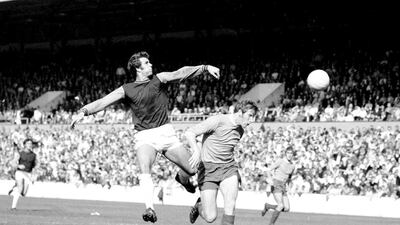
England World Cup legend Sir Geoff Hurst is calling for a ban on children heading footballs after four of his former teammates died of dementia.
The 1966 hat-trick hero said heading the ball "surely must have an impact" on the brain as teammates Jack Charlton, Ray Wilson, Martin Peters and Nobby Stiles all died from the disease over the past two and a half years.
Two weeks ago, Sir Bobby Charlton, brother of Jack, became the latest England World Cup winner to be diagnosed with dementia.
Hurst, 78, said he believes heading in training back then contributed to a large number of players from that era developing Alzheimer’s.
-
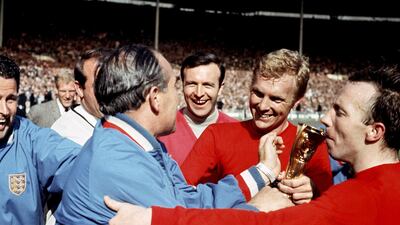
Nobby Stiles kisses the World Cup trophy as Bobby Moore is congratulated by manager Alf Ramsey. PA -
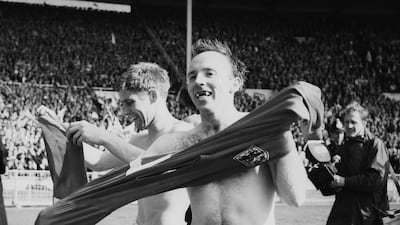
Teammates Alan Ball, left, and Nobby Stiles celebrate after England's victory in the 1966 World Cup final at Wembley in 1966. Getty -

England's Ray Wilson, Bobby Charlton, Nobby Stiles, Martin Peters, Jimmy Greaves and Jack Charlton. PA -
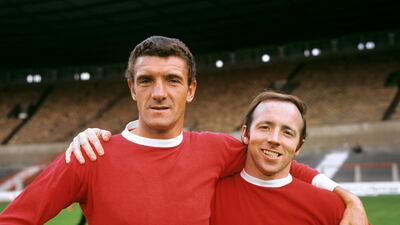
Bill Foulkes (left) and Nobby Stiles of Manchester United in 1968. PA -

Nobby Stiles at Middlesbrough in 1973. PA -
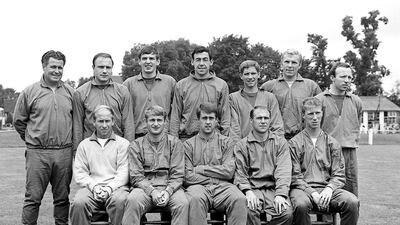
he England team which won the World Cup in the final at Wembley. Left to right: Harold Shepherdson (trainer); George Cohen; Martin Peters; Gordon Banks; Alan Ball; Bobby Moore (captain); Nobby Stiles. Front row: Bobby Charlton; Roger Hunt; Geoff Hurst; Ray Wilson; Jackie Charlton. PA -
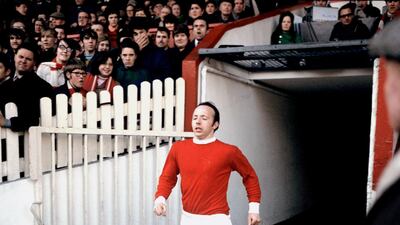
Nobby Stiles, Manchester United, in 1969. PA -
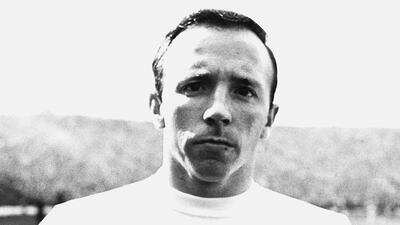
Nobby Stiles in his England shirt in 1966. PA -

Nobby Stiles at England training in 1966. PA -
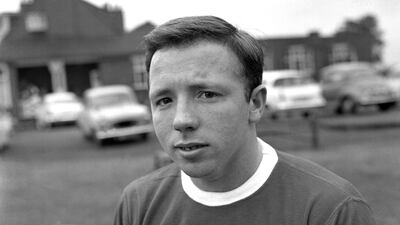
Manchester United's Nobby Stiles in 1961. PA -

Nobby Stiles arrives for the funeral of England teammate Alan Ball at Winchester Cathedral. AP -
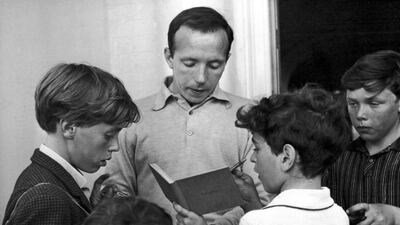
Nobby Stiles, the England soccer player, signs autographs for young fans outside the England team's hotel in Hendon, London. AP -
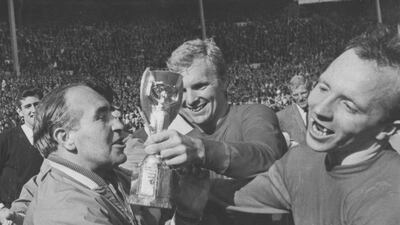
England midfield player Nobby Stiles, right, looks at the Jules Rimet Cup, held by England captain Bobby Moore. AP -
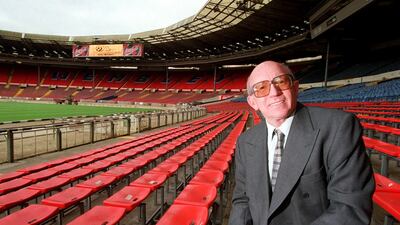
Nobby Stiles sits in the stands at Wembley. Reuters


He told BBC's Radio 4 Today programme: "I'm not a scientist, but surely it must have an impact.
“At West Ham, we had a ball hanging from the ceiling in the gym. We spent half an hour to 45 minutes heading a ball, then we’d go out on to the field and practise crosses heading the ball for half an hour to an hour.
“To me, it’s a lottery – those statistics are quite telling.”
Hurst said a ban on children heading the ball would be a sensible decision.
“They have underdeveloped brains,” he said.
“I don’t think [a ban] would have an impact on the enjoyment for kids and parents in grassroots football.”
Findings contained in the FIELD study – which was funded jointly by the Football Association and Professional Footballers' Association – published last year found footballers were at a significantly heightened risk of developing a range of neurodegenerative diseases compared with the general population.
The Football Association said it holds a "clear and unwavering commitment" to battle dementia, after the family of Stiles, who died last month, hit out at a failure to "address the scandal" of the illness in the game.
Stiles' funeral and cremation took place in Manchester last week.
On Tuesday, the family said there was "a need for urgent action" and that older players had "largely been forgotten", with many suffering ill health.
They said: "The modern player will never need the help required by the older lads.
"How can it be right that some of the heroes of 1966 had to sell their medals to provide for the families?
"These older players are dying like my dad. Many don't have medals to sell."
The FA maintains more collaboration is needed across football's governing bodies to help better understand the issue.
A spokesman said: "Dementia is a debilitating disease across wider society, which places extraordinary emotional and physical burdens on people living with dementia, their families, and those close to them.

"The FA has helped to lead the way in ground-breaking research into the links between football and we have a clear and unwavering commitment, both financially and with resources, to support objective, robust and thorough research. This area of work will be a key part of the FA's 2020-2024 strategy as we recognise the importance of this issue.
"Collaboration across football's governing bodies is key in order to better understand this important issue collectively, and we firmly believe that all areas of football should come together for this meaningful cause."
Meanwhile, current England manager Gareth Southgate stressed the importance of continuing research into the issue.
Asked if heading could be banned in the future, he said: "Who knows what the future might hold?
"I think it is important, with children's football especially, we are careful when that [heading] is introduced and the neck muscles have to be strong enough.
"We don't want any risks taken and there will be ongoing research I am sure – the frustration for everybody is that it isn't quite clear at the moment so we have to keep investigating."

