


At the beginning of this year, Athletic Bilbao celebrated the 50th anniversary of their training headquarters, now also the home of their academy.
The Lezama site, some 10 kilometres outside Bilbao, is tranquil, well-appointed and much like its equivalents in other top division clubs. What it stands for, though, is unique.
When it was opened, in 1971, most leading clubs would expect their young players to be enrolling in the youth system from homes not far away. Elite football then was firmly rooted in the locale.
In the 21st century, it is anything but – except at Athletic Bilbao, where a commitment to only field players born, or raised, or with family connections in the Basque region is maintained even as the sport grows ever more global.
That puts a premium on Lezama academy graduates, the local boys largely responsible for keeping Athletic in the top division in Spain and ensuring they compete for silverware.
“Kids from a very young age understand here that the main goal is to reach the first-team squad and that this is their route to the top division,” says Rafa Alkorta, the club’s sporting director and a former Athletic and Spain player. “Loyalty is important but difficult to maintain."
Athletic may have strictly defined criteria about who can wear their jersey; they cannot as rigidly control who stays or leaves. Lezama’s reputation as a talent-factory means “we have scouts coming to look from elsewhere, from abroad, says Alkorta. "We put in a lot of hard work to develop talent. It’s a lot of man hours that produces so many good players.”
So far, Lezama has had a rewarding 50th year. In January, Athletic won the Spanish Super Cup – beating Real Madrid in the last four and then Barcelona in the final – to deliver a first trophy for six years.
Two weeks ago, they played the long-delayed 2020 Copa del Rey final, a derby against rivals Real Sociedad, another club with a strong tradition of home-grown talent. Athletic lost 1-0 but always knew compensation might come quickly.
The 2021 Copa del Rey final takes place on Saturday, two weeks after last season’s version – which was postponed because of the pandemic – and Barcelona will be the opposition.
World's most valuable football clubs
-

WORLD'S MOST VALUABLE CLUBS: 1. Barcelona - Value: $4.76 billion, according to Forbes. Reuters -

2. Real Madrid - Value: $4.75 billion AFP -

3. Bayern Munich - Value: $4.215 billion Reuters -

4. Manchester United - Value: $4.2 billion Getty Images -

5. Liverpool - Value: $4.1 billion AFP -
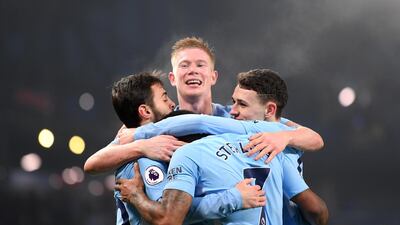
6. Manchester City - Value: $4 billion Getty Images -

7. Chelsea - Value: $3.2 billion PA -

8. Arsenal - Value: $2.8 billion Reuters -

9. Paris Saint-Germain - Value: $2.5 billion AP -

10. Tottenham Hotspur - Value: $2.3 billion EPA -
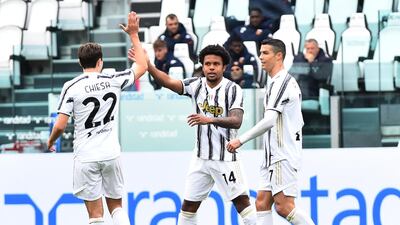
11. Juventus - Value: $1.95 billion Reuters -

12. Borussia Dortmund - Value: $1.9 billion AP -
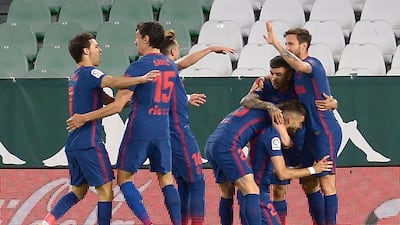
13. Atletico Madrid - Value: $1 billion AFP -

14. Inter Milan - Value: $743 million Getty Images -

15. Everton - Value: $658 million EPA -

16. AC Milan - Value: $559 million AP -

17. AS Roma - Value: $548 million AFP -

18. West Ham United - Value: $508 million. Getty Images -

19. Leicester City - Value: $455 million AFP -

20. Ajax - Value: $413 million AFP


Home-grown talent will be well represented. No two clubs fly the flag for local excellence more vigorously than Athletic and Barca. Bilbao are proud to represent the Basque Country every time they release a team sheet.
No single institution in the region of Catalonia is as well known across the world as Barcelona FC. Barca also like to think the team is at its strongest when the senior XI is packed with players who have come through their own system.
Their academy, La Masia, may still be the most celebrated hothouse of football talent anywhere. It is certainly among the most studied and copied.
Just under a decade ago, Barcelona actually fielded an entire senior XI made up only of former students of their own academy during a 4-0 win over Levante.
Not all were locally-born, the club’s greatest academy product being an Argentinian, Lionel Messi, who arrived at La Masia aged 13, and Andres Iniesta being a native of La Mancha, 500 kilometres to the south of Barcelona. But all those on the pitch owed their sporting apprenticeships to La Masia.
So did the spine of the Barca teams who won the 2009 and 2011 Champions League titles, and the Spain side who triumphed at the 2010 World Cup.
Spanish football may not reign quite as supreme now as it did then, but it remains a leader in cultivating the bridge between club youth systems and senior sides.
Of the top 10 clubs, from the five strongest European leagues, which have the most former academy players in their senior squads, five are Spanish, including, inevitably, Athletic and Barcelona. Marseille make the list, as do Southampton.
On Saturday in Seville, Athletic’s line-up for the Cup final should include at least five Lezama boy-to-man graduates, including captain Iker Munain, striker Inaki Williams and goalkeeper Unai Simon.
Barcelona will pick in their side 30-somethings from older La Masia cohorts, such as Messi, Gerard Pique, Jordi Alba and Sergio Busquets, and one or two who passed through the academy more recently, and in many cases arrived there from far afield, like Pedri, a Canary islander, and Ilaix Moriba, born in Guinea.
To Barca's regret, La Masia's star graduate who is still in his teens, Guinea-Bissau-born Ansu Fati, will miss out with injury. A concern of fans, meanwhile, is that the club's most brilliant student of all time, Messi, may be playing his last final as a Barcelona footballer, his future after this summer still to be clarified.

