

Zico is one of the most influential figures in football history. A genius player who became a successful coach and is revered around the world. That is why he was picked to become an official ambassador for the Open Masters Games Abu Dhabi, the popular multi-sports event that has attracted more than 20,000 athletes to the UAE.
He scored 48 times in 71 caps for Brazil between 1976 and 1986, but was unable to help the team add to their glorious history in World Cups, finishing third in 1978, exiting to eventual champions Italy in 1982, and losing to France in the last eight in 1986.
Stylish and graceful as a player, Zico was astute as a coach, leading the national teams of Japan and Iraq, while also winning a league title with Fenerbahce and landing other club honours in Russia and Uzbekistan.

Zico, now 72, sat down with The National to discuss the Open Masters Games Abu Dhabi, the Brazil national team, and this summer's World Cup.
Question: What convinced you to take on the role of ambassador for the Open Masters Games Abu Dhabi?
Answer: Well, because it's a great opportunity to get to know an event that surprised me with its grandeur. Since I have participated in several masters competitions, but only in football, I wanted the opportunity to see other sports and this relationship between people. I’m very happy to be here.
I thought there would only be a few competitions, but there are more than 30 sports and more than 20,000 athletes. I was very impressed by the quality of the venues. Some of the football pitches here are better than what you see in many places around the world.
The opening ceremony was huge, and the organisation is excellent. I hope the athletes understand the importance of being part of something so big and see this opportunity in the same way the event presents itself.
Q: Friendship is one of the central themes of this event. How important were the relationships you built with teammates during your career?
A: Friendship gives a lot of strength, especially in difficult moments. Not everyone is always on a good day, and friendship helps people in those moments.
Sometimes you have teams with huge talent but no friendship at all. In Brazil, we have a saying that says union makes strength, and I take that very seriously.
Q: How do you assess the region’s growth overall? You coached Iraq and have spent much of your coaching career in Asia, rather than in Brazil. Do you feel this region is developing in terms of footballing talent?
A: Yes. When I started as a coach, it was in Japan. And Japan today is one of the great world powers, not just in Asia. So, I'm happy to have given them this strength, this starting point in the development of professional football in Japan.
I believe that I have done a good job in Iraq, too. Due to professional problems we couldn't make it to the World Cup [but] it was a good experience.
Q: Brazil has Carlo Ancelotti in charge and are often among the favourites for the World Cup, while football in the Arab world is growing, particularly with the impact of players like Cristiano Ronaldo. How do you see Brazil’s prospects, and how do you assess the potential of Arab nations on the World Cup stage?
A: We all hope that Ancelotti, for everything he represents in football and his history as a great champion, can help Brazil return to being world champions. He has the capacity and competence for that. With the mentality that Ancelotti brings to the squad, I really hope that Brazil will win the World Cup.
The question of Cristiano Ronaldo in Saudi Arabia is whether this leads to real development in Arab football, which in recent years has left a lot to be desired. Asia has already experienced something similar. China, for example, brought in big names but local football did not develop.
Japan took a different approach. They also brought experienced international players, but at the same time they developed local football and gave Japanese players the opportunity to grow. Today, Japanese players are playing in the best leagues in the world.
Zico visits Abu Dhabi – in pictures
-
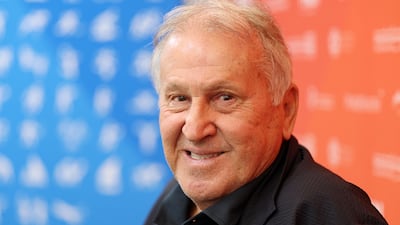
The Brazil legend Zico, ambassador for the Open Masters Games Abu Dhabi 2026 sat down for an interview with The National atADNEC, Abu Dhabi. All pictures by Chris Whiteoak / The National -
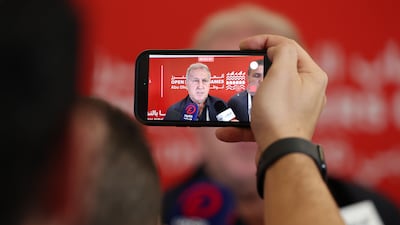
Zico spoke to the media on Saturday in Abu Dhabi. -
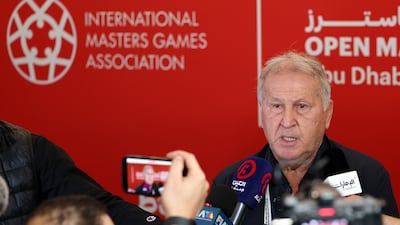
Zico won 71 caps for Brazil in a decade-long international career. -
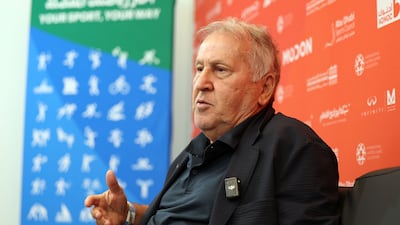
Zico also managed Japan and Iraq. -
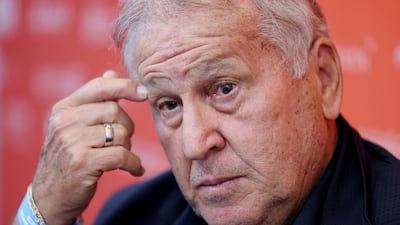
Zico is optimistic about Brazil's chances at the 2026 World Cup.


That is the big difference. Bringing big stars alone is not enough if local players are not given opportunities. I hope that Arab football can be what it was a long time ago.
The United States did something similar years ago, when they brought Pele, [Johan] Cruyff and [Franz] Beckenbauer and the development of American football was suspended because the Americans didn’t play. So, for the public to see great games, that's fine, but the football didn’t develop until years and years later.
Q: You once said that football is about results. At a time when playing style and philosophy are increasingly valued, and teams like Brazil in 1982 are celebrated despite not winning, do you believe that?
A: In the World Cup, the teams that history remembers are always the champions. There are very few exceptions. You can mention Hungary in 1954, the Netherlands in 1974, and Brazil in 1982. These teams marked history without winning.
But in the end, what remains is who won. It doesn’t matter if you played well or badly. The important thing is that you win. If you win the final, everyone remembers you as champions. Unfortunately, football is about results.
For 10 years as a coach, in all the interviews I gave, every press conference that I did, people asked me how Brazil lost to Italy in 1982. That team is still so memorable that people don’t believe we could lose that game, and it's something that changed the course of how football was going because Italy was about more defensive and Brazil was all about attacking.

