


Fifa president Gianni Infantino announced that next year's Fifa World Football Awards will be held in Dubai during a keynote speech at the World Sports Summit.
Infantino made the announcement during his speech, The Next 90 Minutes: Charting the On-Pitch Evolution of Football, to kick off the two-day summit.
"We are here in beautiful Dubai to celebrate sports and to celebrate football," Infantino said. "And I can announce here as well, a new partnership ... we will, as of next year, award the best players, coaches, teams, legends in the world here in Dubai."

It means another top awards ceremony will be coming to the region.
France and Paris Saint-Germain forward Ousmane Dembele won the 2025 men's Fifa Best award at a ceremony in Qatar on December 16, with Barcelona midfield maestro Aitana Bonmati collecting the women's prize.
The pair were also named men's and women's player of the year at the Globe Soccer Awards, also held in Dubai, on Sunday evening.
A star-studded roster of sporting talent has been assembled for the two-day World Sports Summit event, which runs on Monday and Tuesday at Madinat Jumeirah.
Tennis stars Novak Djokovic and Ons Jabeur, and Brazilian football legend Ronaldo Nazario, are among the big names set to speak on Monday.
Sheikh Hamdan bin Mohammed, Crown Prince of Dubai, Deputy Prime Minister and Minister of Defence, said the summit would help shape the future of sport in the UAE and abroad.
“This first-of-its-kind sports summit, originating in the UAE, will bring together sports leaders, specialists and individuals with proven leadership and professional expertise from across the global sports sector,” said Sheikh Hamdan.
“The summit will serve as a global platform for dialogue on sports development and for shaping its future through effective strategic initiatives, legislation and agreements.
The summit, organised by Dubai Sports Council, includes more than 70 speakers, including industry leaders, stars and legends under the theme “uniting the world through sport”.
Later in the day, Sheikh Hamdan announced the signing “of a partnership between Fifa and the Dubai Sports Council to launch a new global award from Dubai in 2026”.
Details of the awards and categories will be announced shortly.
World Sports Summit Day 1 - in pictures
-
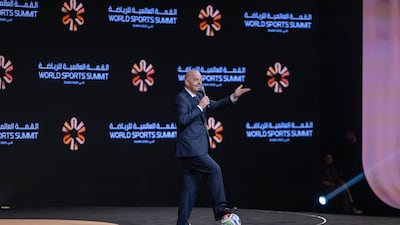
Fifa president Gianni Infantino delivers a keynote speech at the World Sports Summit at Madinat Jumeirah, Dubai. All photos: Antonie Robertson / The National -
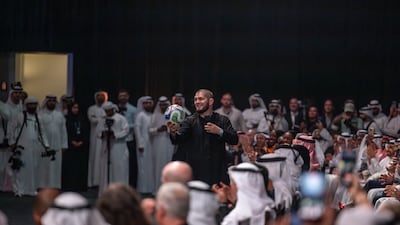
UFC Hall of Famer Khabib Nurmagomedov attends Day 1 of the World Sports Summit in Dubai. -

Former Brazil striker Ronaldo Nazario joins Fifa president Gianni Infantino on stage during the opening of the World Sports Summit in Dubai. -

Tennis player Novak Djokovic on stage. The 24-time Grand Slam champion says he plans to play on until at least the LA Olympics in 2028. -
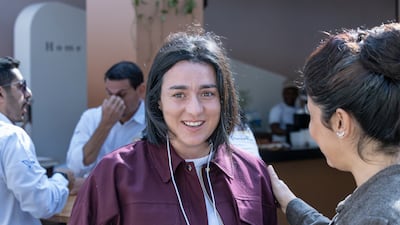
Tunisian tennis player Ons Jabeur speaks to media at the World Sports Summit in Dubai. -
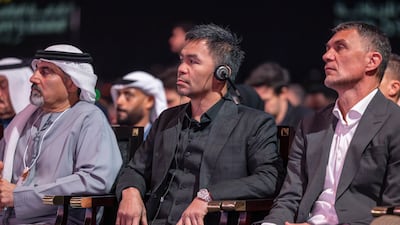
Manny Pacquiao, boxing's only eight-division champion, was one of the guests interviewed on Day 1 of the World Sports Summit at Madinat Jumeirah. -

Khalfan Belhoul, Vice Chairman of the Dubai Sports Council addresses the audience at the World Sports Summit in Dubai. -

Mina Al-Oraibi, Editor-in-Chief of The National newspaper, speaks to Bahrain's Sheikh Nasser bin Hamad Al Khalifa, during their discussion 'Leading from the Front, The Discipline of a World Champion and The Vision of a Prince'. -

Attendees at the World Sports Summit at Madinat Jumeirah, Dubai. -

Ons Jabeur and Paula Badosa during a panel session on Day 1 of the World Sports Summit in Dubai.



