



When Newcastle United's players trudged off the pitch at the end of their 1-1 draw with fellow Premier League strugglers Watford in January, there was an air of despondency hanging over St James' Park.
A late leveller from Joao Pedro had denied Eddie Howe's team only their second victory of the season leaving Newcastle 19th in the table, one point and one place ahead of bottom club Burnley, who had three games in hand.
“We've damaged ourselves to a point ,” said Howe, whose team had been knocked out of the FA Cup by third-tier Cambridge a week earlier. “I just hope it doesn't leave mental scars for the players.”
Fast forward less than two months, and a very different picture has emerged for the Tyneside club after a run of results that has lifted them up to 14th, seven points clear of the relegation zone.
Only Liverpool (22) and Manchester City (19) have secured more points than the Magpies' 17 since the turn of the year and Newcastle have not lost a league game since their 4-0 home thrashing by reigning champions City on December 19.
The black and whites are unbeaten in the first seven games of the calendar year for the first time since 2004, when Bobby Robson was in charge and the club's fifth-place finish, and subsequent failure to seal a Champions League spot, would ultimately lead to their manager being sacked months later.
Little did fans know at the time but Newcastle would only finish as high as fifth once in the 15 top-flight seasons of mid-table mediocrity and relegation battles that have followed.
With a drop down to the second tier looking more likely than not, the club's Saudi Arabia-backed consortium bankrolled a busy month of transfer-window action with Kieran Trippier, Chris Wood, Bruno Guimaraes, Dan Burn and Matt Targett all arriving in January.
Helping shore up a porous defence was priority No 1 and the signings of Trippier, Burn and Targett – from Atletico Madrid, Brighton and Aston Villa, respectively – have given the backline some much-needed steel.
West Ham 1 Newcastle 1: player ratings
-
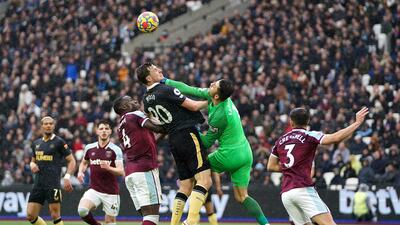
WEST HAM RATINGS: Lukasz Fabianski 6 – Arguably should have done a bit better to deny Joe Willock. Aside from the goal, the Polish stopper wasn’t tested a great deal. AP -

Ryan Fredericks 6 – Had a poor game defensively, which eventually led to the 29-year-old being hooked off at half-time. Getty -
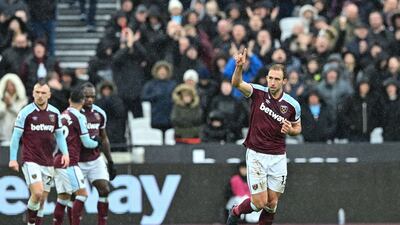
Craig Dawson 8 – Scorer of the game’s opening goal, having steered Cresswell’s freekick into the Newcastle net. Aside from one or two small errors, he was generally dominant in his own box – especially aerially. AFP -

Kurt Zouma 7 – Stepped out of the backline effectively to shut down several possible Newcastle counter attacks. A solid return to the starting XI after not playing last time out at Leicester. AFP -

Aaron Cresswell 7 – One of West Ham’s best performers. His crossed deliveries and passing always seemed to be on point. This was demonstrated best by his inch perfect freekick which was headed home by Dawson. Getty -
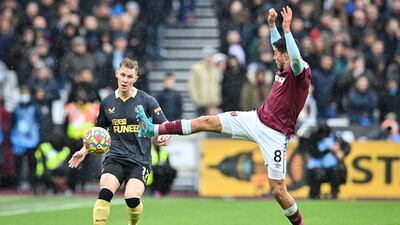
Pablo Fornals 7 – Played both wide and centrally for the Hammers, often linking up well with Bowen. While his end product wasn’t quite consistent, the Spaniard showed good intent in the final third. AFP -

Tomas Soucek 6 – A quiet game from the powerful midfielder. Despite being the home side, West Ham didn’t dominate the midfield battle as they would have liked. PA -
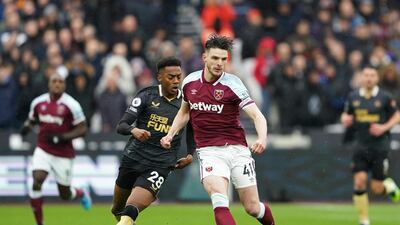
Declan Rice 5 – A tough afternoon for the Englishman, who made a handful of uncharacteristic mistakes. It was Rice’s misguided header that allowed Willock to sneak in and score. AP -
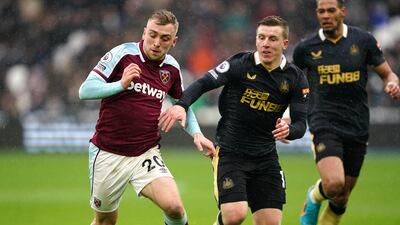
Jarrod Bowen 7 – The brightest of West Ham’s attackers. However, hitting the crossbar from a tight angle in the first half was as good as it got for the former Hull City winger. PA -

Said Benrahma 6 – Struggled to get into the game as the frenetic nature of the tie didn’t appear to suit the Algerian. Replaced in the second half. Getty -
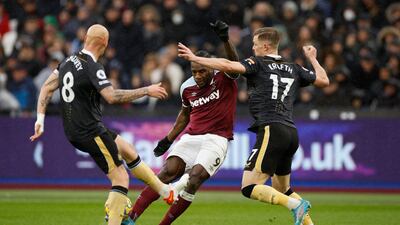
Michail Antonio 6 – Far too wasteful in the final third. While he held the ball up very well, was too eager to shoot from range, and thus squander promising openings. Reuters -
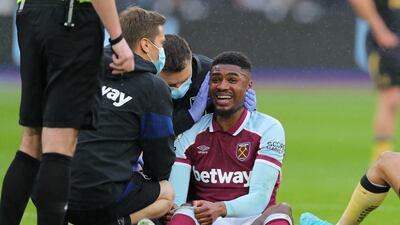
SUBS: Ben Johnson 6 – Replaced Fredericks at half time. Provided more defensive solidity than his teammate, but was wasteful when advancing forwards with the ball. Reuters -

Nikola Vlasic 6 – Looked very sharp after his second half introduction for Benrahma. Best chance at goal was charged down well by Dan Burn. AFP -
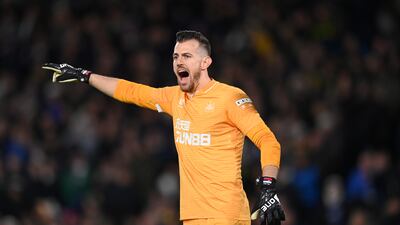
NEWCASTLE RATINGS: Martin Dubravka 7 – Could do very little about Dawson’s bullet header. Earlier in the game, pulled off an excellent fingertip save, pushing a fine effort from Bowen onto the crossbar. Getty -

Emil Krafth 5 – Underwhelmed in both defence and attack. His poor crossing was in stark contrast to Kieran Trippier – the man he is standing in for. Picked up a yellow card late in the second half. Getty -
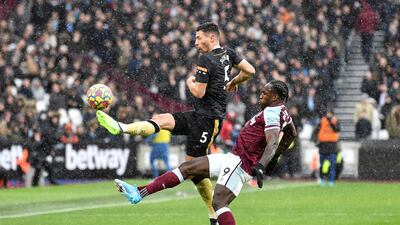
Fabian Schar 6 – Wayward at times, although the centre-half weathered the West Ham pressure adequately in the second period. AFP -
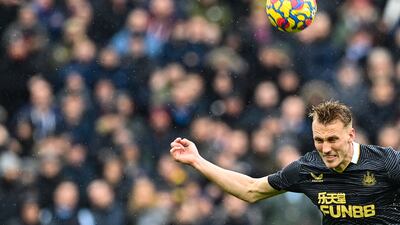
Dan Burn 7 – The new signing was excellent, throwing his body on the line with a series of tackles, headers and blocks. The local boy is looking like a shrewd bit of business. AFP -

Matt Targett 7 – Didn’t stop running up and down the left side. While remaining composed up against Bowen, the loanee also provided great width when venturing forward. Reuters -

Joe Willock 8 – His determination in hounding down the West Ham defenders paid dividends, after he managed to get ahead of Dawson and Co to poke home his first goal of the season. Getty -
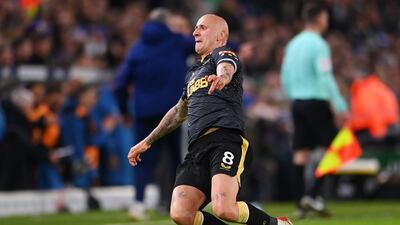
Jonjo Shelvey 7 – Kept things nice and simple for Eddie Howe’s side. Was defensively disciplined and seldom gave the ball away. Getty -

Joelinton 6 – Showed flashes of what he can do, with a handful of driving runs forward. Once again, the Brazilian’s shooting radar was off today. Getty -
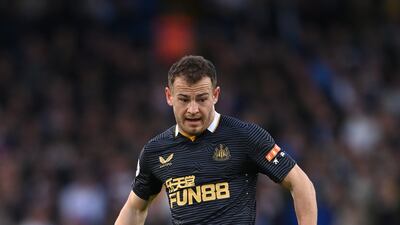
Ryan Fraser 7 – Worked hard for the cause, tracking back while also providing the Magpies with a constant outlet in attack. Also played a key role in Newcastle’s equaliser. Getty -
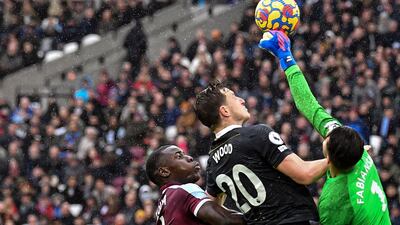
Chris Wood 7 – Proved to be a handful for the West Ham defenders, using his physicality to good effect. Couldn’t quite manufacturer a clear shooting opportunity, but his overall link-up play was a promising sign. AFP -

Jacob Murphy 6 – Injected some much-needed pace and direct running in the final third for the away side. Unfortunately, his end product was missing more often than not. Getty -

SUBS: Miguel Almiron 6 – Failed to stamp his authority on the game, as Newcastle appeared to settle for the draw. Bruno Guimaraes N/A. AFP


Even the potential loss of La Liga-winning England international Trippier for the rest of the season to a foot injury has not stalled the recovery effort of a side who face Southampton on the south coast on Thursday.
But at the heart of the resurgence have been players signed by previous managers who have struggled for form and fitness. Saturday's narrow 2-1 home win over Brighton was secured thanks to two goals in as many minutes from Scottish winger Ryan Fraser and Swiss defender Fabian Schar.
Fraser, signed on a free transfer from Bournemouth by previous manager Steve Bruce, is enjoying his best run of form since joining the club in 2020, masterminded by his former Cherries coach, Howe. Schar was brought in by Rafael Benitez in 2018 but has struggled to hold down a regular starting place since the Spaniard left in 2020.
“It’s all positive for me … the place is a lot happier,” Fraser told NUFCTV last month. “I don’t want to say anything about the previous set-up, it’s disrespectful, but I think everyone is seeing the changes.”

It is in Newcastle's midfield three where the biggest transformation has occurred. Such has been the form of Jonjo Shelvey, Joelinton and Joe Willock – dubbed “Jonjo Joe-Jo” by fans – that Guimaraes, their £34 million signing from Lyon, has been restricted to cameo appearances from the bench.
Shelvey is enjoying his role at the base of the trio, while Willock has finally found something like the form that persuaded Newcastle to turn his successful loan spell last season into a £22m permanent deal.
“The midfield has worked incredibly well and I’m reluctant to make too many changes when we’re in a really good flow,” Howe said recently.
The decision to move £40m record buy Joelinton from striker who could not score to marauding box-to-box midfielder has been the real masterstroke by Howe.

After managing just six league goals in his first two campaigns, it became painfully obvious that leading the line and scoring regularly was not part of the Brazilian's repertoire – although what position actually suited him only became clear during the 1-1 draw with Norwich City last November.
Defender Ciaran Clark had been sent-off after just nine minutes and Joelinton was asked to move into a deeper midfield role as the team adapted to being a man down. It is fair to say he has never looked back.
“You can see with the way he’s performed, especially since I’ve arrived. He’s been unbelievable,” Trippier told the True Geordie podcast. “He can go where he wants to. He has the ability to be a world-class player.”
Sentiments echoed by manager Howe. “The biggest compliment I can give him is he hasn’t made it look hard,” he said. “His defensive performance has been at the highest level tactically. He has been perfect in that respect.”
A remarkable turnaround for a player who seemed to have cemented his place as one of one worst buys in Premier League history but is now being talked-up for a possible Brazil call-up.
Newcastle 1 Aston Villa 0: player ratings
-

NEWCASTLE RATINGS: Martin Dubravka - 7: Not a save to make in first half, and not particularly busy in second even with Villa more of a threat. AFP -
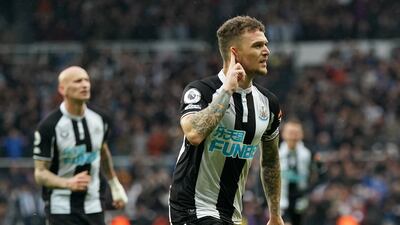
Kieran Trippier - 8: Captain for day in Jamaal Lascelle’s absence and scored his second free-kick in successive games, via a slight deflection. Was injury concern before game and limped off just after half-time in huge blow for Magpies. PA -

Dan Burn - 9: Local boy making his debut and enjoyed a man-of-the-match performance. Calm and commanding from start to finish. Ripped a massive chunk out of Mings’ shirt in second-half tussle. Getty -
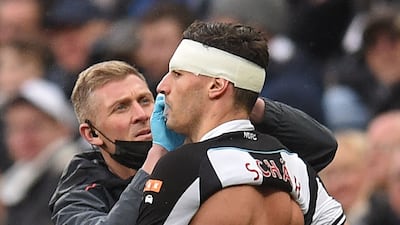
Fabian Schar - 8: Looked in trouble after being caught in face by teammate Trippier’s arm in first five minutes but returned to action after long stoppage. Left with cut round eye that required more treatment and a bandage round his head. Didn’t stop him putting in committed shift. AFP -
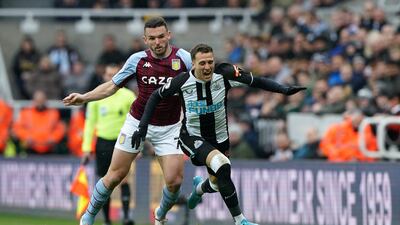
Javier Manquillo - 7: Looked in trouble after nasty landing resulted in ankle injury. Tried to carry on but limped off just before half-time bringing an early end to his 100th game for the club. PA -

Jonjo Shelvey - 8: Fine game in midfield. Chased and harried Villa, made important challenges and was sensible in possession. Booked for scything down Ramsey. AFP -

Joe Willock - 7: Clipped first-time shot well wide on 20 minutes. Starting to find a bit form in midfield and crowd appreciated his effort and workrate. PA -
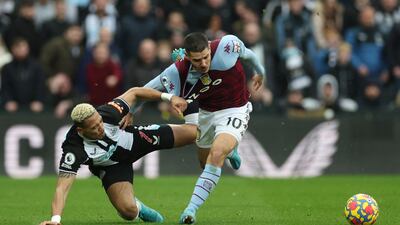
Joelinton - 7: Booked for trying to relieve Buendia of his shirt. Relishes his role in midfield where Newcastle are really benefitting from his hard graft. Distribution was great and made some important interceptions. Reuters -
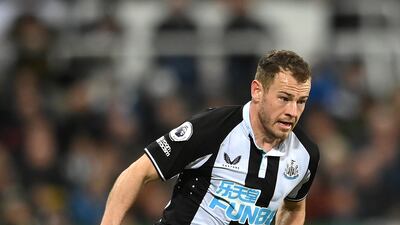
Ryan Fraser - 7: Scot is enjoying a good run in the team. Always busy, always looking for the ball and should have been put through on goal by Wood in first half. Another Newcastle player whose workrate was exemplary. Getty -

Allan Saint-Maximin - 6: Quiet until 25th minute when he skipped past Cash and chipped ball into box but struggled to make impact as Villa regularly doubled up on him. PA -
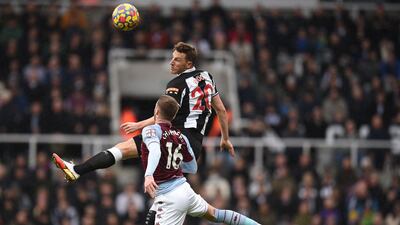
Chris Wood - 6: Couldn’t get any power or direction on header when picked out by Fraser and then hit abysmal shot high and wide with Fraser better placed just before half-time. AFP -

SUBS: Paul Dummett – (On for Manquillo 45 + 4’) 7: Slotted straight in at left-back. No-nonsense defending was what Newcastle needed in second half. Getty -

Emil Krafth – (On for Trippier 49’) 6: Played Watkins onside for goal that was disallowed by VAR but did OK for rest of half. Reuters -
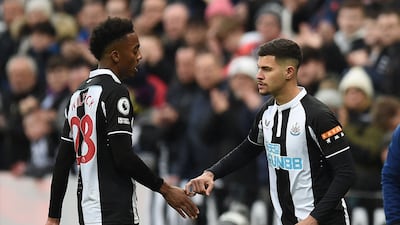
Bruno Guimaraes – (Willock 90 +2’) N/A. AFP -
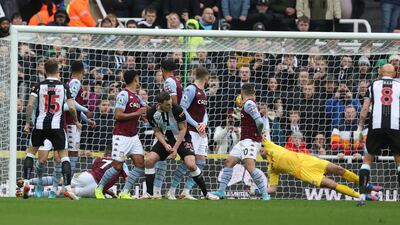
ASTON VILLA RATINGS: Emiliano Martinez - 6: Might have saved Trippier free-kick if not for deflection. Crazy decision to come charging out of box that almost resulted in Mings scoring an own goal. Reuters -
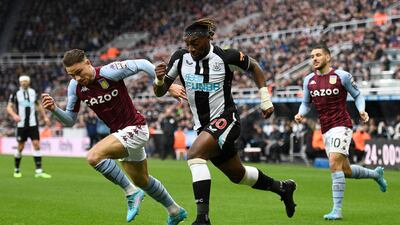
Matty Cash - 7: Drilled shot just wide at start of second half and was given too much space by Newcastle as Villa found joy down Newcastle’s flanks after break. Helped keep Saint-Maximin relatively quiet. AFP -
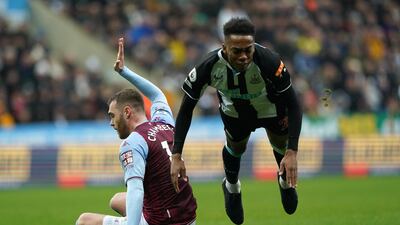
Calum Chambers - 6: First start for Villa but was a couple of centimetres from giving away clumsy penalty after fouling Willock … only for Trippier to belt home the resulting free-kick. PA -
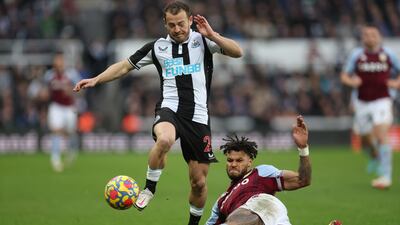
Tyrone Mings - 7: Headed over from corner just before break then nearly headed into his own net a minute later after rush of blood by goalkeeper. Left with half a shirt after tussle with Burn. Reuters -
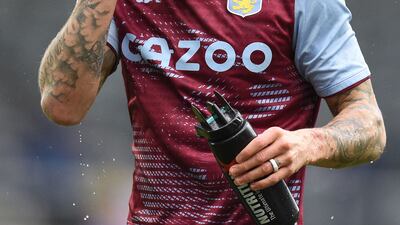
Lucas Digne - 6: Like Cash, made use of extra space he was given by Newcastle down his flank in second half but some of his final balls were poor. AFP -

John McGinn - 6: Booked for chopping down Saint-Maxmin although looked like Scot got ball first. Had shot deflected just wide in first-half injury time but not his usual influential self for Villa. Getty -
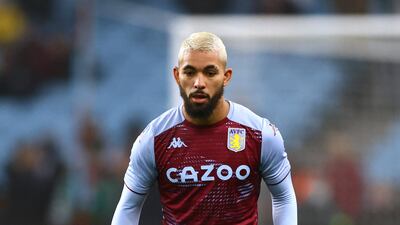
Douglas Luiz - 4: Woefully over-hit his first two set-pieces out for goal kicks – from a free-kick and a corner - which summed up Villa’s efforts in the first 45 minutes. Reuters -

Jacob Ramsey - 5: Highly-rated midfielder bagged two against Leeds midweek but never looked like doing same on Tyneside. The 20-year-old had minimal impact on game. Getty -

Emiliano Buendia - 6: His slight deflection on Trippier free-kick helped take shot away from Martinez. Looped header just wide minutes after Villa had goal disallowed. Getty -
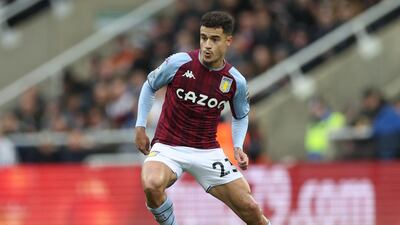
Philipe Coutinho - 4: Manager Steven Gerrard said before the game they are still building the Brazilian’s fitness and he contributed very little for Villa here. Reuters -
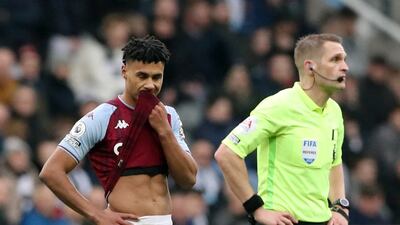
Ollie Watkins - 5: Well marshalled by Newcastle in first half and barely touched the ball. Thought he had headed home leveller only for extremely tight VAR offside call. Reuters -
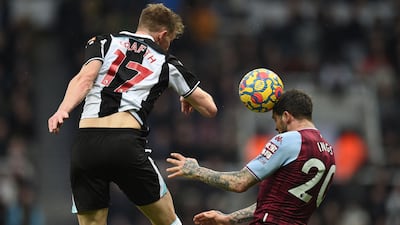
SUBS: Danny Ings – (On for Watkins 73’) 5: Striker wasn't allowed any goalscoring opportunities. AFP -
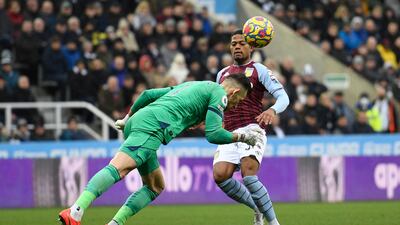
Leon Bailey – (On for Buendia 73’) 5: Did little on his return to action bar fouling Dummett and pick up a booking for bringing down Saint-Maximin. PA -
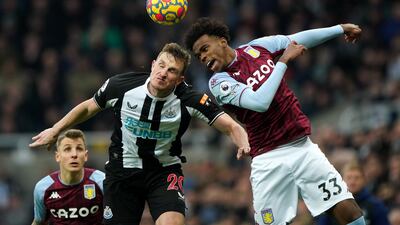
Carney Chukwuemeka – (On for McGinn 85’) N/A. PA



