



The final race of the season ended in thrilling fashion on Sunday as Lando Norris scored his first win at the Etihad Airways Abu Dhabi Formula One Grand Prix and fourth race win of an impressive season.
In taking the chequered flag at Yas Marina Circuit, Norris also clinched the constructors' championship for McLaren – the British team's first team title since 1998.
Red Bull's Max Verstappen could afford to let McLaren and Ferrari battle it out at the front, denied a fifth consecutive win in Abu Dhabi following an earlier collision with Oscar Piastri in the second McLaren.
The Dutchman finished sixth in the race but had already secured a fourth consecutive drivers' title two weeks previous in Las Vegas.
The National reviews a year that began in Bahrain in March and culminated on Sunday with a record 24th race in Abu Dhabi.
Masterful Max
After coasting to the past two world titles Verstappen was again seen as a dead-cert for a fourth driver's crown, a sequence that begun with his controversial defeat of Lewis Hamilton on the last lap of the season at the 2021 Abu Dhabi Grand Prix.
The Red Bull driver secured victories in seven of the first 10 races to set the early pace and also highlighted his single focus determination as he blocked out the malaise surrounding the team in pre-season testing.
Team principal Christian Horner looked to be on his way out as he fought off accusations of inappropriate behaviour towards a female colleague. A secret inquiry cleared the beleaguered Briton and Horner was in the pitlane for the season opener in Bahrain. An internal power struggle at the Austrian giants simmered away though, then came the bombshell that their technical genius, Adrian Newey, was quitting to join Aston Martin from 2025.
None of this appeared to faze Verstappen as victory in Spain in June gave him a commanding lead in the title race. Little did he know then but that was to be the last time he was to win a race until he snapped an 11-race winless run in Brazil in November. He then extinguished Norris' slim chances of seizing his crown under the lights of Las Vegas with two races to spare.
As he leaves Abu Dhabi, Verstappen's thoughts will already turn to how he can do what no driver has done since Michael Schumacher in 2004 and win five successive F1 drivers' titles.
-
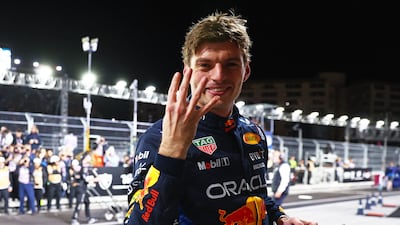
Red Bull's Max Verstappen finished fifth at the Las Vegas Grand Prix, enough to give him an unassailable lead in the F1 drivers' championship to clinch a fourth world title. AFP -
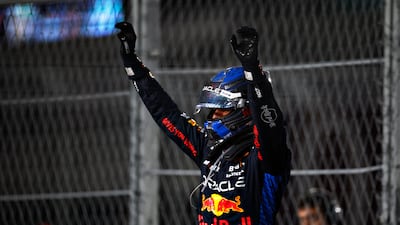
World champion Max Verstappen waves to the crowd after the Las Vegas GP. AFP -
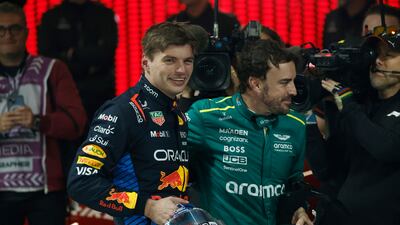
Red Bull's Max Verstappen celebrates after winning the 2024 F1 world championship title with Aston Martin's Fernando Alonso. Reuters -

Red Bull's Max Verstappen celebrates after finishing fifth at the Las Vegas GP to clinch the F1 drivers' championship. Reuters -
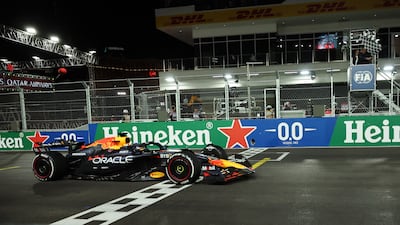
Red Bull's Max Verstappen crosses the line to finish the race in fifth place. Reuters -

Max Verstappen of Red Bull fends off Ferrari's Charles Leclerc. Getty -

Mercedes driver George Russell, of Britain, celebrates after winning the Las Vegas Grand Prix. Reuters -
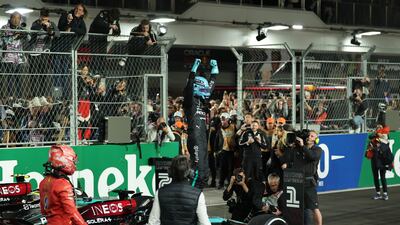
George Russell of Mercedes celebrates on top of his car after winning the Las Vegas race. Reuters -
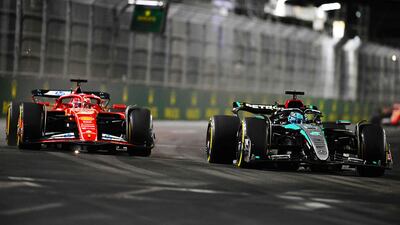
George Russell of Mercedes leads Charles Leclerc of Ferrari on his way to winning the race. Getty -
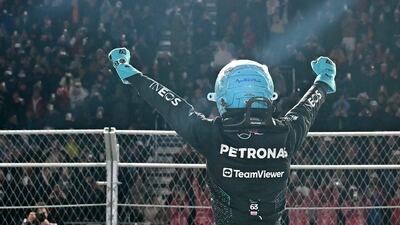
Mercedes' British driver George Russell celebrates winning the Las Vegas Formula One Grand Prix in Las Vegas, Nevada. AFP -
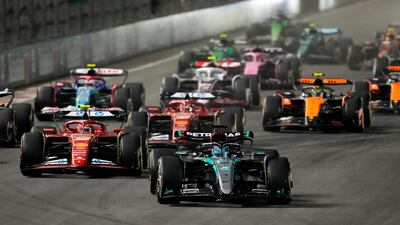
Mercedes driver George Russell, of Britain, leads the field. AP


Hamilton swaps Mercedes for Ferrari
Sunday was an emotional day in Abu Dhabi for Lewis Hamilton, driving his final race with Mercedes.
The British driver announced ahead of the season that he was moving to Ferrari next year, brining to an end his 11-year association with the Silver Arrows, where he won six of his seven world drivers' titles.
Hamilton won two races in 2024 but finished a distant seventh in the final standings – one place lower than teammate George Russell.
Hamilton is hoping the gamble on a move to Ferrari proves as fortuitous as his equally shocking move when he quit McLaren in 2013 for Mercedes. Ferrari's uptick in fortunes under French team principal Fred Vasseur, with whom Hamilton has a strong relationship, augurs well for a golden drive into his F1 sunset.
McLaren end wilderness years
Abu Dhabi proved a happy hunting ground for McLaren on Sunday. After dominating Saturday's qualifying, Norris would go on to win Sunday's Abu Dhabi Grand Prix to claim second place in the drivers' championship, but the British team pipped Ferrari to the constructors' crown – ending a 26-year wait for that championship.
The end-of-year-standings are crucial for teams – one place representing a difference of millions of dollars, with the 2003 champions Red Bull estimated to have won $140 million, the last and 10th-placed outfit collecting $60m.
This was the British marque's 21st world title, and the confidence it will generate – aligned with the extra cash – puts Zak Brown's outfit in a tremendous position for 2025.
-
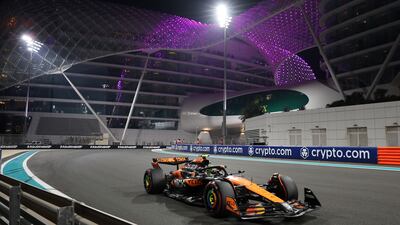
McLaren driver Lando Norris secured pole position in the Abu Dhabi Grand Prix at the Yas Marina Circuit, on December 7, 2024. Abu Dhabi. Chris Whiteoak / The National -
Pole position winner Lando Norris, centre, with McLaren teammate Oscar Piastri who will start in second and Ferrari's Carlos Sainz in third. AFP -
McLaren driver Lando Norris after securing pole position at the Yas Marina Circuit. AFP -
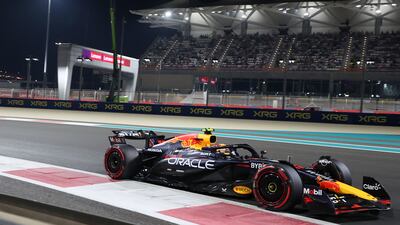
Red Bull's Sergio Perez will start third on the grid in the Abu Dhabi Grand Prix. Chris Whiteoak / The National -

Red Bull driver and world champion Max Verstappen will start fifth at the Yas Marina Circuit. Chris Whiteoak / The National -
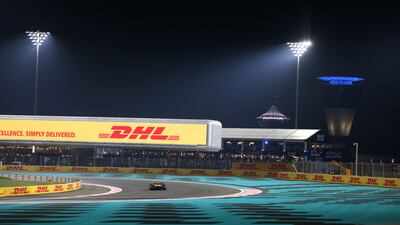
Red Bull driver Sergio Perez during qualifying. Chris Whiteoak / The National -
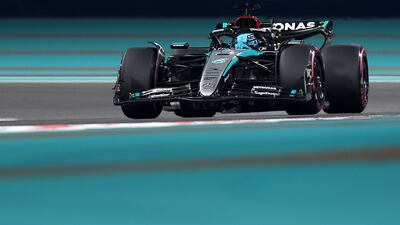
Mercedes driver George Russell will start seventh on the grid. Chris Whiteoak / The National -
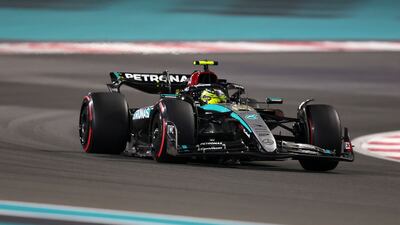
Mercedes driver Lewis Hamilton will start in 18th. Chris Whiteoak / The National -
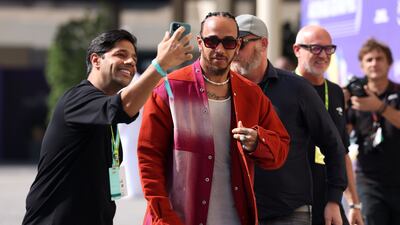
Mercedes driver Lewis Hamilton arrives at the Yas Marina Circuit. Chris Whiteoak / The National -
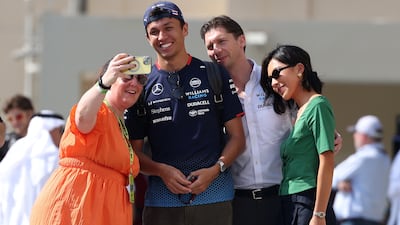
Williams driver Alexander Albon poses for a selfie ahead of qualifying. Chris Whiteoak / The National -
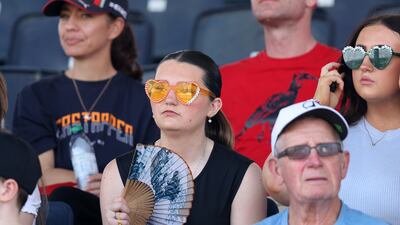
Fans watch the final practice session at Yas Marina Circuit. Abu Dhabi. Chris Whiteoak / The National


Changing lanes
The drivers' merry-go-round that usually starts spinning in the mid-summer break began this year in February with Hamilton's decision to quit Mercedes for Ferrari. He replaces Carlos Sainz, who moves over to Williams.
F1 bade farewell to one of the sport's most likeable and popular drivers – Daniel Ricciardo, let go by Red Bull's sister team RB in favour of Kiwi Liam Lawson in September.
Other familiar faces leaving the grid are Sauber duo Valterri Bottas and Zhou Guanyu, and Kevin Magnussen of Haas. Despite his poor season Sergio Perez remains Verstappen's teammate at Red Bull, for the time being at least. Exciting newcomers are Andrea Kimi Antonelli, who replaces Hamilton at Mercedes, Gabriel Bortoleto at Sauber, and Jack Doohan, son of former MotoGP star Mick Doohan, who takes over Haas-bound Esteban Ocon's seat at Alpine. German veteran Nico Hulkenburg makes the reverse switch to Swiss team Sauber from Haas.

