
While it would be wrong to claim that the international community has walked in lockstep ever since the UN was created eight decades ago, the organisation’s role in building momentum and consensus around the world’s most pressing issues is also undeniable.
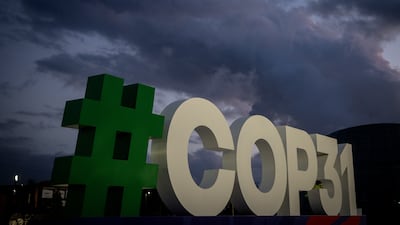
However, the outcomes of two UN conferences that ended within three days of each other suggest that the willingness of its member states to find common ground with one another is becoming rarer still with every passing year. Indeed, the postponement of negotiations on lethal autonomous weapons in Switzerland last Friday, coupled with the failure of Cop31 in Turkey to secure an agreement on fossil fuel transition and climate finance on Sunday, is yet another reminder of the reality that multilateral diplomacy is struggling to translate urgency into action.
As the UN prepares to elect a new secretary general on January 1 next year, it is painfully clear that whoever succeeds Antonio Guterres, the current incumbent, will inherit an institution facing a crisis of both relevance and credibility.
At the Convention on Certain Conventional Weapons, delegations representing 128 member states in Geneva fell short of their stated objective to launch immediate negotiations on passing binding new rules involving lethal autonomous weapons – instead, agreeing to simply continue discussions for the next two years.
Meanwhile in Antalya, Cop31 ran into overtime amid efforts to bridge divisions over fossil fuel language, carbon capture and adaptation finance in the final draft. Unfortunately, the gap between countries – major emitters, energy producers and the more vulnerable nations demanding accessible funding – proved too wide to close. As Amina Mohammed, deputy secretary general of the UN, said at the end of Cop31, “today we lost a battle”, while urging for continued efforts to “fight for climate justice”.
Both outcomes reflect a deep-rooted problem, which is that consensus – intended to preserve international co-operation – often contributes to policy paralysis when national interests and geopolitical rivalries override shared interests. With the UN not being a supernational body, its secretary general cannot impose decisions upon sovereign nations.
Yet new leadership at the top presents the organisation with a chance to build anew. Despite limitations built into the secretary general’s office, its holder isn’t entirely powerless. He or she can still use its influence to build coalitions of willing countries, businesses and civil society to sustain progress on issues such as climate change. Work to close the climate gap before Cop32, to be held in Ethiopia next year, must begin on day one.
The next secretary general should also be willing to challenge governments when their positions are found to undermine collective security and global welfare – particularly crucial on the issue of developing autonomous weapons systems. With military technology advancing faster than international law, the top official must keep the 2028 deadline on the diplomatic agenda. He or she will need to bring military and technological powers into constructive engagement, pressing for enforceable obligations that preserve human responsibility and accountability in warfare.
The top UN official must also pair high-level action with institutional reform – something the UAE’s Lana Nusseibeh, one of the eight candidates in the running to succeed Mr Guterres, has said she is committed to undertaking. The UN80 reform initiative, which includes streamlining bureaucracy, improving co-ordination and aligning resources with priorities, is sorely needed as one of the ways the agency can restore its credibility.
It is now self-evident that multilateralism is failing because its machinery has struggled to keep pace. A good first step for the incoming secretary general would be to set the UN’s house in order, although that too requires international consensus.