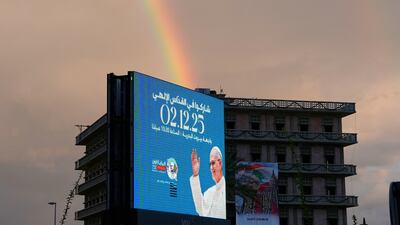

The drive from central Beirut to the mountain village of Annaya, which houses the shrine of Lebanon’s most celebrated saint, is normally a little rough. Pope Leo, who visited the village on Monday, found it to be a smoother experience; the road was completely repaved in recent weeks in anticipation of his visit.
It reflects a broader – and unusual – sense of renewal that took hold in Lebanon over the past three days, as the head of the Catholic Church toured the country, bringing with him a much-needed message of optimism, reconciliation and peace. A meeting with President Joseph Aoun and Prime Minister Nawaf Salam was followed by an interfaith dialogue; a visit to a psychiatric hospital; a silent prayer session at Beirut’s port, where a massive explosion five years ago killed and maimed hundreds; and a mass for tens of thousands of worshipers on the Beirut waterfront.
The papal visit was notable for having been hailed by all of Lebanon’s rival factions, including Hezbollah, the extremist militant group-cum-political party that controls large swathes of the country. It also stood out for having taken place even amid the country’s various crises, including aerial bombardment by Israeli forces and ongoing economic paralysis.

And yet, this is precisely why the Pope's presence was needed. As one priest told The National: “A doctor visits when the patient is critically ill.”
The papacy has a long tradition of bringing unity in Lebanon. In the summer of 1991, mere months after the end of the country’s vicious, 15-year civil war, Pope John Paul II convened a special assembly to advise him on how the Lebanese Catholic Church could recover – physically, spiritually and emotionally. He invited input not just from Lebanese Catholics, but members of Lebanon’s other Christian churches, as well as the Muslim and Druze communities. A multi-confessional approach was critical, he argued, because “the material and spiritual reconstruction of the country…was only possible with the active participation of all its inhabitants”.
The consultation surmised what many in Lebanon have always known to be true: no one community in the country can ever isolate itself from the suffering of the others. “The Church in Lebanon,” wrote the authors of the project’s preliminary report, “was, like the other components of the country, wounded in its flesh. But it was above all in its conscience that it was deeply tested. It saw its sons killed, killing and killing each other. It continues to suffer from their ever-present quarrels.”
Today, the country is not at war with itself, but old quarrels remain ever-present. The swearing-in of Mr Aoun and Mr Salam’s government earlier this year presented hope for stability after years of political disarray, but the state has not yet asserted itself as a force for real progress. Partisan division, militancy and corruption continue to cripple society, and there is little movement to convert the hollow truce with Israel into a real one. The pontiff’s prayer at the site of the Beirut port explosion was particularly poignant – the blast, caused by the negligence of corrupt leaders, is remembered as the chief symbol of all that has gone wrong in Lebanon.
Now, after the Pope’s departure, the hope is that the Lebanese will be reminded instead of all that could go right, if their leaders can seize the uplifting momentum provided by his visit. It starts, as Pope Leo reminded them in his address at the presidential palace, by acting “with commitment and dedication at the service of your people”.

