

No one is taking a closer interest in the political fall-out from the devastating explosion at the port of Beirut that killed more than 200 people and injured thousands of others than Iran.
For nearly 40 years Tehran has invested heavily, both politically and financially, in the Mediterranean state as part of its commitment to exporting the principles of its 1979 Iranian Revolution.
As one of the few countries in the Arab world where Shiite Muslims form the majority of the population, Lebanon, and especially the Shiite heartlands in the south, has been ripe for exploitation by Iran, an opportunity that became even more inviting after large swathes of the region were laid waste by Israel’s 1982 invasion of Lebanon.
But while Iran’s original claim, when it helped to create the Hezbollah militia in the early 80s, was to help Lebanon bring the Israeli occupation to an end, the organisation’s influence in the country's political arena has grown immeasurably since then – to the extent that Hezbollah has become one of the country’s most influential power-brokers.
Despite the fact that Hezbollah is widely condemned in the West as being little more than a terrorist organisation, which has resulted in countries like Britain finally ending the distinction between the organisation's political and military wings, it continues to wield enormous power and influence in Beirut.
Hezbollah's pre-eminent position in Lebanese politics is enshrined in the 2006 memorandum of understanding it signed with the country's Christian head of state, President Michel Aoun, as part of his attempts to consolidate his position. In return for recognising the rights of Lebanon's Christian minority, Hezbollah was accepted into the political mainstream, a move that has had disastrous consequences for the rest of the nation.
Today, such is the power that Hezbollah exercises that hardly any decision of consequence is taken without referral to the organisation’s leadership. Moreover, no move made by Hezbollah is undertaken without prior consultation with Tehran, so that much of Lebanon has become little more than a client state of Iran.
This takeover is central to Tehran's strategic goals. It provides the regime with an active front line in southern Lebanon in its long-standing confrontation with Israel, with its paramilitary militia organisation, the Islamic Revolutionary Guard Corps, making regular arms shipments – including medium-range missiles – to Hezbollah positions there.
-
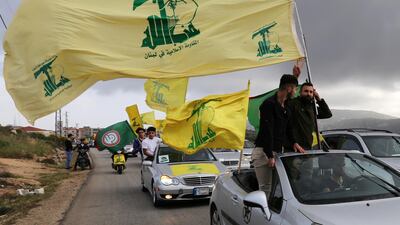
A supporter of Lebanon's Hezbollah gestures as he holds a Hezbollah flag in Marjayoun, Lebanon May 7, 2018. Reuters -
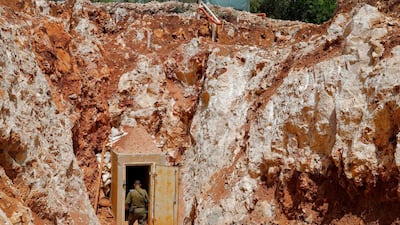
In 2019, Israel said this was a Hezbollah-dug tunnel under the "blue line", a demarcation line drawn by the UN to mark Israel's withdrawal from southern Lebanon in 2000. AFP -
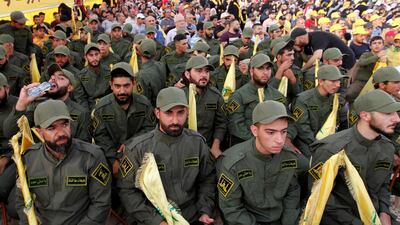
Lebanon's Hezbollah members hold party flags as they listen to their leader Sayyed Hassan Nasrallah. Reuters -

A banner depicting Hezbollah leader Sayyed Hassan Nasrallah and an United Nation's post in Lebanon. Reuters -
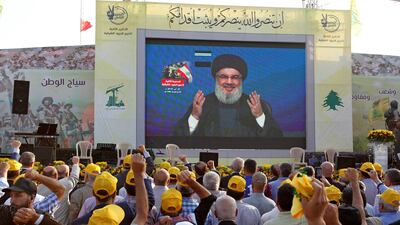
Hezbollah leader Hassan Nasrallah has direct ties with Iran's supreme leader Ayatollah Ali Khamenei. Reuters -
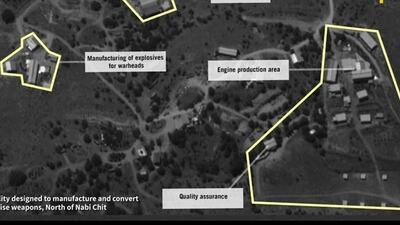
The Israeli military claimed that Hezbollah, with Iranian assistance, had been bringing specialised equipment to a weapons factory in southern Lebanon. Screengrab/YouTube -
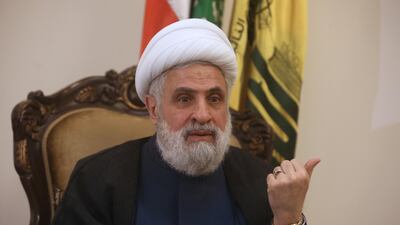
Lebanon's Hezbollah deputy leader Sheikh Naim Qassem gestures as he speaks during an interview with Reuters in Beirut, Lebanon March 15, 2018. Reuters -
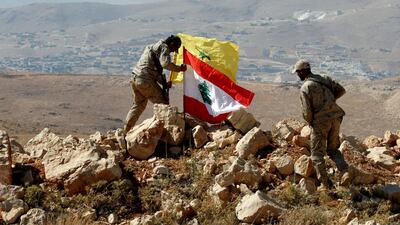
Hezbollah fighters put Lebanese and Hezbollah flags at Juroud Arsal, Syria-Lebanon border, July 25, 2017. Reuters -
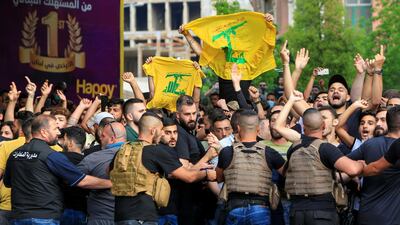
Lebanese soldiers try to block Hezbollah supporters as they gesture and chant slogans against anti-government demonstrators, in Beirut. Reuters -
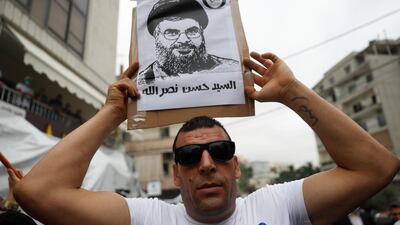
A Hezbollah supporter holds a placard of its leader Hassan Nasrallah, during a protest against the US in Beirut. AP Photo -
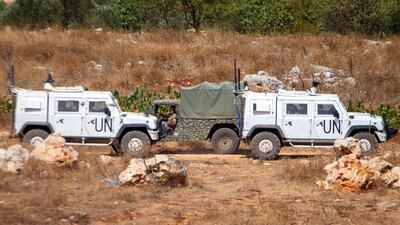
Lebanese soldiers on patrol drive by UN vehicles on the border with Israel on July 28, 2020. AP -
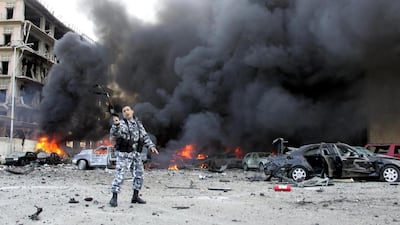
A Lebanese police officer gesturing on the site of an explosion in Beirut that killed ex-premier Rafik Hariri in 2005. AFP -
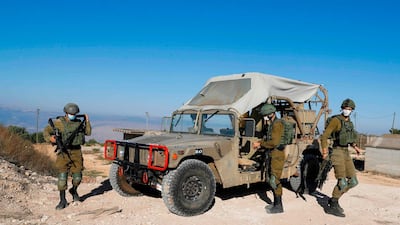
Israeli soldiers monitor the country's border with Lebanon near the northern town of Metula, in July 14, 2020. AFP -
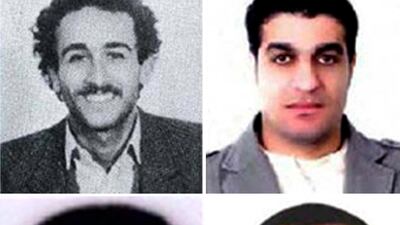
In this file photo obtained on July 29, 2011 from the Special Tribunal for Lebanon shows a combo of pictures showing four Hezbollah suspects indicted in the assassination case of former Lebanese prime minister Rafiq Hariri. AFP -
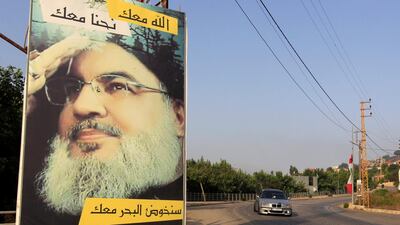
A car drives past a poster depicting Lebanon's Hezbollah leader Sayyed Hassan Nasrallah in Adaisseh village, near the Lebanese-Israeli border, Lebanon July 28, 2020. REUTERS/Aziz Taher


It also provides Iran with a base from which to spread its malign influence throughout the region, most recently in neighbouring Syria, where Hezbollah fighters have been involved in the campaign to save the brutal dictatorship of President Bashar Al Assad – and sustained serious casualties as a consequence.
Now, in the wake of the Beirut port atrocity, there are mounting concerns in Tehran that Iran's long-standing ability to exercise its influence over Lebanon might be in doubt, thereby depriving it of one of the fundamental pillars of its attempts to consolidate its position in the Arab world.
Although the investigation into the devastating explosion is still ongoing, there is a growing recognition among Lebanese protesters that Hezbollah is ultimately responsible for the blast, because the militia has effectively assumed control of the port, which it has used – among other activities – as a convenient route for shipping arms to southern Lebanon.
A report published by US think tank Atlantic Council shortly after the blast concluded that, while the 2,750 tonnes of ammonium nitrate that caused the explosion may not have belonged specifically to Hezbollah, the organisation knew of its existence, and therefore bears some responsibility for the explosions.
-
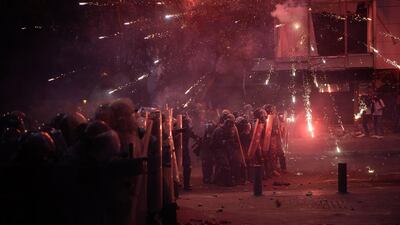
Fireworks thrown at riot police by anti-government protesters explode during clashes near the parliament building following last Tuesday's massive explosion in the seaport which devastated Beirut, Lebanon. AP Photo -
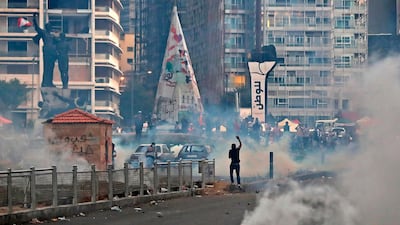
Lebanese protesters, enraged by a deadly explosion, clash with security forces at Martyrs' Square in Beirut. Lebanon's Prime Minister Hassan Diab stepped down amid fury within and outside his government over the deadly Beirut port blast he blamed on the incompetence and corruption of a decades-old ruling class. AFP -
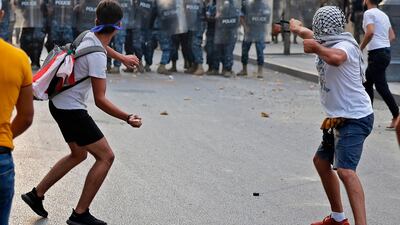
Lebanese protesters, enraged by a deadly explosion, hurl stones at security forces amid clashes in central Beirut. Lebanon's Prime Minister Hassan Diab stepped down amid fury within and outside his government over the deadly Beirut port blast he blamed on the incompetence and corruption of a decades-old ruling class. AFP -
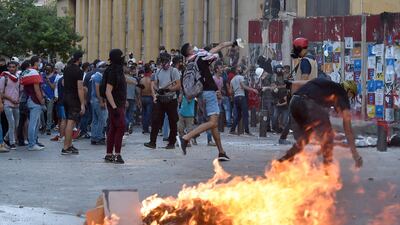
Lebanese anti-government protesters throw stones at security forces at one of the roads leading to the parliament building in Beirut, Lebanon. EPA -
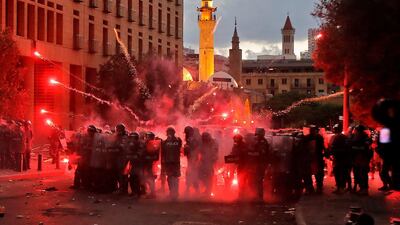
Lebanese security forces clash with protesters near the parliament building in central Beirut following a huge chemical explosion that devastated large parts of the Lebanese capital. AFP -
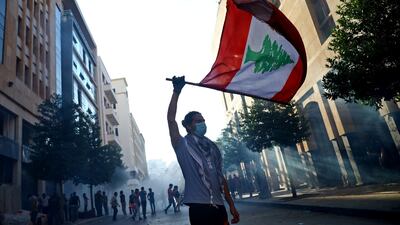
A demonstrator waves a Lebanese flag during anti-government protests that have been ignited by a massive explosion in Beirut, Lebanon. Reuters -
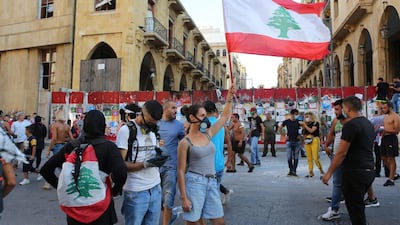
Protesters wave a Lebanese flag during demonstrations near the parliament building in Beirut, Lebanon. EPA -
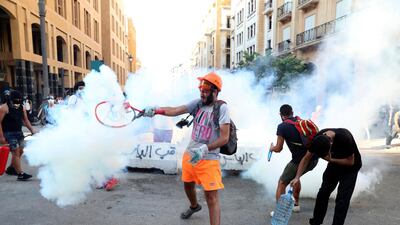
An anti-government protester uses a tennis racket to hit back a tear gas canister towards riot policemen during a protest following last Tuesday's massive explosion, which devastated Beirut, Lebanon. AP Photo -
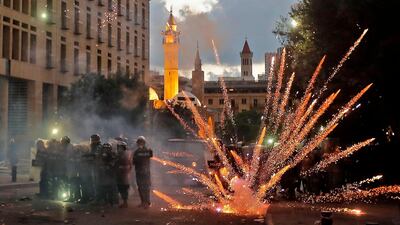
Lebanese security forces clash with protesters near the parliament in central Beirut following a huge chemical explosion that devastated large parts of the Lebanese capital. AFP -
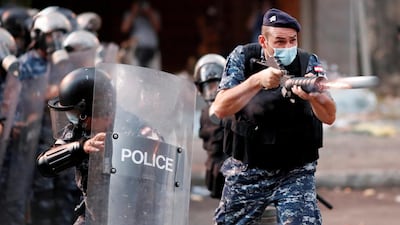
A member of Lebanese riot police fires a weapon during anti-government protests that have been ignited by a massive explosion in Beirut, Lebanon. Reuters -
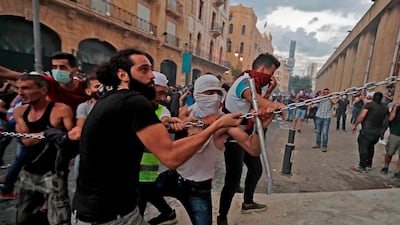
Lebanese protesters try to storm the vicinity of the parliament in central Beirut following a huge chemical explosion that devastated large parts of the Lebanese capital. AFP -
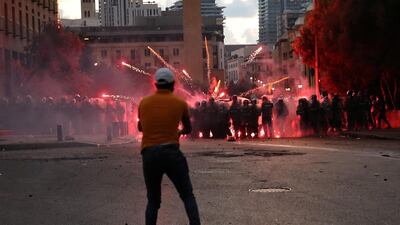
A demonstrator throws fireworks at riot police during anti-government protests that have been ignited by a massive explosion in Beirut, Lebanon. Reuters


Hezbollah’s extreme sensitivity over any suggestion that it shares the blame for the tragedy can be seen in vociferous denials of wrongdoing that have emanated from the group's leadership.
In an interview with the movement’s Al Manar television station, Hassan Nasrallah, the organisation's leader, denied allegations that it was responsible for the blasts – despite being a key member of the coalition government when it occurred. “If you want to start a battle against the resistance over this incident, you will get no results,” Nasrallah declared. “The resistance, with its strength and patriotism, is greater and bigger and stronger than to be hit by those liars who want to push and provoke for civil war.”
In addition, Hezbollah has been pumping out fake news on the internet, with one blog, Sada Al Fikr, claiming that Britain had dispatched a Royal Navy aircraft carrier to the eastern Mediterranean in preparation for an invasion of Lebanon - even though neither of Britain’s new 65,000-tonne, Queen Elizabeth-class aircraft carriers are operational.

Hezbollah’s attempts to absolve itself of any blame for the explosion, though, are making little headway in Lebanon, where a number of prominent figures, such as Bahaa Hariri, eldest son of the country’s murdered former prime minister Rafik Hariri, is openly demanding the group's removal from the political system.
Moreover, the pressure on Hezbollah is expected to increase further next week when the special tribunal set up by the UN to try the four Hezbollah terrorists accused of assassinating Hariri in a car bomb attack in 2005 issues its judgement.
A guilty verdict confirming Hezbollah’s involvement in the murder of a democratically elected prime minister would make its future participation in Lebanon's politics completely untenable, and undermine Iran’s unwelcome involvement in the country’s affairs.
Con Coughlin is the Telegraph’s defence and foreign affairs editor

