Iraqi uprising explodes sectarian narrative of the ruling class


  • English
  • Arabic

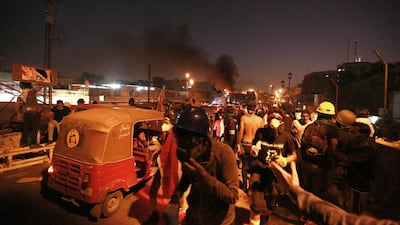
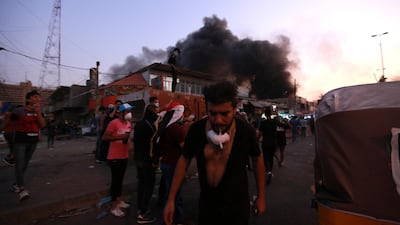
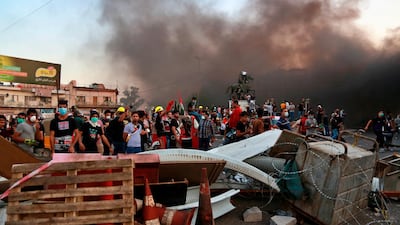
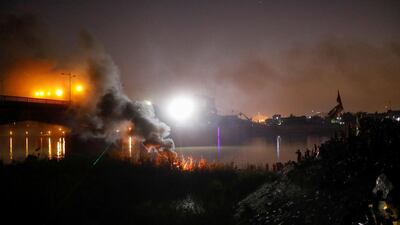
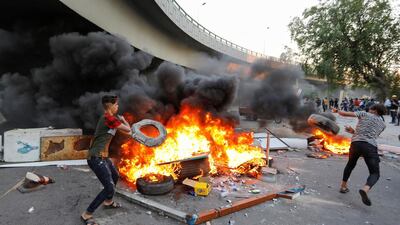
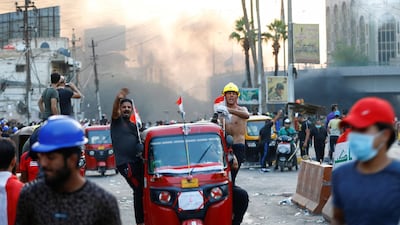
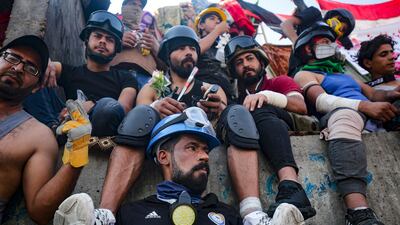
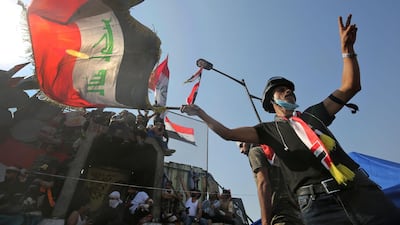
The month-old protest movement sweeping Iraq might be the most significant Arab uprising since 2011 as the country’s Shiite majority break from their leaders’ narrative that they need protection from external forces.

By demanding the removal of the ruling class they accuse of looting the country, Iraqi Shiites are rejecting their politicians' self-appointed role as guardians of a community whose interests they define as subservient to ideology and twinned with those of Iran.

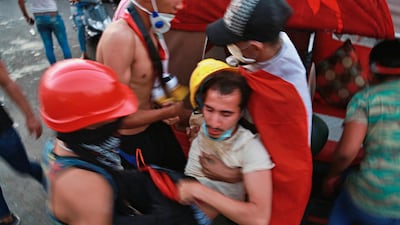
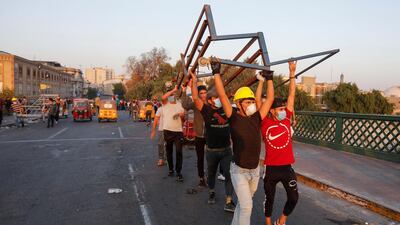
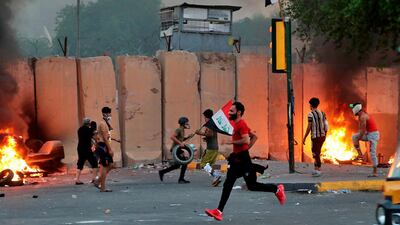
The protest movement has remained non-violent in the face of a brutal response from security forces that has claimed more than 250 lives.

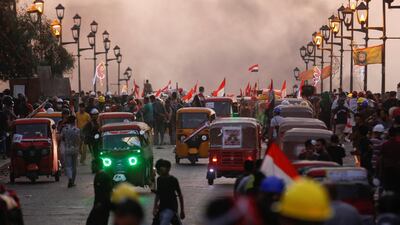
Hundreds of thousands continued to turn out on the streets of Baghdad and across the south in defiance of Prime Minister’s Adel Abdul Mahdi’s order to go home.

Like Iraqi prime ministers before him, Mr Abdul Mahdi attained his office because he was seen as a figure that Iran and the US could agree to.

Otherwise, he is a minor figure in the alliance of big-city merchants, clerics and politicians that dominated Iraqi politics since the US-led invasion toppled Saddam Hussein in 2003, and which has been joined in the past six years by militia leaders backed by Iran.

Back-door deals between Tehran and Washington have shaped Iraqi politics for almost a decade, and Iran has not shied from the portrayal of having Iraq under its tutelage.

The protesters have sought to cast off this image of Iraqis being pawns in the hands of Iran.

From the destitute southern fringes of Iraq to the bazaar cities of Najaf and Karbala, the demonstrators no longer want the political class to remain in charge of an economy with the world’s fifth-largest oil reserves.

Iraq’s energy proceeds have been its curse. Under Saddam, the money financed his wars and repression that crushed mainly the Kurds and Shiites, although his Sunni critics were not spared.

But even ardent opponents acknowledge that, before international sanctions imposed over the 1990 Gulf War, Saddam built proper infrastructure and the bureaucracy was generally clean, as opposed to the soaring levels of malfeasance and corruption since 2003.

Many of the same politicians who now warn of lost gross domestic product because of the protesters are regarded by them as having looted the economy, leaving impoverished the people whose country gave rise to great civilisations of the ancient world.

After news reports of Iran directing its clients in Baghdad to crack down, Iraqi demonstrators tried to storm the Iranian consulate in Karbala on Sunday night and tear down the Iranian flag, while security forces killed three of them.

It was the latest in a high-profile protest action aimed squarely at Iran’s role.

The narrative of many of Iraq’s leaders that the Shiites’ plight owes to a US conspiracy may be running out of steam.

After the protests began last month, Iran’s clerical rulers responded by sending the commander of their shock troops, Qassem Suleimani, to instruct Iraq’s security apparatus not to shy away from mowing down the demonstrators and the elite not to loosen their grip.

Like Saddam, the pro-Iranian clerics, militiamen, businessman and politicians have based their power on sectarian division.

But their policy of putting identity foremost would only isolate Iraqis from fellow Arabs in the Middle East in the long term.

The same tactic has been used in Lebanon by Hezbollah, where it is being challenged to a lesser degree on the street, after the country’s financial crisis was worsened by Arab reluctance to extend aid to a political system increasingly influenced by it and Iran.

In Iraq, the only major figure to break ranks with the elite has been the cleric Moqtada Al Sadr. He has championed nationalist identity across sectarian lines and spoken strongly in favour of the protest movement, although he has failed to protect it.

Mr Al Sadr earlier criticised sending Iran-backed militias into Syria to pacify Sunni rebel regions rising up against Alawite-dominated regime of Bashar Al Assad.

Iran and Hezbollah justified their support in sectarian terms, saying they were protecting Shiite shrines.

Nonetheless, residents of Ramadi, Tikrit and the rest of Iraq’s Sunni heartland have been mostly absent from the streets, not wanting their participation to be used to show the movement as being led by terrorists, two years after the end of the war against ISIS.

This was used as a tactic by the government to crush Sunni protests in 2013.

So far, the Iraqi death toll pales in comparison with the thousands of non-violent Syrians, mostly Sunni, whom the Assad regime killed or disappeared in dungeons during the initial, peaceful phase of the Syrian revolt in 2011.

There are two men who might be preventing Iraqi Shiites being dealt a similar fate: Mr Al Sadr and Ayatollah Ali Al Sistani, the country’s most senior Shiite cleric.

Mr Al Sistani gave his blessing to Shiite militias to fight Sunni militants, without using the same authority to contain them after they exceeded their mandate.

But the relationship between the two men has been characterised as one of animosity since Mr Al Sadr burst on to the Iraqi political scene in 2003.

Until the Iraqi uprising, many western specialists, especially in the US and Germany, had warned of the equivalent of Europe's Thirty Year War happening in the Middle East.

They believed that only coldly practical geopolitical deals could defuse the tension, devoid of any link to the universal values the protesters seek.

Like the rulers of Iraq and Iran, they overlooked the power of the people.

Mercer, the investment consulting arm of US services company Marsh & McLennan, expects its wealth division to at least double its assets under management (AUM) in the Middle East as wealth in the region continues to grow despite economic headwinds, a company official said.

Mercer Wealth, which globally has $160 billion in AUM, plans to boost its AUM in the region to $2-$3bn in the next 2-3 years from the present $1bn, said Yasir AbuShaban, a Dubai-based principal with Mercer Wealth.

Within the next two to three years, we are looking at reaching $2 to $3 billion as a conservative estimate and we do see an opportunity to do so,” said Mr AbuShaban.

Mercer does not directly make investments, but allocates clients’ money they have discretion to, to professional asset managers. They also provide advice to clients.

“We have buying power. We can negotiate on their (client’s) behalf with asset managers to provide them lower fees than they otherwise would have to get on their own,” he added.

Mercer Wealth’s clients include sovereign wealth funds, family offices, and insurance companies among others.

From its office in Dubai, Mercer also looks after Africa, India and Turkey, where they also see opportunity for growth.

Wealth creation in Middle East and Africa (MEA) grew 8.5 per cent to $8.1 trillion last year from $7.5tn in 2015, higher than last year’s global average of 6 per cent and the second-highest growth in a region after Asia-Pacific which grew 9.9 per cent, according to consultancy Boston Consulting Group (BCG). In the region, where wealth grew just 1.9 per cent in 2015 compared with 2014, a pickup in oil prices has helped in wealth generation.

BCG is forecasting MEA wealth will rise to $12tn by 2021, growing at an annual average of 8 per cent.

Drivers of wealth generation in the region will be split evenly between new wealth creation and growth of performance of existing assets, according to BCG.

Another general trend in the region is clients’ looking for a comprehensive approach to investing, according to Mr AbuShaban.

“Institutional investors or some of the families are seeing a slowdown in the available capital they have to invest and in that sense they are looking at optimizing the way they manage their portfolios and making sure they are not investing haphazardly and different parts of their investment are working together,” said Mr AbuShaban.

Some clients also have a higher appetite for risk, given the low interest-rate environment that does not provide enough yield for some institutional investors. These clients are keen to invest in illiquid assets, such as private equity and infrastructure.

“What we have seen is a desire for higher returns in what has been a low-return environment specifically in various fixed income or bonds,” he said.

“In this environment, we have seen a de facto increase in the risk that clients are taking in things like illiquid investments, private equity investments, infrastructure and private debt, those kind of investments were higher illiquidity results in incrementally higher returns.”

The Abu Dhabi Investment Authority, one of the largest sovereign wealth funds, said in its 2016 report that has gradually increased its exposure in direct private equity and private credit transactions, mainly in Asian markets and especially in China and India. The authority’s private equity department focused on structured equities owing to “their defensive characteristics.”

INFO

Schools can register for the Abu Dhabi Schools Championships at www.champions.adsc.ae

Florence and the Machine – High as Hope
Three stars

At a glance

- 20,000 new jobs for Emiratis over three years

- Dh300 million set aside to train 18,000 jobseekers in new skills

- Managerial jobs in government restricted to Emiratis

- Emiratis to get priority for 160 types of job in private sector

- Portion of VAT revenues will fund more graduate programmes

- 8,000 Emirati graduates to do 6-12 month replacements in public or private sector on a Dh10,000 monthly wage - 40 per cent of which will be paid by government

Another way to earn air miles

In addition to the Emirates and Etihad programmes, there is the Air Miles Middle East card, which offers members the ability to choose any airline, has no black-out dates and no restrictions on seat availability. Air Miles is linked up to HSBC credit cards and can also be earned through retail partners such as Spinneys, Sharaf DG and The Toy Store.

An Emirates Dubai-London round-trip ticket costs 180,000 miles on the Air Miles website. But customers earn these ‘miles’ at a much faster rate than airline miles. Adidas offers two air miles per Dh1 spent. Air Miles has partnerships with websites as well, so booking.com and agoda.com offer three miles per Dh1 spent.

“If you use your HSBC credit card when shopping at our partners, you are able to earn Air Miles twice which will mean you can get that flight reward faster and for less spend,” says Paul Lacey, the managing director for Europe, Middle East and India for Aimia, which owns and operates Air Miles Middle East.

Company%20profile
%3Cp%3E%3Cstrong%3EName%3A%20%3C%2Fstrong%3EPurpl%3C%2Fp%3E%0A%3Cp%3E%3Cstrong%3ECo-founders%3A%20%3C%2Fstrong%3EKarl%20Naim%2C%20Wissam%20Ghorra%2C%20Jean-Marie%20Khoueir%3C%2Fp%3E%0A%3Cp%3E%3Cstrong%3EBased%3A%20%3C%2Fstrong%3EHub71%20in%20Abu%20Dhabi%20and%20Beirut%3C%2Fp%3E%0A%3Cp%3E%3Cstrong%3EStarted%3A%20%3C%2Fstrong%3E2021%3C%2Fp%3E%0A%3Cp%3E%3Cstrong%3ENumber%20of%20employees%3A%20%3C%2Fstrong%3E12%3C%2Fp%3E%0A%3Cp%3E%3Cstrong%3ESector%3A%20%3C%2Fstrong%3EFinTech%3C%2Fp%3E%0A%3Cp%3E%3Cstrong%3EFunding%3A%20%3C%2Fstrong%3E%242%20million%26nbsp%3B%3C%2Fp%3E%0A
WORLD CUP SEMI-FINALS

England v New Zealand (Saturday, 12pm)

Wales v South Africa (Sunday, 1pm)

Squad

Ali Kasheif, Salim Rashid, Khalifa Al Hammadi, Khalfan Mubarak, Ali Mabkhout, Omar Abdulrahman, Mohammed Al Attas, Abdullah Ramadan, Zayed Al Ameri (Al Jazira), Mohammed Al Shamsi, Hamdan Al Kamali, Mohammed Barghash, Khalil Al Hammadi (Al Wahda), Khalid Essa, Mohammed Shaker, Ahmed Barman, Bandar Al Ahbabi (Al Ain), Al Hassan Saleh, Majid Suroor (Sharjah) Walid Abbas, Ahmed Khalil (Shabab Al Ahli), Tariq Ahmed, Jasim Yaqoub (Al Nasr), Ali Saleh, Ali Salmeen (Al Wasl), Hassan Al Muharami (Baniyas) 

Our legal consultant

Name: Dr Hassan Mohsen Elhais

Position: legal consultant with Al Rowaad Advocates and Legal Consultants.

Lexus LX700h specs

Engine: 3.4-litre twin-turbo V6 plus supplementary electric motor

Power: 464hp at 5,200rpm

Torque: 790Nm from 2,000-3,600rpm

Transmission: 10-speed auto

Fuel consumption: 11.7L/100km

On sale: Now

Price: From Dh590,000

UAE currency: the story behind the money in your pockets
Profile Box

Company/date started: 2015

Founder/CEO: Mohammed Toraif

Based: Manama, Bahrain

Sector: Sales, Technology, Conservation

Size: (employees/revenue) 4/ 5,000 downloads

Stage: 1 ($100,000)

Investors: Two first-round investors including, 500 Startups, Fawaz Al Gosaibi Holding (Saudi Arabia)

Infiniti QX80 specs

Engine: twin-turbocharged 3.5-liter V6

Power: 450hp

Torque: 700Nm

Price: From Dh450,000, Autograph model from Dh510,000

Available: Now

UAE currency: the story behind the money in your pockets
Recycle Reuse Repurpose

New central waste facility on site at expo Dubai South area to  handle estimated 173 tonne of waste generated daily by millions of visitors

Recyclables such as plastic, paper, glass will be collected from bins on the expo site and taken to the new expo Central Waste Facility on site

Organic waste will be processed at the new onsite Central Waste Facility, treated and converted into compost to be re-used to green the expo area

Of 173 tonnes of waste daily, an estimated 39 per cent will be recyclables, 48 per cent  organic waste  and 13 per cent  general waste.

About 147 tonnes will be recycled and converted to new products at another existing facility in Ras Al Khor

Recycling at Ras Al Khor unit:

Plastic items to be converted to plastic bags and recycled

Paper pulp moulded products such as cup carriers, egg trays, seed pots, and food packaging trays

Glass waste into bowls, lights, candle holders, serving trays and coasters

Aim is for 85 per cent of waste from the site to be diverted from landfill 

Important questions to consider

1. Where on the plane does my pet travel?

There are different types of travel available for pets:

  • Manifest cargo
  • Excess luggage in the hold
  • Excess luggage in the cabin

Each option is safe. The feasibility of each option is based on the size and breed of your pet, the airline they are traveling on and country they are travelling to.


2. What is the difference between my pet traveling as manifest cargo or as excess luggage?

If traveling as manifest cargo, your pet is traveling in the front hold of the plane and can travel with or without you being on the same plane. The cost of your pets travel is based on volumetric weight, in other words, the size of their travel crate.

If traveling as excess luggage, your pet will be in the rear hold of the plane and must be traveling under the ticket of a human passenger. The cost of your pets travel is based on the actual (combined) weight of your pet in their crate.


3. What happens when my pet arrives in the country they are traveling to?

As soon as the flight arrives, your pet will be taken from the plane straight to the airport terminal.

If your pet is traveling as excess luggage, they will taken to the oversized luggage area in the arrival hall. Once you clear passport control, you will be able to collect them at the same time as your normal luggage. As you exit the airport via the ‘something to declare’ customs channel you will be asked to present your pets travel paperwork to the customs official and / or the vet on duty. 

If your pet is traveling as manifest cargo, they will be taken to the Animal Reception Centre. There, their documentation will be reviewed by the staff of the ARC to ensure all is in order. At the same time, relevant customs formalities will be completed by staff based at the arriving airport. 


4. How long does the travel paperwork and other travel preparations take?

This depends entirely on the location that your pet is traveling to. Your pet relocation compnay will provide you with an accurate timeline of how long the relevant preparations will take and at what point in the process the various steps must be taken.

In some cases they can get your pet ‘travel ready’ in a few days. In others it can be up to six months or more.


5. What vaccinations does my pet need to travel?

Regardless of where your pet is traveling, they will need certain vaccinations. The exact vaccinations they need are entirely dependent on the location they are traveling to. The one vaccination that is mandatory for every country your pet may travel to is a rabies vaccination.

Other vaccinations may also be necessary. These will be advised to you as relevant. In every situation, it is essential to keep your vaccinations current and to not miss a due date, even by one day. To do so could severely hinder your pets travel plans.

Source: Pawsome Pets UAE

How does ToTok work?

The calling app is available to download on Google Play and Apple App Store

To successfully install ToTok, users are asked to enter their phone number and then create a nickname.

The app then gives users the option add their existing phone contacts, allowing them to immediately contact people also using the application by video or voice call or via message.

Users can also invite other contacts to download ToTok to allow them to make contact through the app.


COMPANY PROFILE
Name: ARDH Collective
Based: Dubai
Founders: Alhaan Ahmed, Alyina Ahmed and Maximo Tettamanzi
Sector: Sustainability
Total funding: Self funded
Number of employees: 4