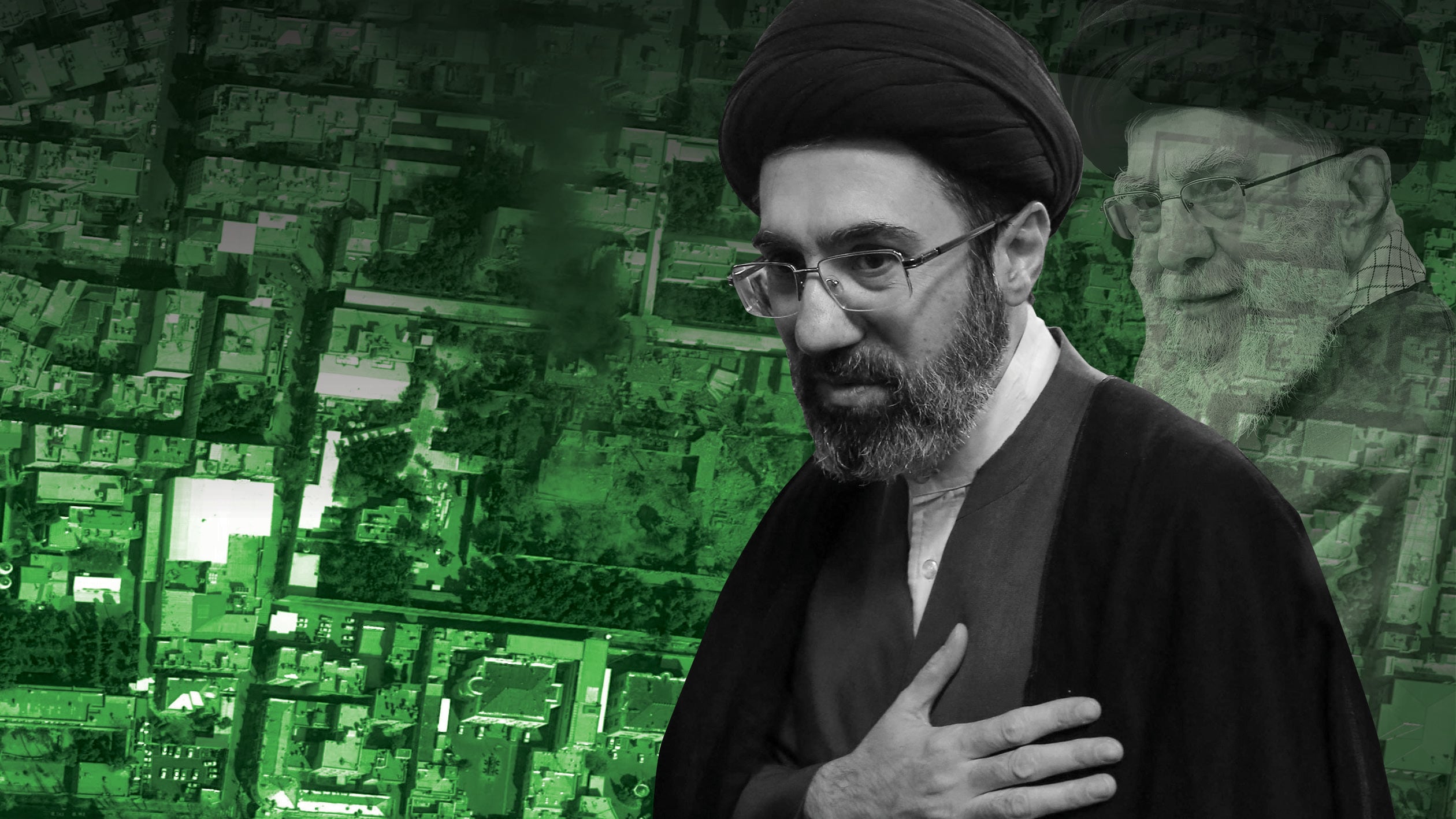


Mojtaba Khamenei’s selection as Iran’s new Supreme Leader, just days after his predecessor and father was killed alongside several senior security figures by US-Israeli strikes, is the most consequential transfer of power in the Islamic Republic in decades. At a moment of war, uncertainty and visible institutional shock, Iran’s leadership moved quickly to fill the top post.
The speed of Mr Khamenei’s appointment mattered as much as the decision itself. Tehran needed to show that the state was still functioning, that the command structure had survived, and that the death of the man at the centre of the system had not left the country politically paralysed.
In wartime, that message was clearly judged to be more important than a longer, more consultative succession process. Under calmer conditions, his elevation might have triggered a far sharper internal debate. The Islamic Republic was founded in opposition to monarchy, and the passing of supreme authority from father to son sits uneasily with that history.
Mr Khamenei also lacks the political CV of many past and present senior figures. He has never held elective office, kept a low public profile and remained for years a figure more often discussed in whispers than seen on the national stage. But with the country under fire, the priority inside the system appears to have shifted from broad legitimacy to immediate continuity.
Even so, the reactions to his appointment make clear that continuity is not the same as acceptance. Inside official Iran, the response was swift and tightly choreographed. Political institutions and military bodies moved one after another to declare loyalty to the new leader. The Islamic Revolutionary Guard Corps went furthest, presenting him not simply as the legal successor but as the natural continuation of the old order. These loyalty statements were meant to signal unity at the top and close off any perception that the succession had left room for a power struggle.
That public display, however, also revealed the regime’s concern that the transition needed active reinforcement. In Iran, succession is never just a legal act. It must also be validated through obedience from the clerical establishment, the security services, political elites and the broader network of institutions that make the system work. The rapid declarations of allegiance suggested that the state understood this clearly.
Behind the scenes, the picture appears more complicated. Reporting from many non-state-affiliated, Persian-language sources has pointed to an intense internal push by figures close to the junior Mr Khamenei, especially from within the security camp, to secure his appointment quickly. Other reports indicate there was unease within parts of the elite, including objections from figures who questioned both the hereditary nature of the transfer and Mr Khamenei’s thin public and clerical credentials. Contradictory comments on the day of the selection from members of the Assembly of Experts, the body that oversees the office of the supreme leader, only added to the sense that the process was less straightforward than the official announcement suggested.
Religious legitimacy is another unresolved issue, with a persistent debate over the younger Mr Khamenei’s formal clerical standing. Even though state media immediately began referring to him as “Ayatollah” – a title typically reserved for senior scholars capable of exercising independent religious judgment – he does not have the same qualifications his father had in order to earn that title. In fact, for years he was widely referred to only as “Hujjat Al Islam”, a mid-level clerical rank, although by 2022 some seminary-linked outlets had begun referring to him as Ayatollah. This ambiguity has fuelled criticism from opponents who argue that his religious credentials remain thinner than those of many traditional candidates for the position of supreme leader. This suggests that while his authority inside the system may be real, it is rooted more in proximity to power than in public religious stature.
Public reaction inside Iran can be hard to measure, partly because of censorship, internet controls and a general climate of fear. But the broad outline is clear enough. For regime loyalists, Mr Khamenei’s appointment is being presented as proof that the Islamic Republic can reproduce itself even under attack. For others, especially those who had hoped the death of Ali Khamenei might open the door to a different political course, the emergence of another Khamenei at the top looks less like renewal than closure. The symbolism is powerful: many Iranians who wanted change now see the system replacing one supreme leader with his son, not with a new direction.
-
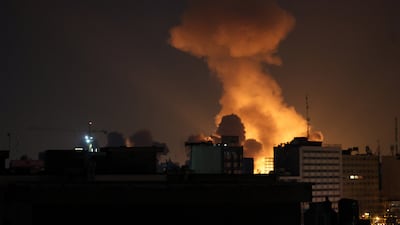
Smoke rises after an air strike in central Tehran. A joint Israeli and US military operation continues to target multiple locations across Iran. EPA -
Projectiles fly through the sky. Reuters -
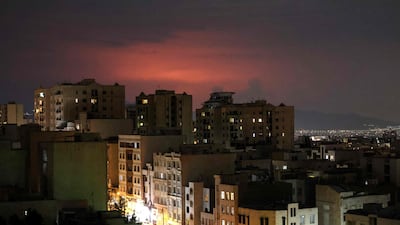
Smoke rises during air strikes in Tehran. AFP -
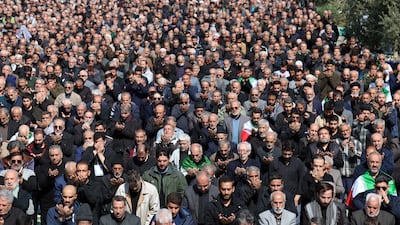
Iranians attend Friday prayers at Mosallah mosque in Tehran. EPA -
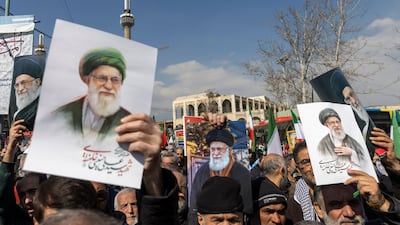
Iranians hold images of Ayatollah Ali Khamenei as they take part in a demonstration against the US and Israel in Tehran. Getty Images -
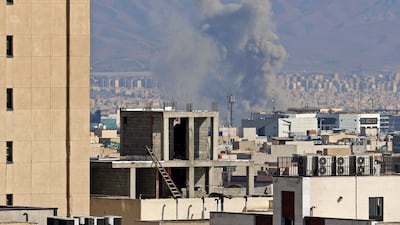
Smoke rises from the site of air strikes in Tehran. AFP -
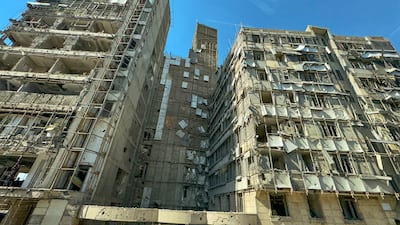
A view of the damaged Gandi Hospital in Tehran. AFP -
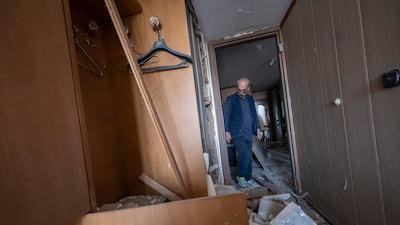
An Iranian man attends his damaged office in Tehran. AFP -
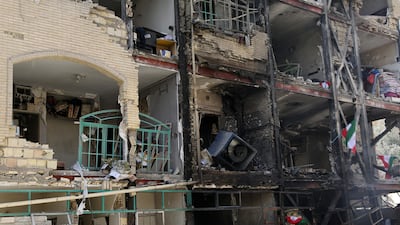
A residential complex in Tehran damaged by intense bombardment. AFP -
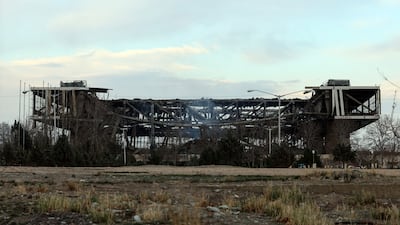
A damaged building at Tehran's Azadi Sport Complex. AFP


The regional response was also politically important. Iran-backed groups in Lebanon, Iraq and Yemen quickly pledged support for Mr Khamenei, underscoring that the wider network built under his father still recognises the authority of the office. Russia offered warm support, while China treated the succession cautiously as an internal Iranian matter. By contrast, the US and Israel made clear that the new leader would not be shielded by office alone. That means Mr Khamenei enters power not only under domestic scrutiny but under direct external threat.
What does all this mean for Iran and for the war? In the short term, his rise points to consolidation, not change. That makes a dramatic policy shift unlikely for now. Governments under attack usually centralise authority; they rarely experiment.
But Mojtaba Khamenei takes power at a far more difficult moment than the one his father faced when he was appointed in 1989. Iran is under direct military pressure. Its regional deterrent model has been weakened. Its economy remains fragile. Social grievances have not disappeared. That means the central question is no longer simply whether the succession has been completed but whether the new leader can transform formal appointment into broad national authority, legitimacy and – most of all – stability.

