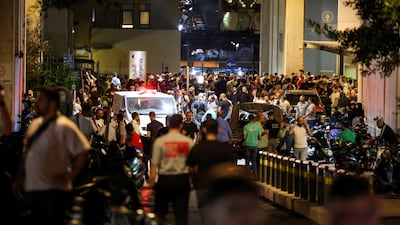
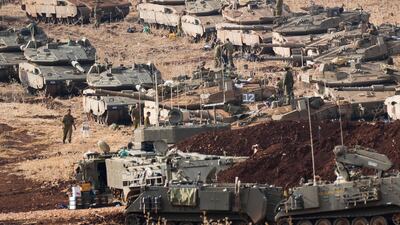
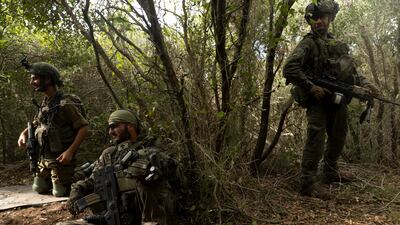
The US ambassador to Turkey and envoy to Syria, Tom Barrack, returned to Beirut on Monday to hear what the Lebanese had to say about a proposal he had presented two weeks ago. Not long after his arrival, he declared he was “satisfied and grateful for the Lebanese response … We are developing a plan to move forward, and I feel very hopeful”.
Mr Barrack has taken over the Lebanon file momentarily following the departure of the previous envoy Morgan Ortagus. On June 19, he brought with him a plan outlining Hezbollah’s disarmament, which would lead to Israel’s withdrawal from hills it occupies in southern Lebanon. The proposal also covers economic and financial reform.
In the proposal, Lebanon and Israel would also move towards demarcation of their border, removing any excuse for continued resistance against Israel. The Israelis would release their Lebanese prisoners as well. In parallel, Lebanon had to implement reforms that ended the cash economy, restructured the banking sector and closed Hezbollah’s de-facto bank Al Qard Al Hassan as well as the money exchanges that help the party finance itself.
Lebanon and Syria would also be asked to improve ties and control their common border, which they would demarcate. This would clarify to whom the Israeli-occupied Shebaa Farms belong, and if the sides agreed that they are Syrian, as the UN has said, it would end Hezbollah’s justification for liberating the farms.
Mr Barrack also made it clear the demands were part of a broader package – one with Arab backing. If Lebanon failed to implement Hezbollah’s disarmament, it would not benefit from outside investment or aid to rebuild the country after the war last year. The Lebanese reply will now be used by Mr Barrack to help lay the groundwork for progress on the Lebanese-Israeli front, because the US feels that the mechanism put in place to consolidate the ceasefire negotiated last November is no longer working.
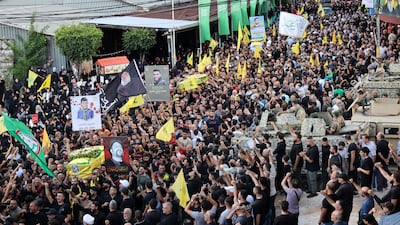
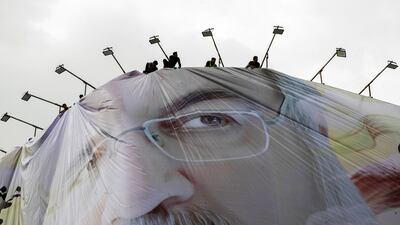
In public, Hezbollah has maintained a hard line, describing calls for its disarmament as an Israeli demand, backed by Washington, and insisting the future of its weapons had to be decided by the Lebanese. Its secretary general, Naim Qassem, stated last week: “We will address and agree internally to […] matters such as weapons and other issues.”
“Our weapons,” he added, “are there to confront Israel, and we will not surrender our right.” On Sunday, Mr Qassem said the party was ready for one of two choices: peace and the building of a state or confrontation. “But,” he said, “we will not surrender, nor will be compromise on our rights and dignity.”
Upon returning to Beirut, Mr Barrack sounded conciliatory when he said that there was “no deadline” for Hezbollah’s disarmament.
The US proposal put the Lebanese on the spot. While President Joseph Aoun and Prime Minister Nawaf Salam seek a monopoly of the state over weapons – they have made this a stated goal of the Cabinet – they have moved slowly on disarming Hezbollah to avoid a potentially risky confrontation with the party. However, under US pressure they explicitly mentioned in their reply to Mr Barrack that the state alone must hold weapons, to which Hezbollah had to agree.
A major part of the problem is that, ultimately, any decision on Hezbollah’s weapons will be taken in Tehran, given that the party’s senior leadership was largely eliminated last year and Iran now has more central say in its affairs. Unconfirmed news reports have indicated that Mr Aoun recently brought up Hezbollah’s disarmament with a leading party official, and proposed that the state confiscate its rockets, but this was met with a refusal.
Publicly, at least, Hezbollah has sought to portray itself as flexible on its weapons. Not that it has had much choice. The party is isolated nationally and has no serious hopes of reviving a military strategy against Israel at present while remaining vulnerable to Israeli attacks. And it wants to avoid tensions with the Lebanese state. There have been unconfirmed reports, notably a July 4 story published by the news agency Reuters, that Hezbollah is discussing internally reducing its role as an armed group, even if this falls short of complete disarmament.
At the same time, the party does not want to be seen as surrendering its weapons under outside, especially US and Israeli, duress. Yet this potentially poses problems for Hezbollah. Lebanon’s President and government have staked their credibility on giving the state a monopoly over weapons, and the party’s reluctance to go along with this, or its desire to impose conditions on its disarmament, may well strain its ties with the state.
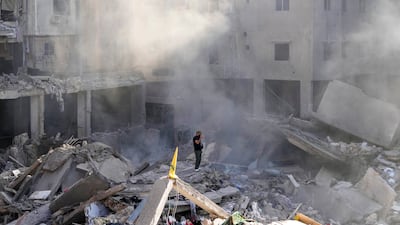
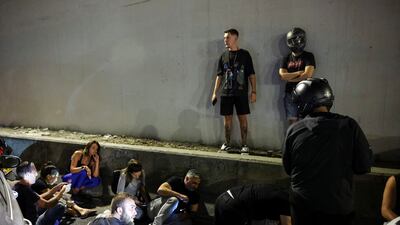
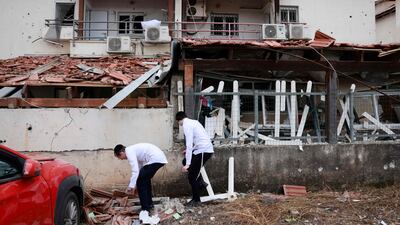
If the Americans and Israelis believe that the Lebanese state and Hezbollah are manoeuvring to buy time, it is a near certainty that Israel will escalate its military operations in Lebanon to impose its preferred outcome. The probability would rise if the fighting in Gaza is soon brought to an end. It also seems highly unlikely the US would support renewing the mandate of UN peacekeepers in the country in such a case, while a further lack of progress would mean no aid for reconstruction, let alone foreign investment in the country.
Mr Barrack’s initiative opens the door to a new phase, one in which Lebanon will soon have to offer a timetable for disarming Hezbollah. Mr Aoun and Mr Salam appear to agree in principle to do so, while Iran and the party are not there. Under these circumstances, the President and Prime Minister may sense, against their deeper preferences, that the only leverage that might change Hezbollah’s mind is that provided by their sworn enemy.

Mercer, the investment consulting arm of US services company Marsh & McLennan, expects its wealth division to at least double its assets under management (AUM) in the Middle East as wealth in the region continues to grow despite economic headwinds, a company official said.
Mercer Wealth, which globally has $160 billion in AUM, plans to boost its AUM in the region to $2-$3bn in the next 2-3 years from the present $1bn, said Yasir AbuShaban, a Dubai-based principal with Mercer Wealth.
“Within the next two to three years, we are looking at reaching $2 to $3 billion as a conservative estimate and we do see an opportunity to do so,” said Mr AbuShaban.
Mercer does not directly make investments, but allocates clients’ money they have discretion to, to professional asset managers. They also provide advice to clients.
“We have buying power. We can negotiate on their (client’s) behalf with asset managers to provide them lower fees than they otherwise would have to get on their own,” he added.
Mercer Wealth’s clients include sovereign wealth funds, family offices, and insurance companies among others.
From its office in Dubai, Mercer also looks after Africa, India and Turkey, where they also see opportunity for growth.
Wealth creation in Middle East and Africa (MEA) grew 8.5 per cent to $8.1 trillion last year from $7.5tn in 2015, higher than last year’s global average of 6 per cent and the second-highest growth in a region after Asia-Pacific which grew 9.9 per cent, according to consultancy Boston Consulting Group (BCG). In the region, where wealth grew just 1.9 per cent in 2015 compared with 2014, a pickup in oil prices has helped in wealth generation.
BCG is forecasting MEA wealth will rise to $12tn by 2021, growing at an annual average of 8 per cent.
Drivers of wealth generation in the region will be split evenly between new wealth creation and growth of performance of existing assets, according to BCG.
Another general trend in the region is clients’ looking for a comprehensive approach to investing, according to Mr AbuShaban.
“Institutional investors or some of the families are seeing a slowdown in the available capital they have to invest and in that sense they are looking at optimizing the way they manage their portfolios and making sure they are not investing haphazardly and different parts of their investment are working together,” said Mr AbuShaban.
Some clients also have a higher appetite for risk, given the low interest-rate environment that does not provide enough yield for some institutional investors. These clients are keen to invest in illiquid assets, such as private equity and infrastructure.
“What we have seen is a desire for higher returns in what has been a low-return environment specifically in various fixed income or bonds,” he said.
“In this environment, we have seen a de facto increase in the risk that clients are taking in things like illiquid investments, private equity investments, infrastructure and private debt, those kind of investments were higher illiquidity results in incrementally higher returns.”
The Abu Dhabi Investment Authority, one of the largest sovereign wealth funds, said in its 2016 report that has gradually increased its exposure in direct private equity and private credit transactions, mainly in Asian markets and especially in China and India. The authority’s private equity department focused on structured equities owing to “their defensive characteristics.”
Our family matters legal consultant
Name: Hassan Mohsen Elhais
Position: legal consultant with Al Rowaad Advocates and Legal Consultants.
Our family matters legal consultant
Name: Hassan Mohsen Elhais
Position: legal consultant with Al Rowaad Advocates and Legal Consultants.
Rebel%20Moon%20-%20Part%20One%3A%20A%20Child%20of%20Fire
%3Cp%3E%3Cstrong%3EDirector%3A%20%3C%2Fstrong%3EZack%20Snyder%3Cbr%3E%3Cstrong%3EStars%3A%20%3C%2Fstrong%3ESofia%20Boutella%2C%20Djimon%20Hounsou%2C%20Ed%20Skrein%2C%20Michiel%20Huisman%2C%20Charlie%20Hunnam%3Cbr%3E%3Cstrong%3ERating%3A%20%3C%2Fstrong%3E2%2F5%3C%2Fp%3E%0A
Directed by: Craig Gillespie
Starring: Emma Stone, Emma Thompson, Joel Fry
4/5
UAE currency: the story behind the money in your pockets
Abaya trends
The utilitarian robe held dear by Arab women is undergoing a change that reveals it as an elegant and graceful garment available in a range of colours and fabrics, while retaining its traditional appeal.
More from Aya Iskandarani
Living in...
This article is part of a guide on where to live in the UAE. Our reporters will profile some of the country’s most desirable districts, provide an estimate of rental prices and introduce you to some of the residents who call each area home.
Biography
Favourite drink: Must have karak chai and Chinese tea every day
Favourite non-Chinese food: Arabic sweets and Indian puri, small round bread of wheat flour
Favourite Chinese dish: Spicy boiled fish or anything cooked by her mother because of its flavour
Best vacation: Returning home to China
Music interests: Enjoys playing the zheng, a string musical instrument
Enjoys reading: Chinese novels, romantic comedies, reading up on business trends, government policy changes
Favourite book: Chairman Mao Zedong’s poems
LA LIGA FIXTURES
Friday
Granada v Real Betis (9.30pm)
Valencia v Levante (midnight)
Saturday
Espanyol v Alaves (4pm)
Celta Vigo v Villarreal (7pm)
Leganes v Real Valladolid (9.30pm)
Mallorca v Barcelona (midnight)
Sunday
Atletic Bilbao v Atletico Madrid (4pm)
Real Madrid v Eibar (9.30pm)
Real Sociedad v Osasuna (midnight)
RESULTS
5pm: Wathba Stallions Cup – Handicap (PA) Dh70,000 (Turf) 2,200m
Winner: M'A Yaromoon, Jesus Rosales (jockey), Khalifa Al Neydai (trainer)
5.30pm: Khor Al Baghal – Conditions (PA) Dh80,000 (T) 1,600m
Winner: No Riesgo Al Maury, Antonio Fresu, Ibrahim Al Hadhrami
6pm: Khor Faridah – Handicap (PA) Dh80,000 (T) 1,600m
Winner: JAP Almahfuz, Royston Ffrench, Irfan Ellahi
6.30pm: Abu Dhabi Fillies Classic – Prestige (PA) Dh110,000 (T) 1,400m
Winner: Mahmouda, Pat Cosgrave, Abdallah Al Hammadi
7pm: Abu Dhabi Colts Classic – Prestige (PA) Dh110,000 (T) 1,400m
Winner: AS Jezan, George Buckell, Ahmed Al Mehairbi
7.30pm: Khor Laffam – Handicap (TB) Dh80,000 (T) 2,200m
Winner: Dolman, Antonio Fresu, Bhupath Seemar
EMIRATES'S%20REVISED%20A350%20DEPLOYMENT%20SCHEDULE
%3Cp%3E%3Cstrong%3EEdinburgh%3A%3C%2Fstrong%3E%20November%204%20%3Cem%3E(unchanged)%3C%2Fem%3E%3C%2Fp%3E%0A%3Cp%3E%3Cstrong%3EBahrain%3A%3C%2Fstrong%3E%20November%2015%20%3Cem%3E(from%20September%2015)%3C%2Fem%3E%3B%20second%20daily%20service%20from%20January%201%3C%2Fp%3E%0A%3Cp%3E%3Cstrong%3EKuwait%3A%3C%2Fstrong%3E%20November%2015%20%3Cem%3E(from%20September%2016)%3C%2Fem%3E%3C%2Fp%3E%0A%3Cp%3E%3Cstrong%3EMumbai%3A%3C%2Fstrong%3E%20January%201%20%3Cem%3E(from%20October%2027)%3C%2Fem%3E%3C%2Fp%3E%0A%3Cp%3E%3Cstrong%3EAhmedabad%3A%3C%2Fstrong%3E%20January%201%20%3Cem%3E(from%20October%2027)%3C%2Fem%3E%3C%2Fp%3E%0A%3Cp%3E%3Cstrong%3EColombo%3A%3C%2Fstrong%3E%20January%202%20%3Cem%3E(from%20January%201)%3C%2Fem%3E%3C%2Fp%3E%0A%3Cp%3E%3Cstrong%3EMuscat%3A%3C%2Fstrong%3E%3Cem%3E%20%3C%2Fem%3EMarch%201%3Cem%3E%20(from%20December%201)%3C%2Fem%3E%3C%2Fp%3E%0A%3Cp%3E%3Cstrong%3ELyon%3A%3C%2Fstrong%3E%20March%201%20%3Cem%3E(from%20December%201)%3C%2Fem%3E%3C%2Fp%3E%0A%3Cp%3E%3Cstrong%3EBologna%3A%3C%2Fstrong%3E%20March%201%20%3Cem%3E(from%20December%201)%3C%2Fem%3E%3C%2Fp%3E%0A%3Cp%3E%3Cem%3ESource%3A%20Emirates%3C%2Fem%3E%3C%2Fp%3E%0A
Dengue%20fever%20symptoms
%3Cul%3E%0A%3Cli%3EHigh%20fever%3C%2Fli%3E%0A%3Cli%3EIntense%20pain%20behind%20your%20eyes%3C%2Fli%3E%0A%3Cli%3ESevere%20headache%3C%2Fli%3E%0A%3Cli%3EMuscle%20and%20joint%20pains%3C%2Fli%3E%0A%3Cli%3ENausea%3C%2Fli%3E%0A%3Cli%3EVomiting%3C%2Fli%3E%0A%3Cli%3ESwollen%20glands%3C%2Fli%3E%0A%3Cli%3ERash%3C%2Fli%3E%0A%3C%2Ful%3E%0A%3Cp%3EIf%20symptoms%20occur%2C%20they%20usually%20last%20for%20two-seven%20days%3C%2Fp%3E%0A
The%20Boy%20and%20the%20Heron
%3Cp%3E%3Cstrong%3EDirector%3A%C2%A0%3C%2Fstrong%3EHayao%20Miyazaki%3C%2Fp%3E%0A%3Cp%3E%3Cstrong%3EStarring%3A%3C%2Fstrong%3E%C2%A0Soma%20Santoki%2C%20Masaki%20Suda%2C%20Ko%20Shibasaki%3C%2Fp%3E%0A%3Cp%3E%3Cstrong%3ERating%3A%20%3C%2Fstrong%3E5%2F5%3C%2Fp%3E%0A
Brief scoreline:
Liverpool 2
Mane 51', Salah 53'
Chelsea 0
Man of the Match: Mohamed Salah (Liverpool)
The specs
Engine: 3.8-litre V6
Power: 295hp at 6,000rpm
Torque: 355Nm at 5,200rpm
Transmission: 8-speed auto
Fuel consumption: 10.7L/100km
Price: Dh179,999-plus
On sale: now
The burning issue
The internal combustion engine is facing a watershed moment – major manufacturer Volvo is to stop producing petroleum-powered vehicles by 2021 and countries in Europe, including the UK, have vowed to ban their sale before 2040. The National takes a look at the story of one of the most successful technologies of the last 100 years and how it has impacted life in the UAE.
Read part four: an affection for classic cars lives on
Read part three: the age of the electric vehicle begins
Read part one: how cars came to the UAE