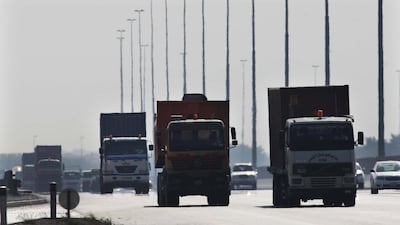
Drivers of heavy lorries and buses will face tougher rules from the start of next year, including limited driving hours and tighter cargo safety rules as authorities seek to reduce accidents and improve road safety.
Drivers cannot drive more than nine hours in any 24-hour period, unless the Federal Traffic Council changes this limit. This rule applies to all drivers but will most likely affect long-distance lorry and bus operators.
Another important change is how heavy vehicles are defined. Now, a heavy goods vehicle must weigh more than 3.5 tonnes when empty rather than the old limit of 2.5 tonnes.

The rules for buses have changed too. Buses carrying nine to 26 passengers will be called light buses. Those carrying more than 26 passengers are heavy buses.
The changes are contained in Cabinet Decision No. 174 of 2026, and will take effect on January 1, 2027.
The new rules are stricter about cargo transport, stating that loads cannot stick out beyond a heavy vehicle's dimensions.
Before, oversized loads could be moved with permission from the Licensing Authority, as long as safety rules and warning signs were used. However, separate rules still apply for special permits for unusual loads.
Drivers of heavy vehicles must make sure their cargo does not put people at risk or block traffic. They must also cover loads to prevent dust, sand, or other materials from spilling or blowing on to the road.
Heavy vehicles cannot carry passengers, except for the owner's employees and workers who load or unload goods. But there should be designated seats for them.
The new regulations also retain several existing restrictions on heavy vehicle. Under Article 34, heavy vehicles and heavy buses cannot overtake each other within cities. Outside cities, they may do so only if traffic is not obstructed. They must also use designated lanes where available.
Fatal accidents in Fujairah
Last week, the Ministry of Interior reminded people about traffic violations and penalties for heavy vehicles. This reminder came after road accidents in Fujairah last Thursday, where 14 people died and about 30 were hurt.
The two crashes on the way to Fujairah involved 18 vehicles and five lorries. In the first crash, a vehicle hit a parked lorry. In the second, a lorry with two shipping containers hit several vehicles before overturning.
The ministry listed 11 traffic violations, with penalties that include fines, black points, and vehicle impoundment.
If a heavy vehicle driver causes an accident in which their own vehicle or another vehicle overturns, they face a Dh3,000 fine and a one-year licence suspension. Lorry drivers who overtake where it is not allowed receive the same penalty.
If cargo falls or spills from a heavy vehicle, the driver gets a Dh3,000 fine and 12 traffic points. Not covering a lorry's load also leads to a Dh3,000 fine. Loading a heavy vehicle in a way that puts others at risk or damages the road results in a Dh2,000 fine and six black points. Not following the correct loading and unloading rules in designated areas results in a Dh1,000 fine and four points.
Drivers who do not stay on roads meant for heavy vehicles get a Dh1,500 fine and 12 points. Driving a heavy vehicle on roads or in areas where they are banned leads to a Dh1,000 fine and four points.
Driving with unsafe tyres results in a Dh500 fine, four points, and a seven-day impoundment. Not putting reflective stickers on the back of lorries and transport vehicles brings a Dh500 fine.
Using industrial or construction vehicles, tractors, or mechanical equipment without a permit from the licensing authority leads to a Dh1,500 fine.

