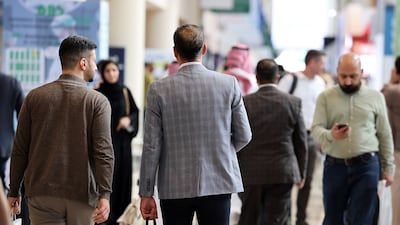
A majority of UAE organisations are expected to keep salaries flat or offer modest increases next year amid economic uncertainty driven by the Iran war, according to a new report.
A total of 77 per cent of organisations plan to hold salary ranges steady (42 per cent), or award rises of 1 per cent to 5 per cent (35 per cent), a Cooper Fitch survey found.
Midsized firms – those with 251 to 1,000 employees – are expected to keep salaries flat, while large organisations will offer pay rises in 2027, it said.

Information technology has the highest share of respondents planning salary increases, at 63 per cent, followed by telecoms with 60 per cent, and heavy industry and manufacturing at 59 per cent.
Other sectors, including banking, financial services and insurance; and retail, e-commerce and luxury goods, are also expected to raise salaries next year.
Salaries in government and the public sector are the most likely to remain unchanged, according to 70 per cent of those organisations.
Economic uncertainty has continued across the Gulf region since the start of the Iran war in February. The Strait of Hormuz, a key route for global oil supplies, remains technically shut, disrupting trade and other activities.
The International Monetary Fund projects the UAE's economy will contract by 3.9 per cent this year before rebounding at a 7.7 per cent growth rate in 2027, conditional on the normalisation of shipping routes and the reopening of the strait.
The projections by the Washington-based lender in October reflect a downgrade of 7 percentage points for 2026 and an upgrade of 2.4 percentage points for 2027 compared to the fund's April forecast.
Companies are also planning to expand their workforce next year, with 42 per cent of respondents expecting to increase their headcount as the economy rebounds from the effects of the war.
A staffing increase of 1 per cent to 5 per cent is the most common rate, selected by 24 per cent of respondents, while 32 per cent expect no change.
Only 7 per cent anticipate reductions of 10 per cent or more next year, compared with 16 per cent in 2026.
Real estate, construction and architecture are most positive about increasing staff numbers followed by retail, e-commerce and luxury goods, and banking, financial services and insurance.
Talent outlook
Most UAE respondents believe the local market has sufficient talent to meet their organisation’s hiring needs for 2027, while 25 per cent report insufficient talent and 11 per cent are unsure.
Views vary by department, with 55 per cent of technology respondents reporting insufficient talent, compared with 16 per cent in human resources. Among the sectors shown, aviation, defence and aerospace has the highest share citing insufficient talent at 60 per cent, followed by information technology and hospitality (40 per cent each), and real estate and construction at 33 per cent.
Government and public sector respondents are the most likely to report sufficient talent, at 91 per cent.
The survey also that found sales and business development roles were the most difficult to fill, followed by technical and engineering roles and those requiring AI, data and technology skills.
Hiring stabilises
LinkedIn, in a separate report on Monday, said hiring in the UAE was stabilising after war-related disruption earlier this year.
Hiring fell to 40 per cent below 2025 levels in April, but by August the decline had narrowed to 18 per cent, and 15 out of 17 major industries posted monthly growth, it said.
“The sharpest phase of the downturn appears to have passed, although hiring activity remains below 2025,” it added.
AI is rapidly changing what employers need, LinkedIn found, with demand for artificial intelligence engineering jobs rising 232.4 per cent year-on-year in August.
“The UAE is committed to developing national capabilities while attracting the world’s best talent, creating an agile workforce that can translate technological change into higher productivity, new industries and sustainable opportunities in the UAE,” Dr Thani Al Zeyoudi, Minister of Foreign Trade of the UAE, said.

