President Sheikh Mohamed on Friday visited the Hungarian Parliament in Budapest as part of his official visit to the country.
He was welcomed on arrival by Hungarian President Tamas Sulyok before attending an official reception ceremony at Kossuth Lajos Square, in front of the parliament building.
The UAE leader's motorcade was escorted by a procession of horse riders, before national anthems of both countries were performed.
Sheikh Mohamed inspected the guard of honour and was greeted by senior Hungarian ministers and officials.
Sheikh Mohamed and Mr Sulyok then held talks at the Hungarian Parliament aimed at bolstering ties between the countries, with a focus on the economy, renewable energy, trade, investment, and culture.
Both sides reaffirmed their commitment to strengthening UAE-Hungary relations and exploring new opportunities for collaboration across a variety of sectors.
Sheikh Mohamed wrote an entry in the VIP guestbook at the parliament, in which he expressed his pleasure at visiting Hungary and noted the significant progress made in furthering relations.
The UAE leader and the Hungarian President also exchanged symbolic gifts reflecting the culture and rich heritage of their respective nations.
Following the meeting, Sheikh Mohamed departed Budapest, concluding his official visit to Hungary.
Sheikh Mohamed had on Thursday met Hungarian Prime Minister Viktor Orban in Budapest on the first day of his trip.
The two leaders discussed regional and global issues, including the need to support international efforts aimed at strengthening stability and peace around the world. They emphasised the importance of resolving crises and conflicts through dialogue and diplomacy, state news agency Wam reported.
Sheikh Mohamed stressed the UAE’s commitment to enhancing co-operation with Hungary to help advance development goals and promote further progress and prosperity for both countries.
Sheikh Mohamed in Hungary – in pictures
-
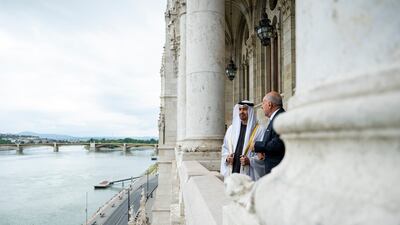
President Sheikh Mohamed is received by President Tamas Sulyok of Hungary, at the Parliament Building in Budapest. All Photos: UAE Presidential Court -

Sheikh Mohamed and Mr Sulyok inspect a guard of honour -
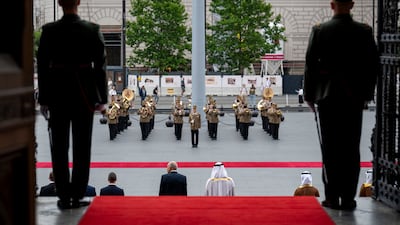
The national anthems of the UAE and Hungary are played -

Sheikh Mohamed bids farewell to Hungarian officials at the Hungarian Parliament Building -

The UAE President is received by officials at the Hungarian Parliament Building -
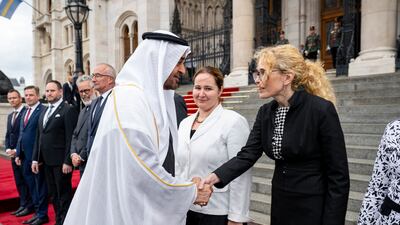
The UAE President is received by officials at the Hungarian Parliament Building -
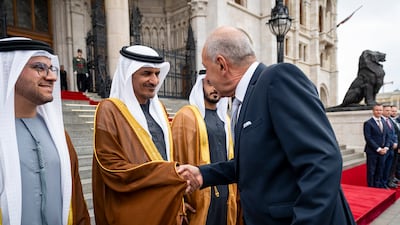
President Tamas Sulyok of Hungary greets Ali Al Shamsi, Secretary General of the UAE Supreme Council for National Security -
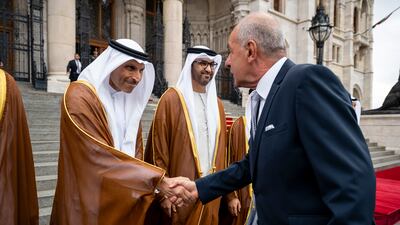
Mr Sulyok greets Khaldoon Khalifa Al Mubarak, Chairman of the UAE Executive Affairs Authority and Managing Director and Group Chief Executive of Mubadala Investment Company -
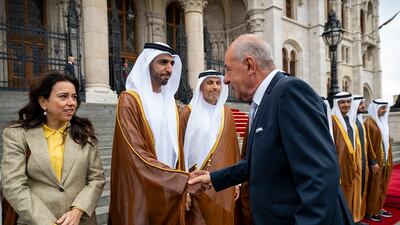
Mr Sulyok greets Sheikh Shakhbout bin Nahyan, UAE Minister of State -
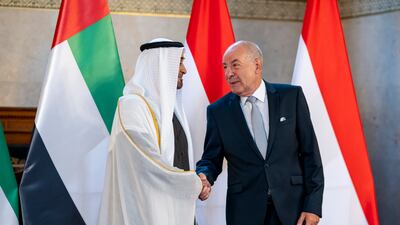
President Sheikh Mohamed and Mr Sulyok stand for a photograph -
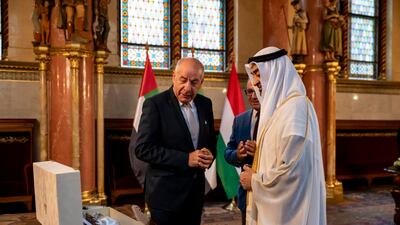
Sheikh Mohamed and Mr Sulyok held talks at the Hungarian Parliament aimed at bolstering ties between the countries -
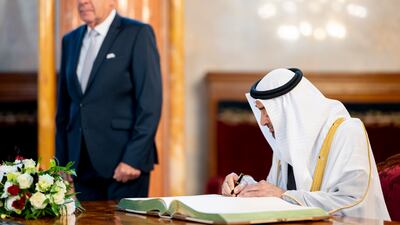
Sheikh Mohamed signs a guest book at the Parliament Building -

Both sides reaffirmed their commitment to strengthening UAE-Hungary relations and exploring new opportunities for collaboration across a variety of sectors -
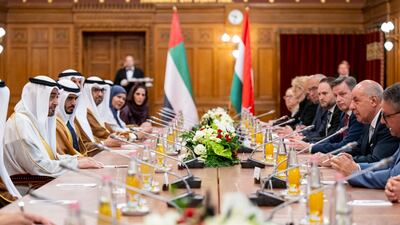
Sheikh Mohamed and Mr Sulyok during an official reception -

A gift from Hungary is displayed during the reception -
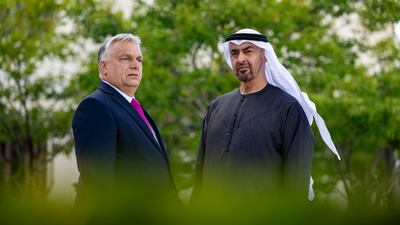
President Sheikh Mohamed and Prime Minister Viktor Orban of Hungary tour the Carmelite Monastery -
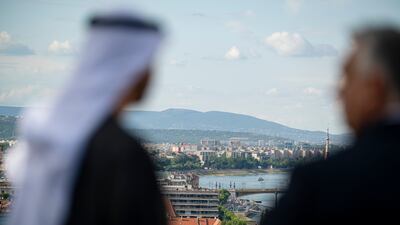
President Sheikh Mohamed and Prime Minister Viktor Orban of Hungary tour the Carmelite Monastery -
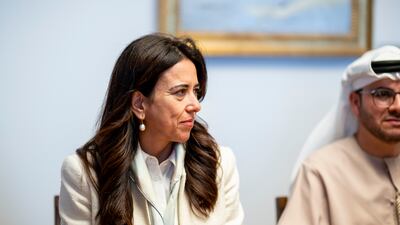
Lana Nusseibeh, UAE Assistant Minister for Political Affairs, attends a meeting with Prime Minister Viktor Orban, at Carmelite Monastery -

President Sheikh Mohamed is received by Prime Minister Viktor Orban of Hungary at Carmelite Monastery -
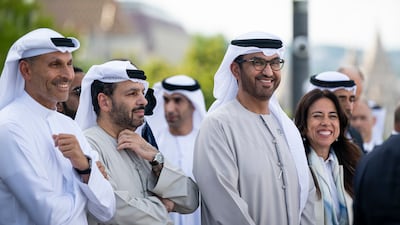
Khaldoon Al Mubarak, Chairman of the UAE Executive Affairs Authority and Managing Director and Group Chief Executive of Mubadala Investment Company, Faisal Al Bannai, Adviser to the UAE President for Strategic Research and Advanced Technology Affairs, Dr Sultan Al Jaber, UAE Minister of Industry and Advanced Technology and Managing Director and Group Chief Executive of Adnoc, and Lana Nusseibeh, UAE Assistant Minister for Political Affairs, tour the Carmelite Monastery -
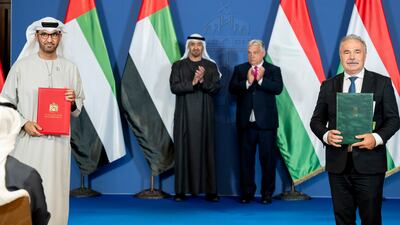
Sheikh Mohamed and Mr Orban witness the exchange of a Memorandum of Understanding on Investment Co-operation in Food and Agriculture, between the UAE and Hungary. Seen exchanging are Dr Sultan Al Jaber, UAE Minister of Industry and Advanced Technology, Managing Director and Group Chief Executive of Adnoc and Chairman of Masdar, and Istvan Nagy, Minister of Agriculture of Hungary -

President Sheikh Mohamed and Prime Minister Viktor Orban of Hungary at the Carmelite Monastery -
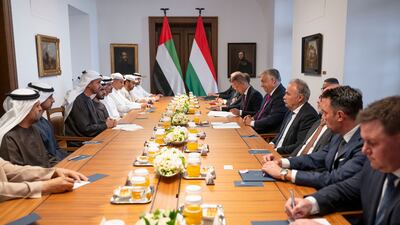
The two sides praised the significant progress made in furthering relations


He also repeated the UAE’s consistent approach of “building bridges of co-operation with countries around the world and continuing to foster productive partnerships based on collaboration and mutual interests”, Wam said.
Sheikh Mohamed and Mr Orban also witnessed the signing of agreements in areas including data centres and artificial intelligence projects, renewable energy, food and agriculture, family and youth policy, government development, energy storage systems and defence.
Mr Orban later hosted a state dinner in honour of the President and the Emirati delegation, which was attended by Hungarian ministers and senior officials.

