
Pope Leo XIV on Monday prayed for calmer times in Lebanon and the Levant, and delivered a message of faith to leaders that "unity, reconciliation and peace are possible", on the first full day of his visit to the country.
Worshippers braved dismal weather and lined the streets leading to St Maroun Monastery in Lebanon's mountainous village of Annaya, about 40km from Beirut. The Pope prayed in French at the tomb of the revered St Charbel as a choir sang nearby.
“Sisters and brothers, today we entrust to St Charbel’s intercession the needs of the Church, Lebanon and the world," he said. "For the world, we ask for peace. We especially implore it for Lebanon and for the entire Levant."

Speaking to guests, including clergy, at the tomb, the pontiff presented a lamp as a gift. "In offering this lamp, I entrust Lebanon and its people to the protection of St Charbel, so that they may always walk in the light of Christ," he added.
Pope Leo's visit to Lebanon has been a rare moment of hope for the country, which faces daily attacks from Israel and remains deeply divided over issues including the disarmament of Hezbollah.
Pope Leo in Lebanon – in pictures
-
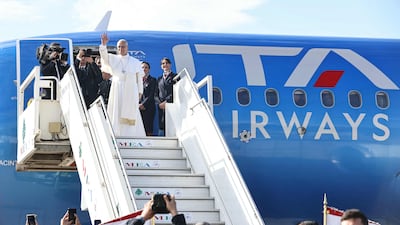
Pope Leo XIV waves as he leaves Beirut International Airport. AFP -
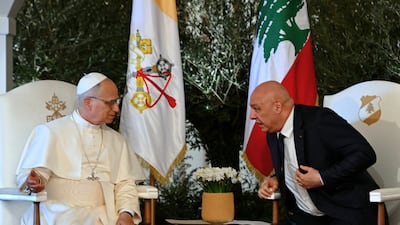
Pope Leo speaks to Lebanese President Joseph Aoun during a farewell ceremony at the airport. AP -
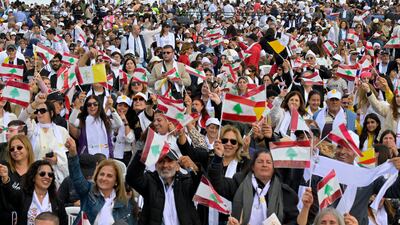
People wave Lebanese flags at a mass led by Pope Leo at the Beirut waterfront. EPA -
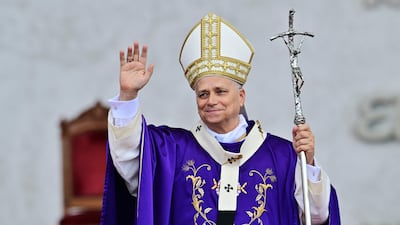
The Pope waves at the end of the mass. AFP -
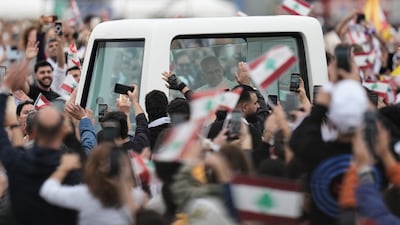
Pope Leo arrives at Beirut waterfront. AP -
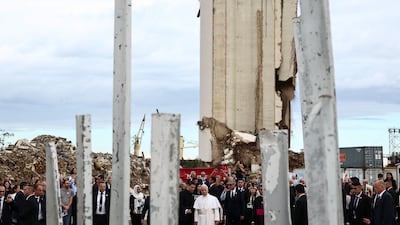
The pontiff holds a silent prayer at the site of the 2020 Beirut port blast. AFP -
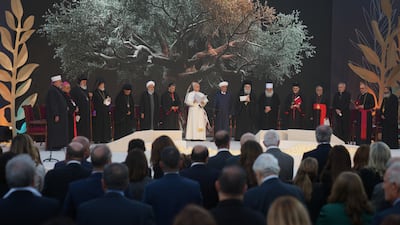
Pope Leo attends an ecumenical and interreligious meeting near the Mohammad Al Amin Mosque, in the Martyrs' Square in Beirut. AP -
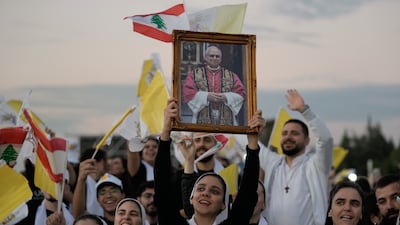
People hold aloft a portrait of Pope Leo as an expectant crowd awaits his arrival in Bkerki. AP -
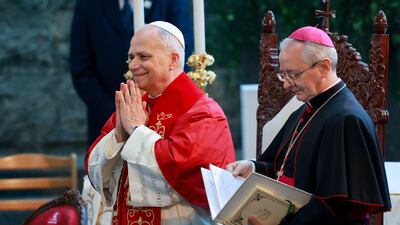
The Pope arrives to meet bishops, priests, consecrated people and pastoral workers at the Shrine of Our Lady of Lebanon in Harissa. Reuters -
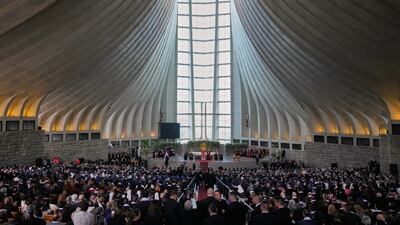
A crowd attends the gathering at the Catholic Basilica of Harissa. AP -
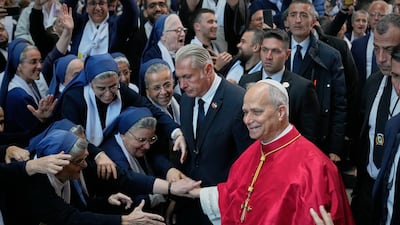
Nuns reach out to Pope Leo as he arrives at the Catholic Basilica of Harissa. AP -
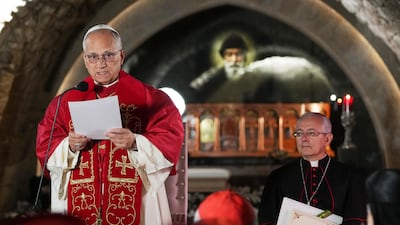
Pope Leo delivers a speech in front of the tomb of St Charbel Makhlouf at the Monastery of St Maroun, in Annaya. EPA -

Pope Leo visits the Monastery of the Carmelite Sisters of the Theotokos in Harissa. EPA / Vatican Media -
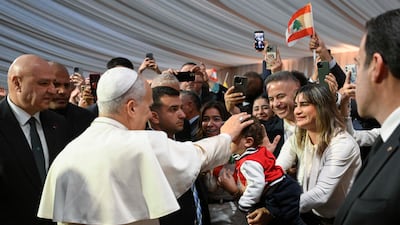
Pope Leo blesses a child during a warm welcome as he arrives in the country at Beirut International Airport. EPA -
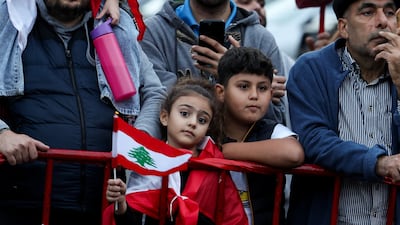
A child holds a Lebanese flag on the day Pope Leo arrives in Lebanon. Rueters -
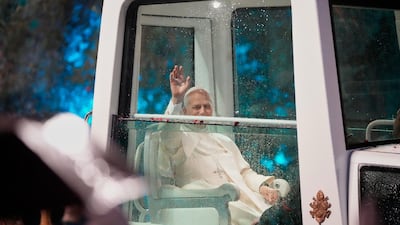
Pope Leo arrives for a welcoming ceremony at the Presidential Palace in Baabda, east of Beirut. AP -
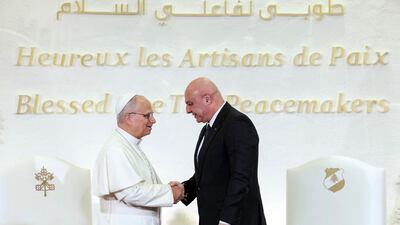
Pope Leo meets Lebanese President Joseph Aoun at the Presidential Palace. AFP -
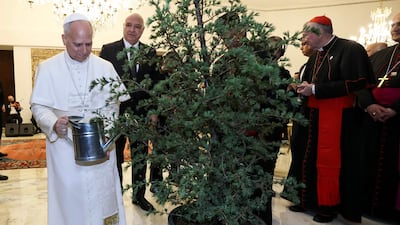
The pontiff, watering a tree next to President Aoun, was making his first foreign trip on a six-day visit to Turkey and Lebanon. AFP -
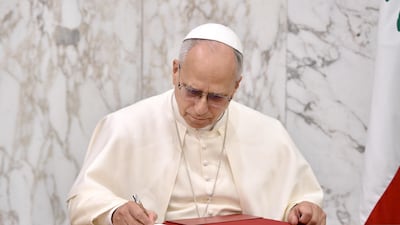
He wrote a dedication in the guest book at the end of his courtesy visit. EPA -
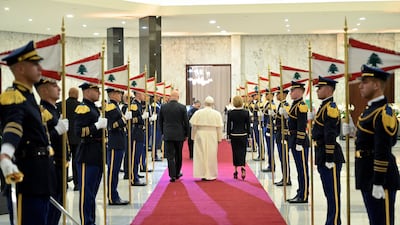
Pope Leo, President Aoun and his wife Neamat, the first Lady of Lebanon, review a guard of honour. EPA -
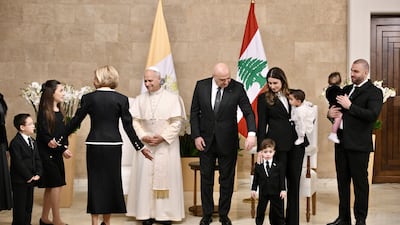
Pope Leo meets President Aoun's family. AFP -

Pope Leo receives a gift at the Presidential Palace. Reuters -
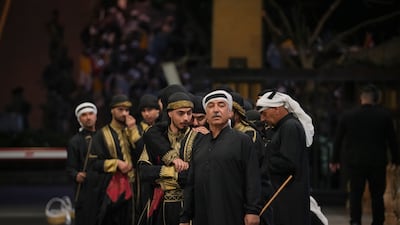
Members of different groups perform during Pope Leo's visit to the Presidential Palace. Getty Images -
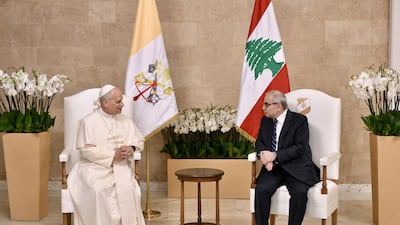
Pope Leo meets Lebanese Prime Minister Nawaf Salam. AFP


From St Charbel’s monastery, Pope Leo went to the Shrine of Our Lady of Lebanon in Harissa to meet bishops and priests, as well as pastoral workers who all gave him a noisy welcome.
There a giant statue of Our Lady of Lebanon overlooks the Mediterranean from a steep hilltop. The shrine is visited by Lebanese of all faiths, and Pope Leo called it "a symbol of unity for the entire Lebanese people".
"I am reminded of the responsibility we all bear towards young people," Pope Leo said.
"It is necessary, even among the rubble of a world that has its own painful failures, to offer them concrete and viable prospects for rebirth and future growth," he added.
Later on Monday, he held interfaith talks in Beirut's Martyr's Square, which has long been a symbol of meetings between Lebanon's various faiths, as well as a site of protest. The leaders of many religious groups, Muslim and Christian, gave speeches at a makeshift tent in the square.
He told leaders of Lebanon's various faiths: “Here in this beloved land may every bell toll, every adhan, every call to prayer blend into a single, soaring hymn – not only to glorify the merciful creator of heaven and Earth, but also to lift a heartfelt prayer for the divine gift of peace.”
He said even in times of uncertainty, the Lebanese and their multitude of faiths "remind us that fear, distrust and prejudice do not have the last word, and that unity, reconciliation and peace are possible".
Abdul Latif Derian, the Grand Mufti of Lebanon, described the Pope's visit as a moment of "great joy" for a "country of coexistence and confessional diversity".
Rounding off the day, about 15,000 young people gathered for an event with the Pope on Monday evening outside the Maronite Catholic headquarters in Bkerke.
St Charbel, a hermit who died in 1898, is revered for his piety and miracles of healing. Since his death, Annaya has become one of Lebanon’s most important pilgrimage destinations for those seeking his blessing.

Pope Leo arrived in Lebanon to much fanfare on Sunday afternoon and was greeted by President Joseph Aoun and other leaders. In a speech, the Pope delivered a message of peace and persistence despite the country's difficulties.
He also praised the resilience of the Lebanese people and acknowledged the "highly complex, conflictual and uncertain" situation in the region.
On Tuesday, the last day of his visit, the Pope will hold a silent prayer at the Port of Beirut where in August 2020 an intense explosion led to the deaths of more than 220 people and devastated much of the city.
He was to hold a mass at the Beirut waterfront for tens of thousands of worshippers, before departing Lebanon to return to the Vatican.
The Pope's visit to Turkey and Lebanon is his first overseas trip since his election in May. The late Pope Francis, his predecessor, had hoped to make similar visits, with this year marking the 1,700th anniversary of the Council of Nicaea in what is now Iznik in Turkey. But Pope Francis's ailing health prevented that before his death in April.

