
Live updates: Follow the latest on Israel-Gaza
Powerful explosions rocked central Beirut in the early hours of Saturday as five Israeli air strikes hit an eight-storey building in the densely populated Basta neighbourhood. At least 20 people were killed and 66 injured, according to the Lebanese Health Ministry.
The air strikes at around 4am marked the fourth attack by Israel on central Beirut this week as US-brokered negotiations to stop its war with Hezbollah reached a critical stage. Ground fighting has also intensified along the border in southern Lebanon, which Israel invaded in late September as part of an escalation against Lebanese armed group.
Israel used bunker-buster bombs in Saturday's attack, which left a large crater, Lebanon's state-run National News Agency reported. One building was destroyed and several others nearby were damaged, it said.
Civil defence rescuers on the scene said that around 30 people were missing. The death toll is expected to rise as rescuers are still identifying victims through DNA testing of remains found at the site. The smell of burning explosives lingered in the capital hours after the attack.
Images and video circulating online showed rescuers rushing to the site amid smoke and the sound of ambulance sirens. In one video, a man reportedly filming from his balcony next to the strike site says his relatives' home was completely destroyed. “There was five buildings there, full of people, they’re all gone,” he says.
-
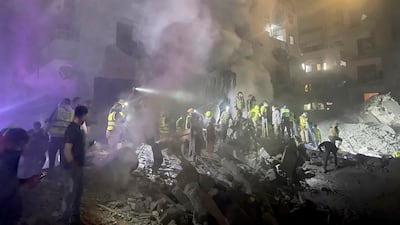
Emergency workers and volunteers search for victims at the site of an Israeli air strike in central Beirut, Lebanon. AP -
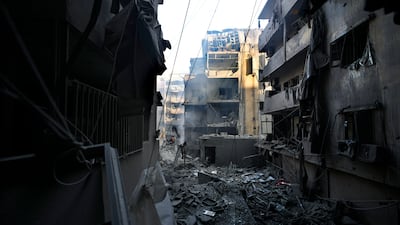
The Israeli air strikes destroyed and eight-storey building and damaged others in central Beirut's Basta district. AP -
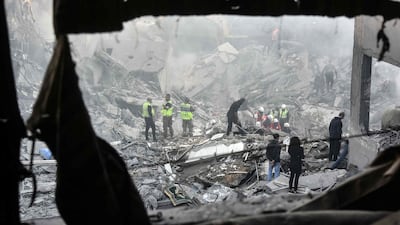
Rescuers sift through the rubble of a levelled building in Basta. AFP -
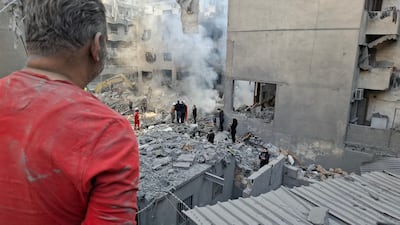
A man looks on as rescuers sift through the rubble of a levelled building in Basta. AFP -
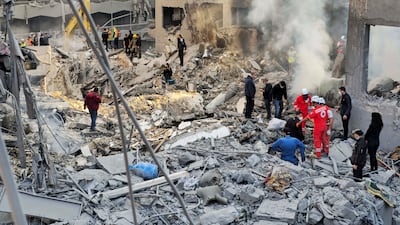
Rescuers search for survivors and victims' bodies. AP -
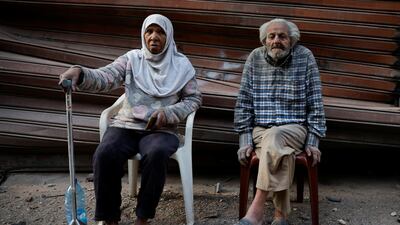
Elderly people near the site of the Israeli strike in Basta. Reuters -
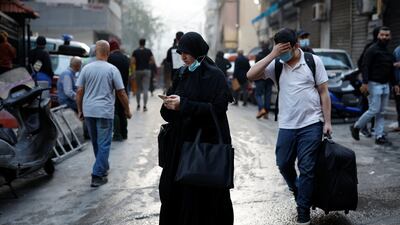
People leave the area of the attack in Basta. Reuters -

The search for survivors and victims' bodies continues. AP -
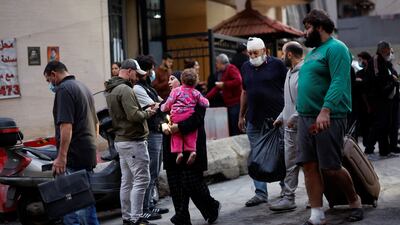
Residents flee Basta with few belongings. Reuters -
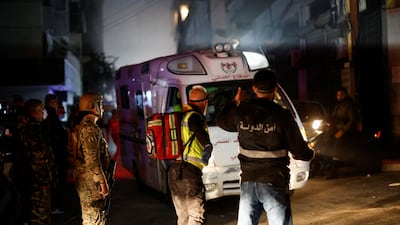
Ambulances at the site of the strike. Reuters


AFP, citing a Lebanese security source, reported that the target of the strike was a senior Hezbollah official, whose fate remains unclear. Israel and Hezbollah did not immediately comment. Hezbollah MP Amin Sherri has denied the presence of any Hezbollah members in the targeted building.
The last reported Israeli air strike on Basta was on October 10. The strike, which hit just dozens of metres away from the latest attack, killed 22 people. It was aimed at Hezbollah’s liaison and co-ordination unit chief, Wafiq Safa, who reportedly survived.
Hours after the latest strike, Israel bombed the Hadath and Chouaifet El Aamroussieh neighbourhoods in southern Beirut, less than 10km south of Basta, after issuing eviction orders to residents.
Israel has bombed southern Beirut heavily since it launched an all-out offensive against Hezbollah in late September, but attacks on central Beirut have been relatively rare until the past week.
The strike in Basta follows an air strike in Ras Al Nabaa last Sunday, which killed Hezbollah media chief Mohammad Afif and two other people. A busy shopping street in the Mar Elias district was struck hours later, killing three people, while the Zuqaq Al Blat district, near the Lebanese parliament and prime ministerial office, was hit on Monday night.
US special envoy Amos Hochstein arrived in Beirut on Tuesday to push forward a ceasefire proposal drafted by Washington. He extended his visit by a day amid signs of progress in the negotiations, before travelling to Israel on Thursday. Instead of returning to Lebanon after his meetings with Israeli officials, Mr Hochstein went straight back to the US, indicating that there had been a deadlock over the terms.
In a televised speech delivered on Wednesday, Hezbollah leader Naim Qassem said the group was prepared for a “war of attrition” if negotiations failed, threatening attacks on central Tel Aviv.
A key sticking point in the US-drafted deal is a provision giving Israel the right to strike in Lebanon in “self defence” even after the truce takes effect, sources familiar with the negotiations told The National.
“The Israeli side expects to achieve through the agreement what it could not secure in war, and this is not possible,” Mr Qassem said in his speech.

