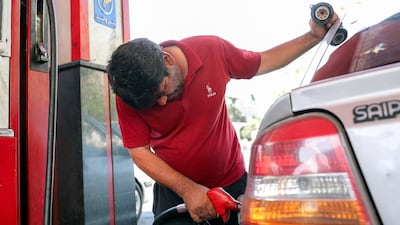

Iran is raising the price of petrol for heavier users as the country's wartime economy comes under growing strain, with a widening fuel deficit exposing the limits of its ability to maintain subsidised supplies.
The move risks adding to the pressure on households already facing the economic effects of the conflict, while reviving memories of the 2019 fuel-price protests that erupted into nationwide unrest.
The petrol squeeze is also being compounded by the economic pressure of the war. US-imposed sanctions and a naval blockade restricting shipping to and from Iranian ports have sharply constrained Tehran's ability to earn oil revenue and import the fuel needed to cover its domestic shortfall.

This has intensified with US strikes on Iranian oil tankers. Axios reported last week that a US official described a newly approved “tanker for tanker” policy under which Iranian tankers are targeted in retaliation for Iranian attacks on commercial shipping. US forces subsequently struck several Iranian tankers in a further escalation of US President Donald Trump's campaign to restrict Iran's oil trade and its access to foreign currency.

The pressure is also being reflected in Iran's collapsing currency. The rial has plunged to a record low of about 2.27 million rials per US dollar.
Under the new measure, announced on Sunday night, Iranian motorists using more than 110 litres of petrol a month will pay 100,000 rials (about $0.04) a litre – double the existing top-tier price. The first 60 litres will remain at 15,000 rials a litre and the next 50 litres at 30,000 rials a litre.
The first signs of a public reaction have emerged before the newly announced price rise takes effect on Tuesday, with queues reported at petrol stations in several cities as motorists seek to fill up at lower rates.
The rush comes as Iran faces a growing petrol shortage. Iranian officials have put the shortfall at roughly 14 million to 15 million litres per day. The gap between consumption and domestic production predates the war, but the conflict, sanctions and blockade have made it harder to compensate through imports.
One senior Iranian source told Reuters last week that Iran had only about two months' supply of petrol remaining, partly because limited refining capacity has forced the country to import fuel.
'Spark in a powder keg'
Government spokeswoman Fatemeh Mohajerani said the government needed to address an imbalance between supply and demand caused by rising consumption.
“Given the circumstances ... this has disrupted the balance between supply and demand,” Ms Mohajerani said on Sunday night, referring to the country’s war-hit economy.
“In order to maintain the sustainability of supply and demand, and strengthen national resilience, we need to correct this situation,” she said on state television.
The government had taken measures to increase production and reduce consumption through public transport and the conversion of vehicles to compressed natural gas (CNG) and liquefied petroleum gas (LPG), she said.
Ms Mohajerani said 85 per cent of Iranians would have their needs met by the existing 110-litre subsidised allocation.
"All revenue resulting from this increase will be spent on people's livelihoods," she said.

Footage circulating online showed queues at petrol stations in Tehran, Isfahan and other cities after the announcement, with motorists seeking to buy fuel at the lower rate before the increase.
Petrol stations in several cities had already been experiencing long lines ahead of Sunday's announcement.
In November 2019, a sudden fuel price increase triggered nationwide protests that quickly expanded into broader anti-government unrest. Security forces responded with a deadly crackdown and an internet shutdown. At least 1,500 people were reportedly killed.
The issue has already generated warnings from within the political establishment. Hossein Samsami, a member of parliament’s energy commission, said last month that raising petrol prices under current conditions could be like a “spark in a powder keg”.

