



Live updates: Follow the latest news on Israel-Gaza
The UN's highest court has ordered Israel to take all measures to prevent genocide against Gazans and allow vital aid into the Palestinian enclave, but stopped short of demanding it halt its military campaign.
Outlining the case, court president Joan Donoghue, an American lawyer who advised on foreign policy during the Obama administration, said the court was “acutely aware of the extent of human tragedy unfolding in the region and is deeply concerned about the continued loss of life and human suffering”.
The International Court of Justice did not rule at this stage on the core of the case brought by South Africa on whether genocide has occurred in Gaza. But it recognised the right of Palestinians to be protected from acts of genocide, which it described as “plausible”.
A panel of 17 judges at the ICJ dismissed Israel's bid to throw out the case and ordered it to report back in a month, also outlining six provisional measures to protect Palestinians in Gaza.
By not calling for a ceasefire while also stating that there is a possibility of genocide in Gaza, the court paved the way for both Israel and South Africa to claim they had scored a diplomatic victory.
What the ICJ decided

In its interim order, the court ruled:
- Israel must take all measures within its power to prevent the act of genocide (15 votes to two)
- Israel must ensure the military does not commit acts of genocide (15 votes to two)
- Israel must take all measures within its power to prevent or punish incitement of genocide (16 votes to one)
- Israel must ensure humanitarian assistance to Gaza (15 votes to one)
- Israel must prevent the destruction of allegations of acts of genocide (15 votes to two)
- Israel shall report to the court within one month (15 votes to two)
'A significant milestone in the search for justice'
The South African government described the interim ruling as a “significant milestone in the search for justice for the Palestinian people”.
“I would have wanted that the word 'cessation' be included in the judgment, but I’m satisfied with the directives that have been given,” South Africa's Foreign Affairs Minister Naledi Pandor told reporters in The Hague.
“It’s now a test for the government of the people of Israel as to whether they will act in a manner that says all of us must respect international law.”
The ministry's director-general Zane Dangor played down the court not calling for a ceasefire.
“We called for an end to the military operations, and an end to the military operations in its current forms is definitely implied in this order,” said Mr Dangor.
Palestinian Foreign Minister Riyad Al Maliki welcomed the provisional measures, saying “the ICJ judges assessed the facts and the law, they ruled in favour of humanity and international law”, while a senior Hamas official called the decision “an important development that contributes to isolating the occupation and exposing its crimes in Gaza”.
"It is a historic day and we are in close collaboration and consultation with South Africa," said Palestinian ambassador to the UN Riyad Mansour, adding that he had called for an emergency Arab Group meeting on the ruling.
"We are digging into all the details in order to take the appropriate steps, which, of course, these steps will be in the Security Council ... So fasten your seat belts."
In a statement, Israeli Prime Minister Benjamin Netanyahu hailed the court's decision not to call for a ceasefire while also criticising South Africa.

“The charge of genocide levelled against Israel is not only false, it’s outrageous, and decent people everywhere should reject it,” said Mr Netanyahu.
Israel's National Security Minister Itamar Ben-Gvir mocked the court in a post on X, which read: “The Hague Shmague.”
In the sweeping ruling, a large majority of the 17-judge panel voted for urgent measures, which covered most of what South Africa asked for with the notable exception of ordering a halt to Israeli military action in Gaza.
The court quoted UN statements describing the high level of suffering of civilians in Gaza as well as inflammatory calls to kill Palestinian civilians made by Israeli government ministers.
“The court considers that the catastrophic humanitarian situation in the Gaza Strip is at serious risk of deteriorating further before the court renders its final judgment,” said Ms Donoghue.
She said that recent statements by Israel's attorney general that calling for intentional harm to civilians represents a criminal offence were “encouraging” but “insufficient”.
The court also said it was “gravely concerned” about the fate of Israeli hostages in Gaza and called on Hamas and other armed groups to immediately release them without conditions.
“All parties to the conflict in the Gaza Strip are bound by international humanitarian law, which includes Hamas,” said Ms Donoghue.

Judges demanded that Israel refrain from engaging in acts of genocide, which include killing, deliberately inflicting conditions of life calculated to bring about a group's physical destruction in whole or in part, and imposing measures intended to prevent births.
South Africa on December 29 brought the case requesting emergency measures against Israel, accusing it of committing state-led genocide in the Palestinian enclave.
The case will now move on to the “merits” stage, during which judges will determine whether Israel is actually committing genocide in Gaza. However, the merits of the genocide allegations may take years to decide.
Observers said that the provisional measures were in line with was expected.
“The court could have done more? Yes. The court could have done less? Yes. Is this a 'win' for South Africa? Yes. Is it the best win of the century? No,” Alonso Gurmendi, lecturer on international relations at the University of Oxford, wrote on X.
The judges
The panel of 17 judges include an American, a Russian and one each from Israel and South Africa.
The ICJ has 15 permanent judges who serve a nine-year term, are elected by UN members and swear to be impartial as they hear disputes between states.
Both Israel and South Africa made use of their right to nominate an “ad hoc judge” to hear their case.

The only judge to object to all measures was Ugandan judge Julia Sebutinde. In a dissenting opinion, Ms Sebutinde argued that the dispute between Israel and the people of Palestine was essentially political and not to be settled by the ICJ.
Israeli ad hoc judge Aharaon Barak opposed most measures except calling on Israel to punish public incitement to commit genocide and the urgent provision of humanitarian assistance to the enclave.
A Holocaust survivor, Mr Barak said in a separate opinion that genocide was “more than just a word for him: it represents calculated destruction and human behaviour at its very worst”.
The “appropriate legal framework for analysing the situation in Gaza is international humanitarian law, and not the Genocide Convention”, he said.
ICJ rules not to throw out genocide case against Israel – in pictures
-
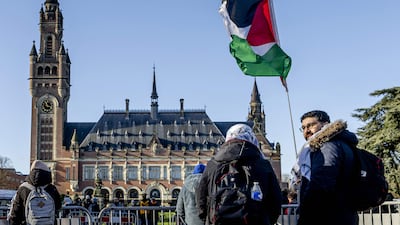
A demonstrator waves the Palestinian flag in front of the Peace Palace, which houses the International Court of Justice, in The Hague. AFP -
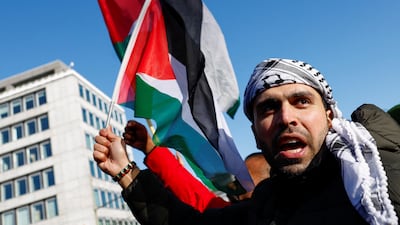
A pro-Palestinian demonstrator outside the International Court of Justice which was delivering an interim ruling on South Africa's genocide case against Israel. Reuters -
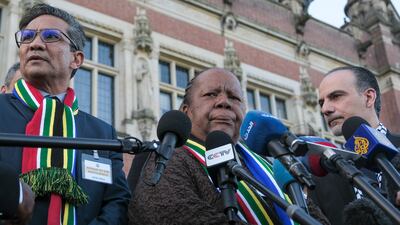
South Africa's Foreign Minister Naledi Pandor, centre, addresses reporters after the court session. AP -
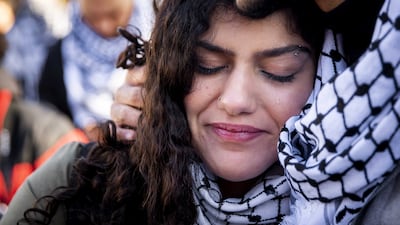
People embrace during a demonstration in solidarity with the Palestinian population, in The Hague. EPA -
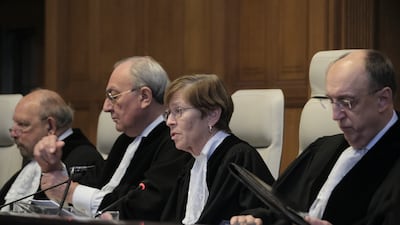
Presiding judge Joan Donoghue speaks during the session at the International Court of Justice. AP -
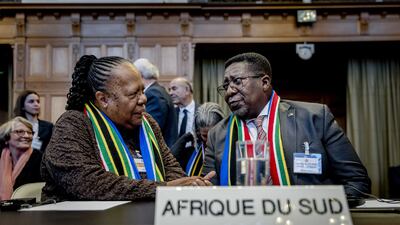
South African Foreign Minister Naledi Pandor and Vusimuzi Madonsela, the country's ambassador to the Netherlands, confer during the session. EPA -
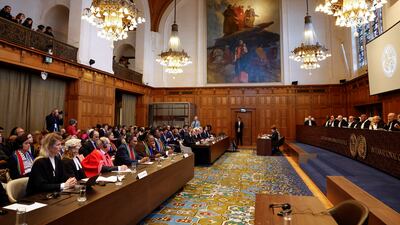
Judges at the International Court of Justice. Reuters -
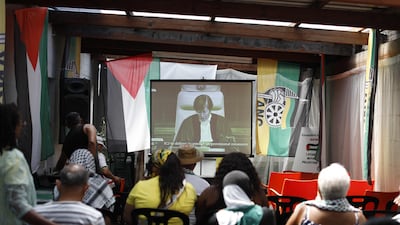
Residents gather at the Dullah Omar Centre in Cape Town to watch the ruling in The Hague. AFP -
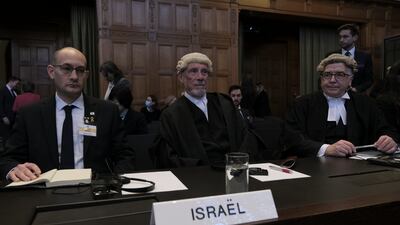
British jurist Malcolm Shaw, centre, and Gilad Noam, left, Israel's Deputy Attorney General for International Affairs, attend the session. AP -
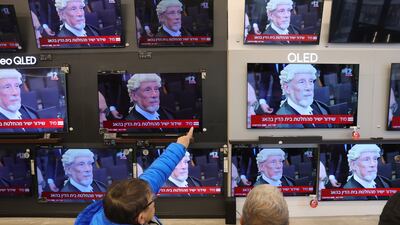
Israelis watch a live stream of the court session at a TV shop in Jerusalem. EPA -
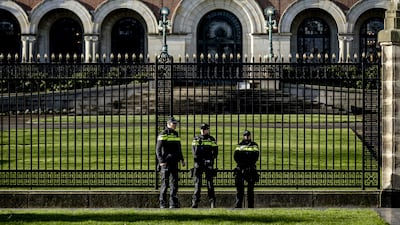
Police officers in front of the Peace Palace. EPA -
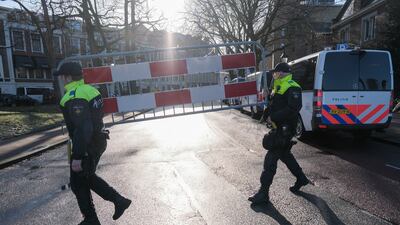
Police carry a security fence near the Peace Palace. AP
Ongoing battle in Khan Younis
The Israeli military said on Friday it was still engaged in “intensive battles in the heart of Khan Younis”, the main city in the south of the enclave, with forces striking dozens of Hamas fighters and infrastructure from the air and ground.
It said forces had also fired at Hamas targets in northern Gaza and along the coastline.
Gaza officials said on Thursday that Israeli strikes had killed 20 Palestinians queuing for food aid in Gaza city, 11 in the central Al Nusseirat refugee camp and at least 50 in the previous 24 hours in Khan Younis.
In more than three months of war, Israel's campaign has levelled much of the enclave, displaced about 1.9 million Palestinians and killed more than 26,000, according to Gaza officials.
The conflict began in October after militants from Hamas, which rules Gaza, stormed into southern Israel, killing 1,200 people and taking 240 hostages.

