

Follow the latest Sudan updates here
Evacuation efforts have intensified in Sudan after a US and Saudi-brokered 72-hour ceasefire came into effect at midnight on Monday.
Local media reported a “cautious calm” in parts of Khartoum — but many residents in the city said they woke up to shelling on the first day of the three-day truce.
“Waking up to heavy gunfire, despite the announced US-sponsored ceasefire,” Hamid Khalafallah wrote on Twitter.
“Literally under shots and heavy artillery from morning in Kafouri, no ceasefire has been honoured ever since this war started,” Zeinab Mubarak said.
Reports of sporadic gunfire continued into Tuesday afternoon.
Videos posted on social media appeared to show civilians walking down a street in Khartoum North, where almost every building was destroyed and smoke rose from the ruins.
Some witnesses said warplanes were flying overhead.
More than 420 people have been killed since fighting broke out between the Rapid Support Forces (RSF) paramilitary group and Sudan's army 10 days ago.
Egypt said a member of its diplomatic mission, Mohammad Al Gharawi, was killed on his way to the embassy in Khartoum.
Three previous ceasefires have failed, so the outlook is uncertain, but some local groups assisting in evacuations are reporting that humanitarian corridors have been created.
The Refugees in Egypt platform, helping people leave Sudan into Egypt, said the corridors are also helping the wounded get the medical help they need.
Meanwhile, fears are mounting that civilians will be in even bigger danger when foreigners leave the country.
UN Secretary General Antonio Guterres has warned about the consequences of Sudan's conflict extending beyond its borders, adding that the violence “could engulf the whole region and beyond”.
-
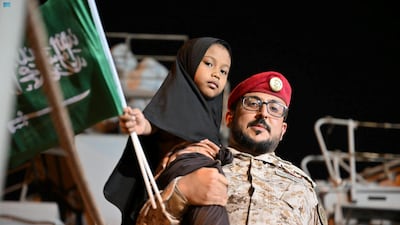
A member of the Saudi Navy carries a child from a ship at Jeddah's port during the kingdom's evacuation of civilians from Sudan. Reuters -
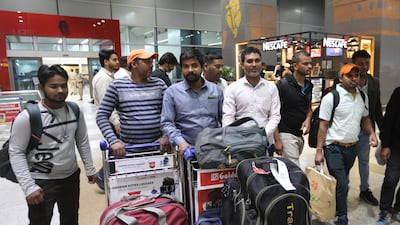
Indian nationals evacuated from Sudan arrive at Indira Gandhi International Airport in New Delhi. EPA -
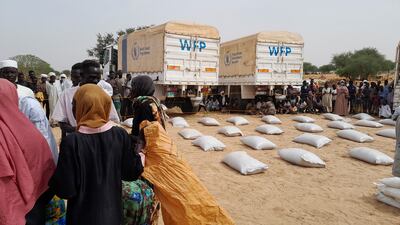
Sudanese refugees queue to receive aid from the World Food Programme near the border between Sudan and Chad in Adre, Chad. Reuters -
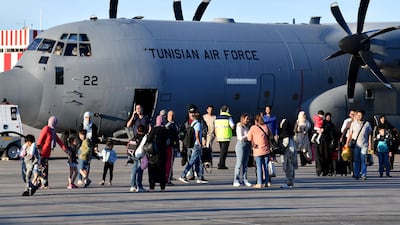
Tunisian citizens evacuated from Sudan leave a military aircraft upon their arrival at Tunis-Carthage International Airport. AFP -
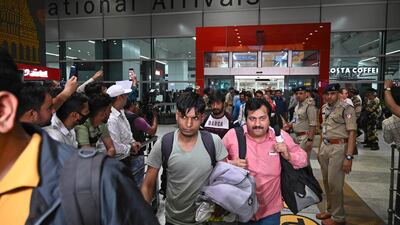
Indians evacuated from Sudan arrive on a flight at the Indira Gandhi International Airport in New Delhi, India. AP Photo -

Moroccan nationals, who have been evacuated from Sudan, arrive at Mohammed V airport in Casablanca, Morocco. EPA -
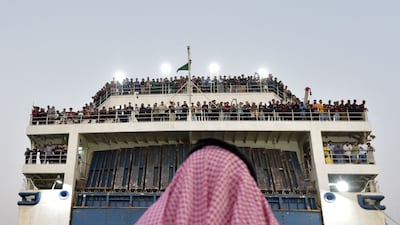
A boat with 1,687 civilians from more than 50 countries fleeing violence in Sudan, arrives at King Faisal naval base in Jeddah, Saudi Arabia. AFP -

RSF fighters in the East Nile district of greater Khartoum. AFP -
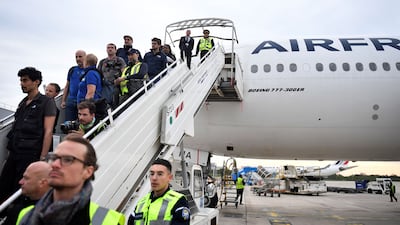
Passengers disembark a plane from Djibouti at Roissy-Charles-de-Gaulle airport near Paris after being evacuated from Sudan. AFP -
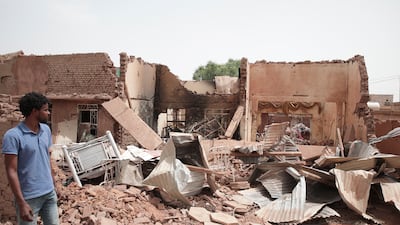
Buildings destroyed in recent fighting in Khartoum, Sudan. AP -
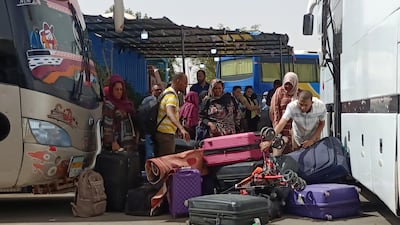
Passengers fleeing the fighting in Sudan arrive at Wadi Karkar bus station in Aswan, Egypt. EPA -
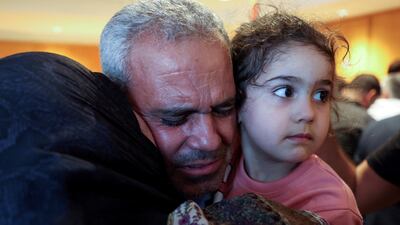
Ali Mazloum, a Lebanese citizen who was evacuated from Sudan, is welcomed upon his arrival at Beirut airport. Reuters -
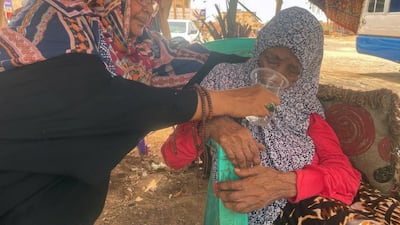
A woman helps another after fleeing clashes between the paramilitary Rapid Support Forces and the army in Khartoum. Reuters -
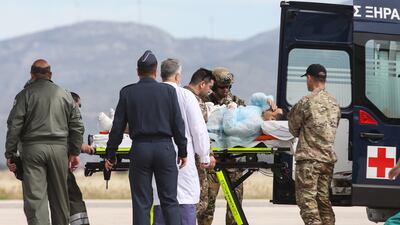
Soldiers attend to Greek citizens evacuated from Sudan as they disembark from a military aircraft in Attica, Greece. EPA -
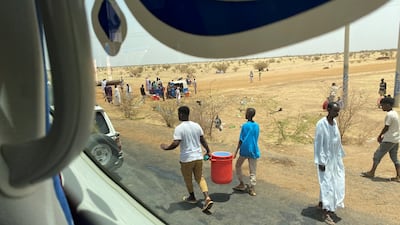
People carry hibiscus juice and cold water for those being evacuated from Khartoum to Port Sudan. Reuters -
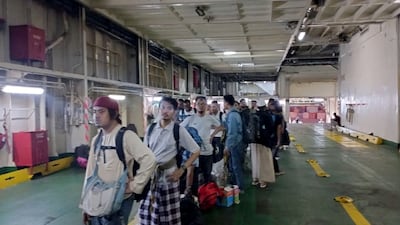
Thais wait to be evacuated by boat at a port in Sudan. EPA -
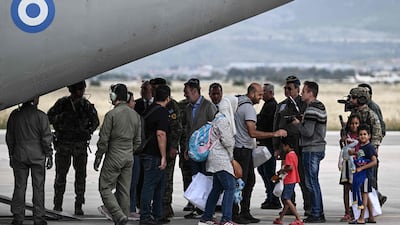
Greek citizens arrive from Sudan on a military plane in Elefsina, south of Athens. AFP -

Japan's senior Vice Foreign Minister Shunsuke Takei welcomes his country's citizens in Djibouti after they were rescued from Sudan. AFP -
A member of the Saudi Royal Navy carries a child who was rescued from Sudan, in Jeddah. Reuters -
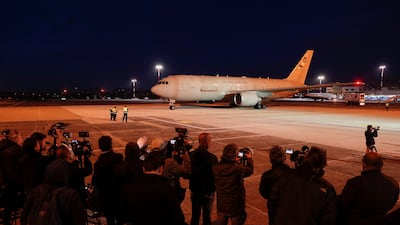
A military plane carrying evacuees arrives at Ciampino Airport near Rome, Italy. Reuters -
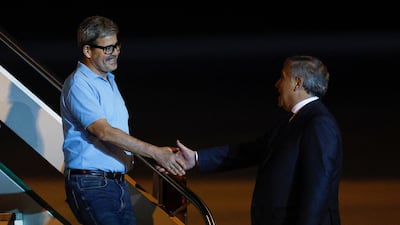
Italy's Foreign Minister Antonio Tajani greets the country's ambassador to Sudan, Michele Tommasi, as he arrives at Ciampino Airport. Reuters -
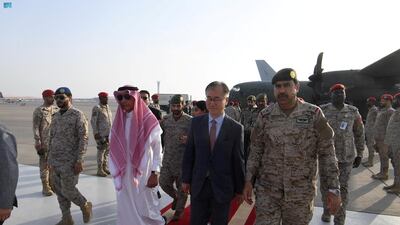
South Korea's ambassador to Saudi Arabia, Park Joon-yong, at a Saudi Air Force base in Jeddah, where he met diplomats from his country evacuated from Sudan by the kingdom's air force. Reuters -
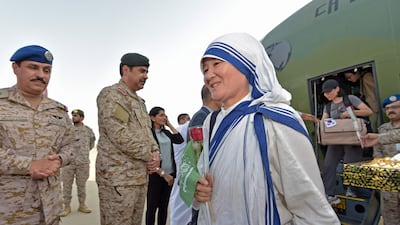
Having fled from Sudan, a South Korean nun disembarks from a military plane after landing at King Abdullah Air Base in Jeddah. AFP -
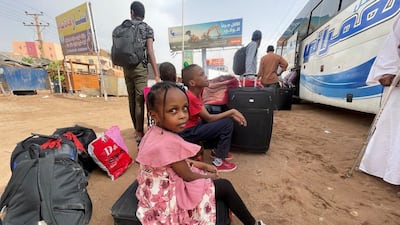
People gather as they seek to escape the violence in Khartoum. Reuters -

Spanish diplomatic personnel and citizens wait to disembark from a military plane after being evacuated from Sudan, in Djibouti. Reuters -
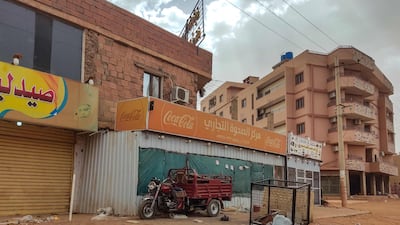
A closed pharmacy and shops in the south of Khartoum as battles rage in the capital between the army and paramilitaries. AFP -
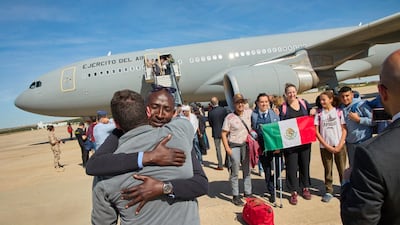
Passengers from Sudan disembark from a Spanish Air Force plane at Torrejon Airbase in Madrid. AP -
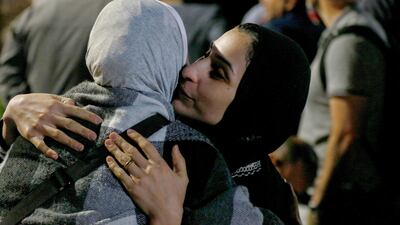
People evacuated from Sudan arrive at a military airport in Amman. AFP -
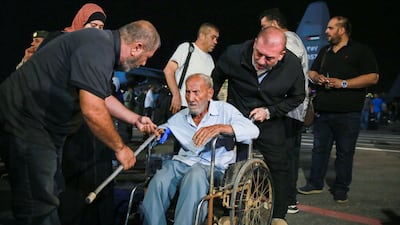
Jordan was among those countries to have rapidly flown its citizens in Sudan to safety. AFP -
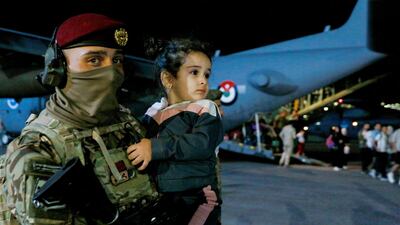
This child was one of those to have arrived safely in Amman. AFP -
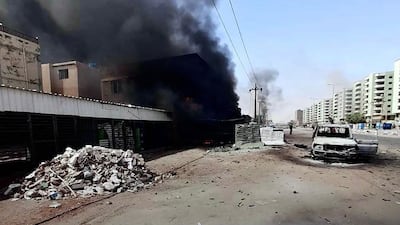
A building in Khartoum burns as violence rages in Sudan. EPA -
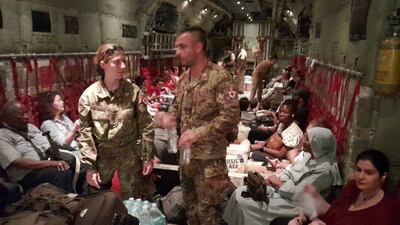
Italian citizens are flown out of the Sudanese capital on a military aircraft. Reuters -
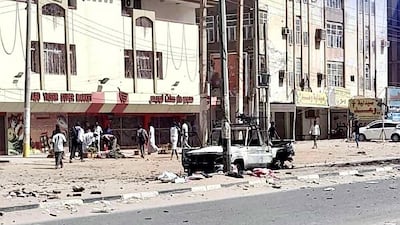
The fighting has caused heavy damage to parts of Khartoum. EPA -
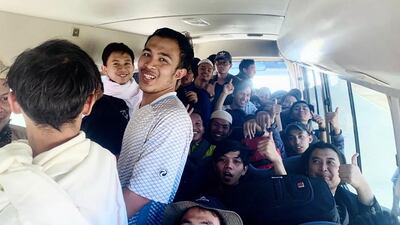
Indonesian citizens travel on a bus during an evacuation operation in Khartoum. EPA -
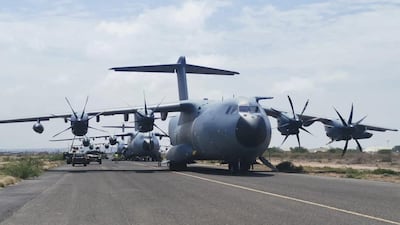
A Spanish military aircraft takes off from Khartoum as European countries rescue citizens from Sudan. Reuters -
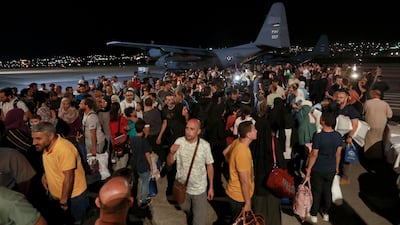
Jordanians arrive at a military airport in Amman after their evacuation from Sudan to escape the fighting. AP -

French troops arrive at an air base in Djibouti to prepare to evacuate about 100 people from Sudan. AFP -
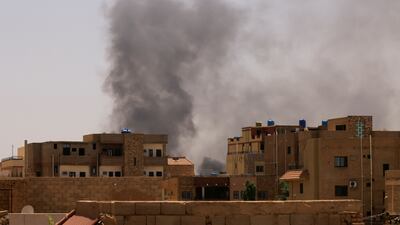
Smoke rises from buildings during clashes between the paramilitary Rapid Support Forces and the Sudanese army in Khartoum. Reuters -
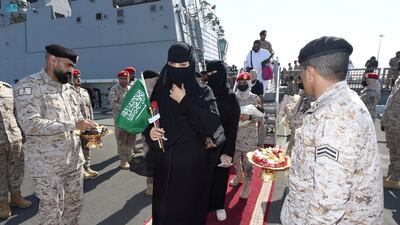
Saudis are met by Saudi Royal Navy staff as they arrive at Jeddah on the Red Sea after being evacuated from Sudan. Reuters -

The streets of southern Khartoum bear the scars of fighting between two factions of the Sudanese military. AFP -
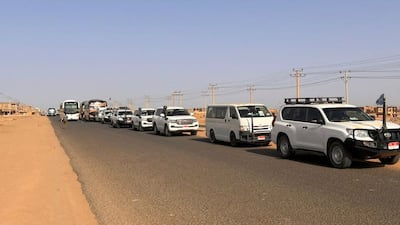
A convoy leaves Khartoum for Port Sudan as fighting between military factions in the Sudanese capital continues. AFP -

A civilian convoy leaving Khartoum for Port Sudan. AFP -

Saudi citizens and people of other nations are evacuated by the Saudi Royal Navy from Port Sudan to escape the conflict. Reuters -

A photo from October 2017 of the US embassy in Khartoum. AFP -
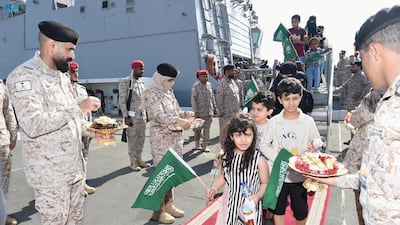
Saudi citizens are met by Saudi Royal Navy staff as they arrive at Jeddah after being evacuated from Sudan. Reuters -

Smoke hangs over Khartoum as factions belonging to the Sudanese Army and the Rapid Support Forces go back to trading gunfire after a ceasefire failed. AP


A UN convoy made the 850km journey from Khartoum, where clashes are most intense, to Port Sudan on the Red Sea coast — one of several destinations for people trying to escape the violence.
“Thirty-five hours in a not so comfortable convoy is certainly better than three hours of bombing and sitting under the shells,” UN head of mission to Sudan Volker Perthes said on Monday, after arriving in Port Sudan. Using a megaphone to speak to those with him, he assured the Sudanese people that the UN would not leave the country.
Others had a longer journey to make.
Nearly 200 people from 20 countries arrived in Jeddah on Monday night after crossing the Red Sea to Saudi Arabia.
“We travelled a long way from Khartoum to Port Sudan. It took us around 10 or 11 hours,” said Lebanese citizen Suhaib Aicha, who has operated a plastics factory in Sudan for more than a decade.
Sudan's doctors' union reported that morgues were full and that “corpses litter the streets”. Unverified videos seen by The National showed dead bodies, purportedly of fighters in uniform, from both sides. They were wrapped in blankets as they lay near what appeared to be pools of blood.
The videos were shot by civilians who had managed to leave their homes briefly to get basic necessities such as food, water and fuel, which are running dangerously short.
One Sudanese-British citizen in the UK told The National that her mother, father and sister, who are Dutch, had made it safely to an evacuation point for Dutch citizens.
“I feel so helpless,” she said, adding that her sister-in-law remained trapped in Khartoum with very little to eat.
Saudi Arabia was among the first countries to evacuate civilians from Sudan on Saturday, with 150 people landing in Jeddah.
On Monday, a C-130 Hercules military plane flew more people, including children and a nun, to Jeddah's King Abdullah Air base.
So far, 356 people have been taken from Sudan to Saudi Arabia, state news outlet SPA reported.
Saudi Arabia has been calling for calm since the fighting broke out on April 15 between the RSF's Gen Mohamed Dagalo and his former boss, Sudanese army chief Gen Abdel Fattah Al Burhan.
— With reporting from news agencies

