Yas Bay Waterfront, a vibrant leisure and entertainment district on Yas Island, will open on December 1.
The destination will bring new dining concepts to Abu Dhabi, including the Ibiza-style beach club, Cafe del Mar, known for its distinctive ambience, music and Mediterranean cuisine; Paradiso, a globally renowned Mediterranean restaurant helmed by Nicole Rubi, the woman behind La Petite Maison, and Michelin-lauded chef Pierre Gagnaire; and critically acclaimed Japanese street-food concept, Akiba Dori.
Other offerings include the trilogy by Buddha-Bar, comprising Zeera, Bushra and the Siddharta Lounge, plus Hunter & Barrel, The Lighthouse, La Carnita, Daikan Izakaya, Lock Stock & Barrel, and Asia Asia.
Several other concepts will also open by the end of the year, including Emmy Squared, Drop Cafe, and family-friendly venue, Central, set to be an entertainment complex for all ages, similar to the one found in Wavehouse at Atlantis, The Palm.
Yas Bay Waterfront offers uninterrupted views of the Arabian Gulf, which has also inspired a series of bespoke artwork on display at the destination.
International artists such as Beastman, Fatspatrol, Monkeybird, as well as Supakitch & Koralie have curated exclusive pieces, with inspiration taken from the local culture, history and environment, as well as Abu Dhabi’s architecture.
In celebrating the waterfront destination's opening, visitors can expect a line-up of daily entertainment, performances and events such as DJ nights, parades and firework displays set to take place every weekend throughout December.
“The opening of Yas Bay Waterfront is another proud milestone for Yas Island,” said Gurjit Singh, chief portfolio officer at Miral. "This new destination supports our vision for Yas Island to become a global convergence for entertainment, leisure and business, as well as an attractive location for partnerships and investment opportunities.
“We are looking forward to welcoming residents and visitors to Yas Bay Waterfront to enjoy the exceptional experiences and distinctive international culinary adventure on offer.”
Scroll through the gallery below to see Abu Dhabi's new national aquarium:
-
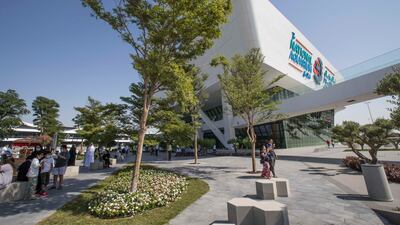
The National Aquarium Abu Dhabi opened to the public in November. All photos by Ruel Pableo for The National -
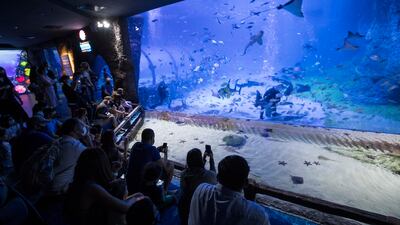
It is the first attraction to open in Al Qana, a new waterfront destination. -
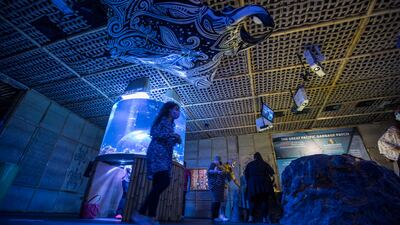
Inside The Sub, one of 10 zones in the aquarium. -
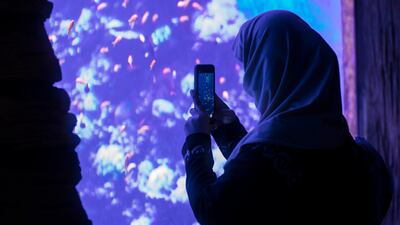
The Red Sea Wreck zone. -
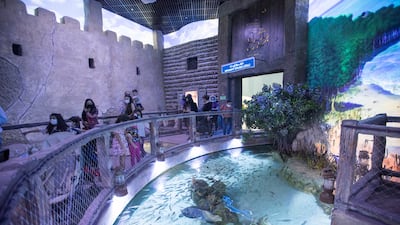
The UAE's Natural Treasures zone. -
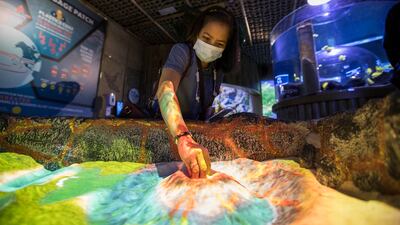
The Ring of Fire zone where guests can learn about volcanic caves and how islands are formed. -
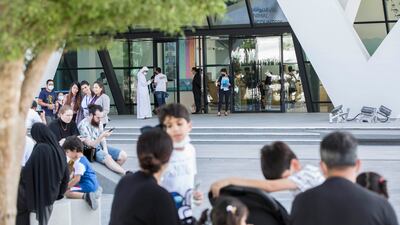
Children outside of the National Aquarium on opening day. -
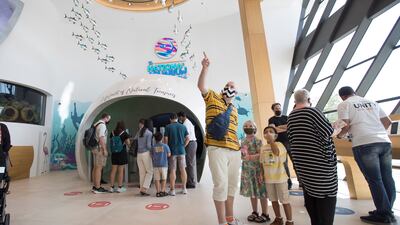
Tickets can be purchased at the door or online. Prices start at Dh105 ($28). -
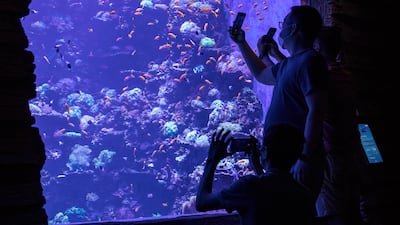
Visitors explore the Red Sea Wreck zone. -
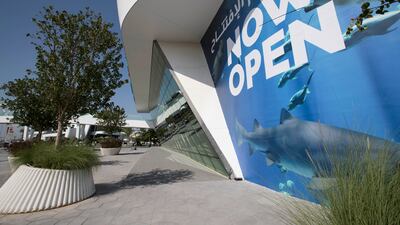
The National Aquarium Abu Dhabi is set to be joined by other attractions at Al Qana. -
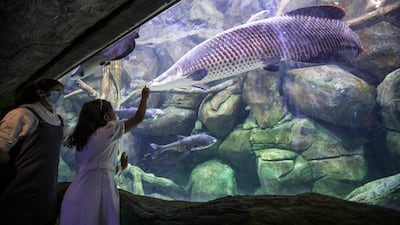
The aquarium is home to 46,000 creatures, representing 300 species. -
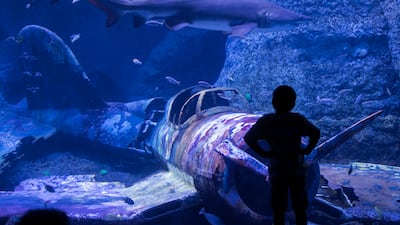
Covering more than 9,000 square metres, it is the largest aquarium in the Middle East. -
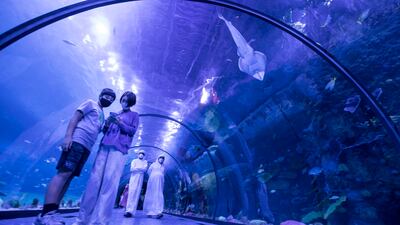
An underwater tunnel at the National Aquarium Abu Dhabi. -

Visitors can book the aquarium tour or a behind-the-scenes tour. -

The Flooded Forest zone is home to Super Snake – a female reticulated python, aged 14, that weighs 115 kilograms. -
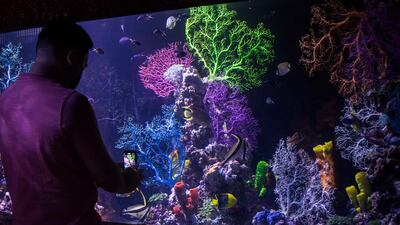
Inside the Red Sea Wreck zone visitors can can come face-to-fin with hundreds of fish. -
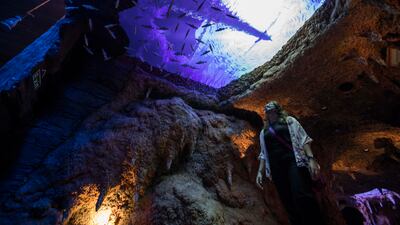
At the Atlantic Cave zone visitors can discover what really lives beneath the ocean's surface. -
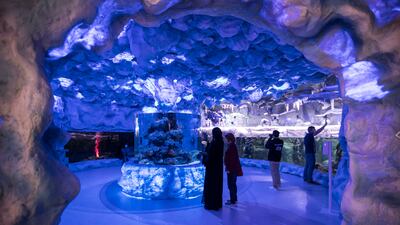
The Frozen Ocean zone. -
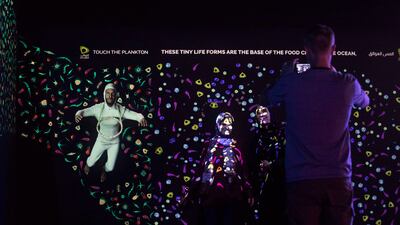
The Ocean Magic zone. -

Inside Bu Tinah Island zone. -
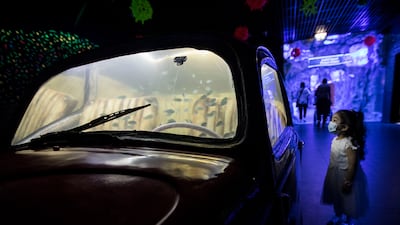
The Ocean Magic zone contains a car filled with fishes. -
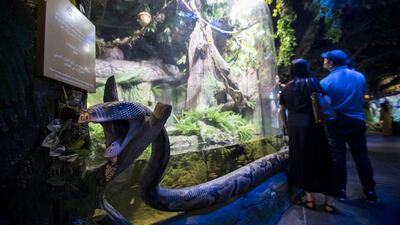
The Flooded Forest zone. -
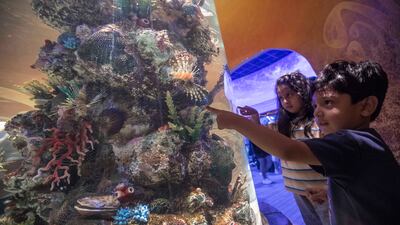
The UAE's Natural Treasures zone explores the country's rich pearl diving history.