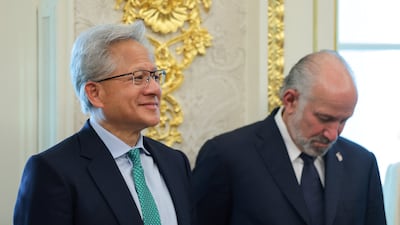

Just days after Nvidia chief executive Jensen Huang's resignation, the US Department of Commerce has finalised a rule to secure AI technology.
The Bureau of Industry and Security, an agency within the Commerce Department, announced the regulation on Monday, saying it is designed to ensure that existing restrictions on access to sensitive American technology “cannot be circumvented through remote computing arrangements involving data centres in third countries".
The BIS will be implementing more licensing requirements for AI technology exports to Indonesia, Malaysia, Singapore, Brazil and Thailand, all of which the US says have “an unacceptable risk of diversion".
The timing of the announcement will probably draw more attention to the controversy around the departure of Mr Huang, after he admitted having an affair with technology executive Alice Huang, who is suspected of spying for the Chinese government.
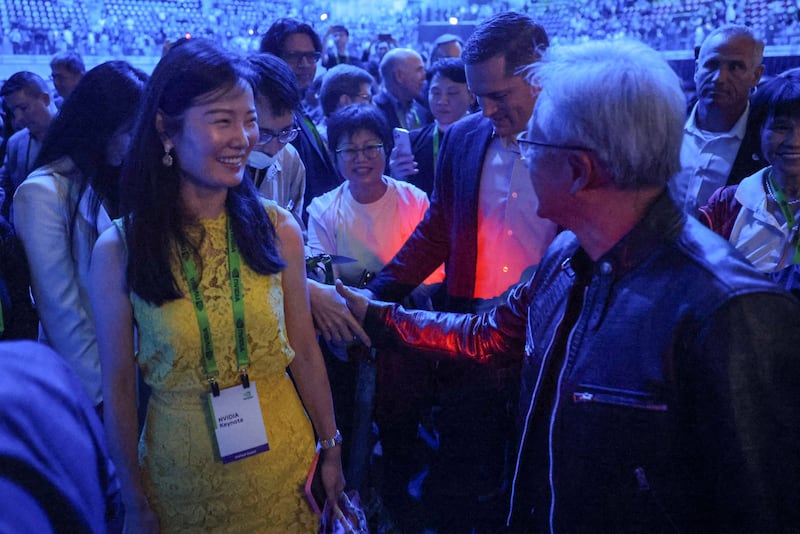
Nvidia's former chief executive had already been criticised by Democrats and Republicans for his persistent push to relax US chip export regulations designed to keep US AI technology out of China.
US President Donald Trump, who agreed to Mr Huang's request to weaken certain chip export policies, has also been under criticism, in part because of his frequent meetings with Mr Huang.
The ordeal has caused infighting in the White House. Last week, Treasury Secretary Scott Bessent accused Commerce Secretary Howard Lutnick of failing to enforce US export policy properly.
Mr Bessent told CNBC that several federal agencies, including the Department of Treasury, had wanted to put Ms Huang's company, Megaspeed, on a list of entities suspected of smuggling US technology to China.
“Commerce has the pen and BIS has the pen. You'll have to ask them about that internal process,” he said, referring to the agency led by Mr Lutnick.
Mr Trump on Monday defended Mr Lutnick and suggested that he did not put Megaspeed on an export watch list because he wanted to avoid major rifts with China.
“We're having a very good relationship with China right now and I understand both sides of it,” Mr Trump told reporters.
Democratic Senator Maria Cantwell demanded answers from Mr Lutnick.
“You received a classified warning in May 2026, yet the Department of Commerce did not act,” she wrote in a letter to him, referring to Megaspeed.
“America cannot maintain its leadership in AI if the agency responsible for protecting that advantage fails to enforce its own controls."
Mr Huang still has supporters who want Nvidia's board of directors to let him return as chief executive.
An online petition called Stand With Jensen has prompted more than 180,000 people to sign and support efforts to bring him back.
Tesla chief executive Elon Musk, Replit's Amjad Masad and senior Nvidia director Roopa Prabhu are among those who have signed.
Mr Trump told reporters he also supported Mr Huang's return. “That certainly isn't a bad idea,” he said.
That endorsement, however, is not likely to influence Nvidia's board of directors, who are concerned about the possibility of congressional inquiries into Mr Huang's actions that may damage Nvidia's reputation.
Mr Huang has said that he has agreed to answer questions from US Congress behind closed doors, although it is not yet clear when that will happen.

