
Question: I am an overseas investor and I keep hearing positive things about the Abu Dhabi market, so I am beginning to wonder whether the UAE capital may offer a more stable long-term opportunity than Dubai. Is that a fair view? PT, London
Answer: In a word, yes. It is a far more sophisticated question than many investors were asking even two years ago.
For a long time, international investors viewed Abu Dhabi as the more conservative sibling to Dubai: slower moving, less internationally visible and less dynamic from a property perspective. But that perception is changing quite quickly.
Abu Dhabi has become far more relevant because it is increasingly offering something many investors want more of right now: stability, measured growth and stronger institutional confidence.
Dubai will almost always lead in terms of international visibility, transaction volume, lifestyle branding and short-term liquidity.
But Abu Dhabi has quietly strengthened its position as a market for buyers who are thinking in terms of capital preservation, long-term residency, strategic asset allocation and lower volatility.
And in times of geopolitical uncertainty, those qualities become more valuable.
Abu Dhabi’s appeal is rooted in several things. First, it benefits from a very strong sovereign backdrop and policy consistency. Second, international buyers are increasingly willing to look beyond Dubai, especially when they can access larger unit sizes, more family-orientated communities and a slightly calmer pricing environment. Third, the market itself has matured, with better-quality stock, more meaningful freehold opportunities, and growing participation from foreign investors.
What I would say, though, is you still need to buy well.
A mediocre asset in Abu Dhabi is not automatically better than a strong asset in Dubai. The decision should come down to: your objective, your holding period, your yield expectations, and whether you are prioritising liquidity or defensiveness.
If you want the UAE’s most globally recognised real estate market, Dubai still leads. But if you want a market that may feel more insulated, more disciplined and potentially less emotionally driven in times like these, then yes, Abu Dhabi absolutely deserves serious consideration and frankly, many investors are only now waking up to that.
Q: I keep hearing that Ras Al Khaimah is still “one to watch”, but with tourism and sentiment under pressure, has that investment story become more vulnerable? DJ, London
A: That is a very good question, because Ras Al Khaimah is one of the UAE’s most interesting markets right now but also one of the easiest to oversimplify.
There is no question that RAK has captured attention over the past 18 months. It has benefited from strong investor curiosity, mainly due to the Wynn casino announcement, other major master plan announcements, branded development momentum and a wider narrative around lifestyle, hospitality and future growth. But investors need to be very careful about assuming that all excitement automatically translates into broad-based resilience.
It does not.
-

The 13th edition of the Ras Al Khaimah Arts Festival took place in February. Antonie Robertson / The National -

Visitors at Ras Al Khaimah Arts Festival. Antonie Robertson / The National -

Beachside resort Wynn Al Marjan Island is scheduled to open in 2027. Chris Whiteoak / The National -
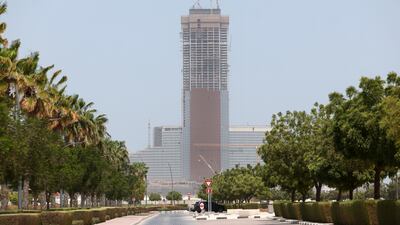
Construction of Wynn Al Marjan Island gets under way. Chris Whiteoak / The National -

The sun sets over Ras Al Khaimah. -

Ras Al Khaimah Creek. Chris Whiteoak / The National -

Dhayah Fort. Chris Whiteoak / The National -
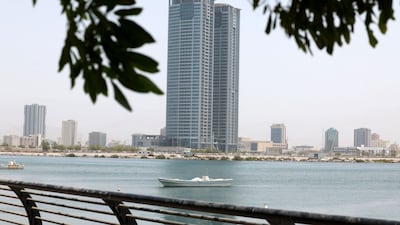
Ras Al Khaimah waterfront. Chris Whiteoak / The National -

White sandy beaches and crystal clear waters. Khushnum Bhandari / The National -
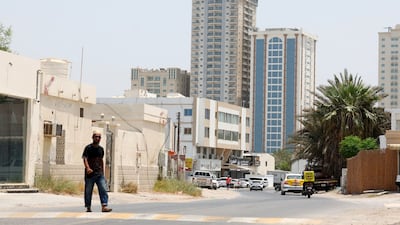
An inner city residential district. Chris Whiteoak / The National


RAK is a more narrative-sensitive market than Dubai or Abu Dhabi. That means confidence, perception and future promise play a bigger role in pricing and demand. And in periods of geopolitical uncertainty especially when tourism sentiment softens, it's those markets that can feel more exposed especially in the short term.
That does not mean the opportunity has disappeared. It means the market must be understood properly. I would divide RAK investors into two groups.
The first group gets it right: They are buying selectively into areas, developers and products that have a genuine long-term use case whether that is owner-occupation, lifestyle-led second-home demand, or sustainable future rental demand.
The second group gets it wrong: They are buying purely because someone told them RAK is “the next Dubai”, or because they think every project will automatically appreciate just because this particular emirate is trending. That is where risk enters the conversation.
In a more uncertain environment, the gap between good RAK stock and average RAK stock becomes much wider.
So yes, in my opinion RAK still has a compelling investment story but buying into the story alone is no longer enough. Investors now need to buy into the right location, the right developer, the right delivery timeline, the right long-term demand profile.
In simple terms: Ras Al Khaimah still offers opportunity, but this is no longer a market where being the early bird gets you the worm, you also have to get it right.
The opinions expressed do not constitute legal advice and are provided for information only. Please send any questions to mariovolpi64@gmail.com

