

Countries with strong digital services and the technology to maintain their economy remotely have handled the Covid-19 pandemic better, the World Economic Forum said.
Nations with strong financial systems that could support businesses and provide the resources to keep them afloat – such as the UAE – also fared well at a time when government intervention was needed more than ever across the world.
“Those economies that were already well set up to not just put in place safety nets rapidly, but ensure that funding is being distributed, not just to the largest companies, but actually to small and medium sized companies and directly to households – those countries did well,” said Saadia Zahidi, a managing director of the WEF.
-
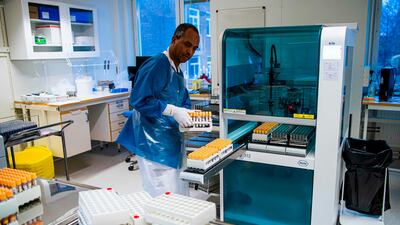
Medical staff at the laboratory of the Karolinska Hospital operates a machine used in the PCR testing process in Solna near Stockholm, Sweden. AFP -

A woman walks in the old town of Sweden's capital Stockholm. AFP -
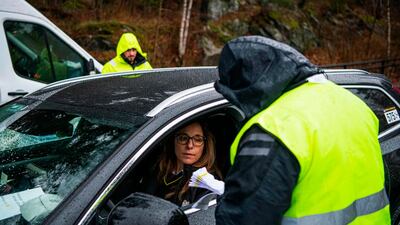
Jotta Nikopoulou, 45, a driver with the company Taxi Stockholm, returns PCR tests for processing after collecting them from people who suspect they have Covid-19, in a suburb of Stockholm, Sweden. AFP -

Restaurants, cafes, and night clus owners attend a demonstration to protest against government measures in Paris, France. Reuters -

A closed chairlift is seen during a heavy snow-fall in the closed winter ski resort of Val d'Isere, France. Reuters -
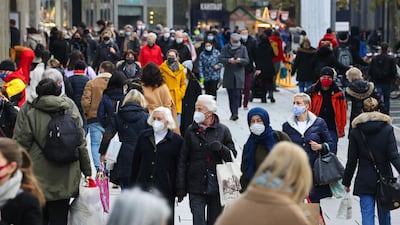
Shoppers wear protective face masks on a crowded retail high street in Frankfurt, Germany. Bloomberg -
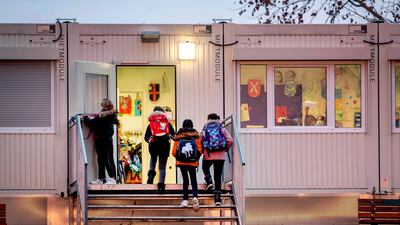
Pupils go to a school which is partially located in containers in Frankfurt, Germany. AP Photo -

A teacher conducts a lesson for just two pupils in Bonn, Germany. Reuters -
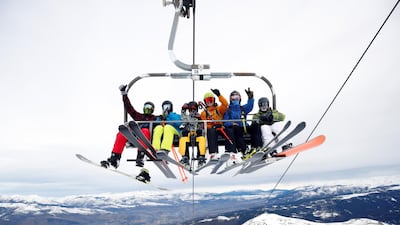
Skiers and snowboarders gesture from a chairlift as La Masella ski resort re-opensi n Masella, Spain. Reuters -

A medical staff member collects a swab sample in Rome, Italy. Reuters


Governments that were able to strike a tricky balance between economic and health matters have also fared comparatively well in dealing with the pandemic.
“Balancing public health policies with economic and social policies requires adopting second-best solutions, which are difficult to assess,” a WEF report said.
“In general terms, countries that could better plan and co-ordinate health measures with fiscal and social policies have been relatively more successful in mitigating the effects of the crisis.”
Unsurprisingly, countries that were able to offer its citizens widespread access to healthcare and had experience in tackling previous outbreaks such as SARS were also better placed to cope.
“During this time of profound uncertainty, the health crisis and economic downturn have forced a fundamental rethink of growth and its relationship to outcomes for people and planet. Policymakers have a remarkable opportunity to seize this moment and shape new economic systems that are highly productive while growing shared prosperity and environmental sustainability,” said Ms Zahidi.
In its Global Competitiveness Report Special Edition 2020: How Countries are Performing on the Road to Recovery, the WEF laid out how countries could recover from the pandemic and use it as an impetus to transform their economies.
“It makes clear the priorities for making economies more productive, sustainable and inclusive as we emerge from the crisis. The stakes for transforming our economic systems simply could not be higher,” said Klaus Schwab, founder of the WEF.
Among its recommendations, the report says the transition of the energy sector towards a greener world should be accelerated – with upgraded infrastructure as well as enhanced information and communications technology (ICT) becoming more widely available.
“Before the Covid-19 crisis, despite the significant expansions of ICT access, ICT availability and use remained far from universal,” the report said. “The Covid-19 crisis has accelerated digitalisation in advanced economies and made catching up more difficult for countries or regions that were lagging before the crisis.”
The report calls for an updated education curriculum that focuses on the skills needed for the future markets, with an added focus on those at greatest risk of job displacement.
“Countries should focus in the revival phase on gradually transitioning from furlough schemes to new labour market opportunities, scaling up reskilling and upskilling programmes and rethinking active labour market policies,” it said. “In the transformation phase, leaders should work to update education curriculums and expand investment in the skills needed for jobs.”
-
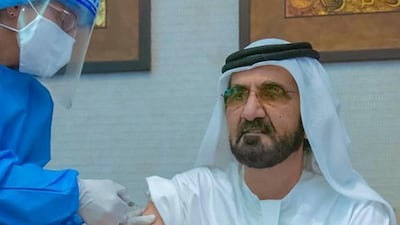
Sheikh Mohammed bin Rashid receives the Sinopharm vaccine to protect against Covid-19 on November 3, 2020. Courtesy: Dubai Media Office -
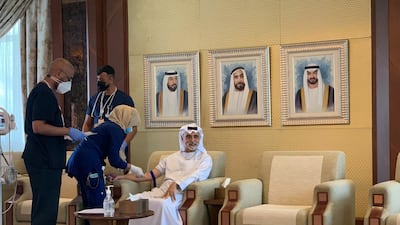
Sheikh Nahyan bin Mubarak receives the first of two shots of a vaccine that was trialled in the UAE. Wam -
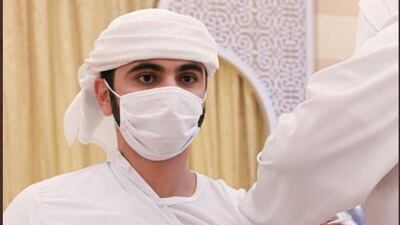
Sheikh Mansoor bin Mohammed, chairman of Dubai’s Supreme Committee of Crisis and Disaster Management, receives the Pfizer-BioNTech vaccine. Courtesy: Sheikh Mansoor -
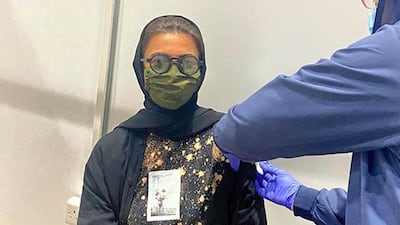
Noura Al Kaabi, Minister of Culture and Youth, gets the Sinopharm jab. -
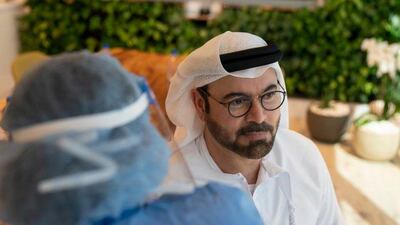
Mohammad Al Gergawi, Minister of Cabinet Affairs, receives the Covid-19 Sinopharm vaccine on Saturday, October 31. Courtesy: UAE Government Twitter -
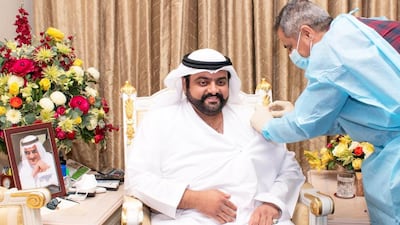
Sheikh Mohammed bin Hamad Al Sharqi, Crown Prince of Fujairah, receives his first dose of the Covid-19 vaccine on Wednesday. Wam -
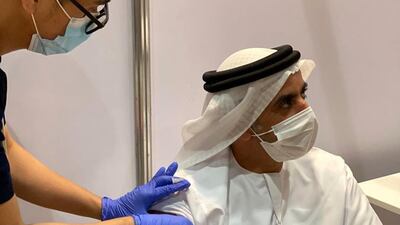
Sheikh Saif bin Zayed, Deputy Prime Minister and Minister of Interior, takes the Sinopharm vaccine. Courtesy: Sheikh Saif bin Zayed Twitter -
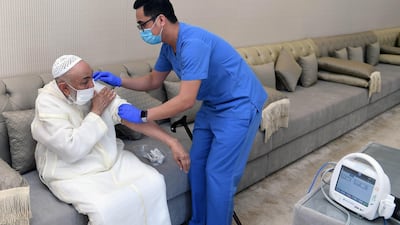
Sheikh Abdullah bin Bayyah, UAE Fatwa Council, is vaccinated with the Sinopharm innoculation on January 4, 2021. Wam -

Sheikh Khalid bin Mohammed, chair of Abu Dhabi's Executive Office, takes the first dose of the Sinopharm vaccine. Courtesy: Abu Dhabi Media Office -
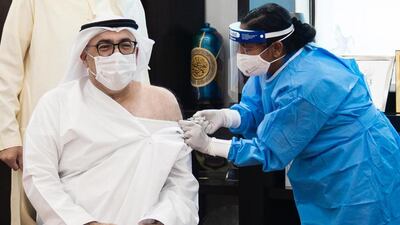
The UAE's health minister, Abdulrahman Al Owais, receives the Sinopharm vaccine. -
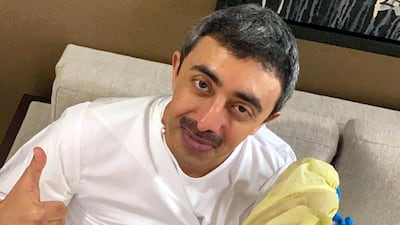
Sheikh Abdullah bin Zayed, Minister of Foreign Affairs and International Co-operation, gives a thumbs up as he is vaccinated against Covid-19. -
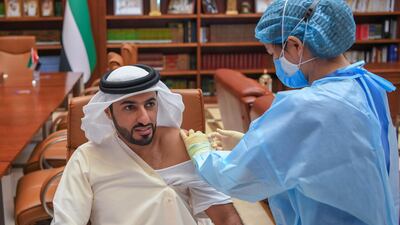
Sheikh Rashid bin Humaid Al Nuaimi, president of the UAE Football Association, receives the Covid-19 vaccine. -
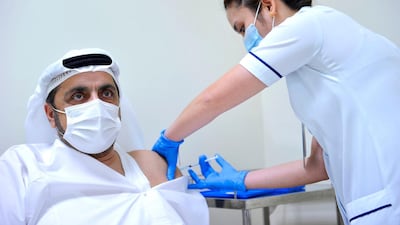
Khalifa bin Dary, executive director of Dubai Ambulance Services Corporation, receives his first dose of the Pfizer-BioNTech vaccine. Courtesy: Dubai Media Office -
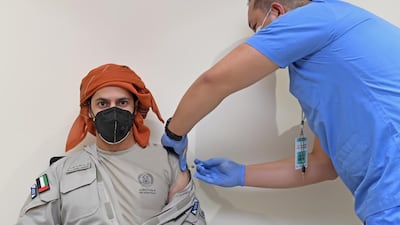
Lt Col Sheikh Zayed bin Hamad Al Nahyan, director of special patrols at Abu Dhabi Police, receives the Covid-19 vaccine. Courtesy: Abu Dhabi Police -
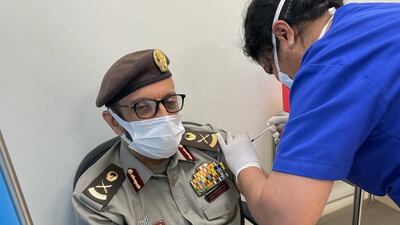
Maj Gen Mohammed Al Marri, director general of the General Directorate of Residency and Foreigners Affairs Dubai, receives his first dose of the Pfizer-BioNTech vaccine. Courtesy: Dubai Media Office -
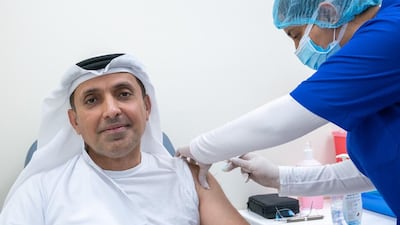
Maj Gen Talal Al Falasi, director general of Dubai's State Security Department, receives his first dose of the Pfizer-BioNTech vaccine. Courtesy: Dubai Media Office -
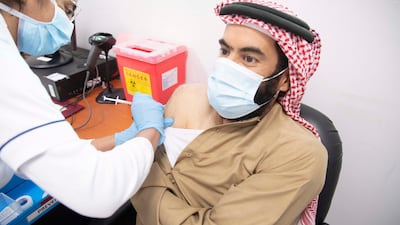
Abdullah Al Falasi, director general of Dubai Government Human Resources Department, receives his first dose of the Pfizer-BioNTech vaccine. Courtesy: Dubai Media Office -
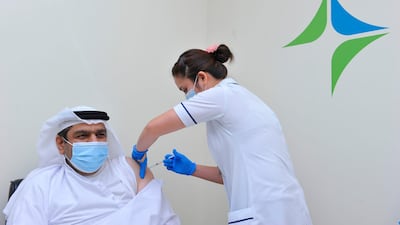
Amer Sharif, head of Dubai's Covid-10 Command and Control Centre, receives his first dose of the Pfizer-BioNTech vaccine. Courtesy: Dubai Media Office -
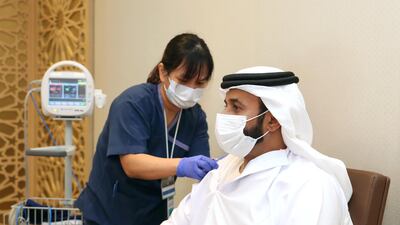
Obaid Al Shamsi, director general of the National Emergency Crisis and Disasters Management Authority, takes the first dose of Covid-19 vaccine


“It’s long been clear that greater investment in people and, in particular, with all of these job disruptions that are taking place due to technology, it’s important to give people reskilling and upskilling opportunities,” said Ms Zahidi.
The WEF report also recommended that governments focus on better public service delivery and management of public debt, with more progressive taxation introduced.
“The combined health and economic shocks of 2020 have affected the livelihoods of millions of households, disrupted business activities, and exposed the fault lines in today’s social protection and healthcare systems,” Mr Schwab and Ms Zahidi wrote in the report.
“The crisis has also further accelerated the effects of the Fourth Industrial Revolution on trade, skills, digitisation, competition and employment, and highlighted the disconnect between our economic systems and societal resilience.”

