

The Covid-19 pandemic is the “toughest situation” London’s Abu Dhabi-owned ExCeL exhibition centre has ever faced, according to its chief executive, as the venue expects a surge in post-pandemic business.
ExCeL London, which is owned by Abu Dhabi National Exhibitions Company (ADNEC), was transformed into Britain’s first coronavirus field hospital in April to help the country cope with a surge in coronavirus cases.
"It has been a challenging and unprecedented year, and like every other global exhibition and convention centre it has been the toughest situation that ADNEC and ExCeL have ever faced," Jeremy Rees, chief executive of ExCeL, told The National.
“As 2020 draws to a close, we find ourselves at a pivotal moment with vaccines starting to be rolled out across the world. In 2021, our focus will be getting our business safely back on track, motivating our team and taking strategic decisions that will create a sustainable future for us and our customers.”
The global events industry has been hammered by the Covid-19 crisis, as major exhibitions and conferences were cancelled to help curb the spread of the virus. For the UK events industry, which generates £70 billion ($94.78bn) of economic impact and employs more than 700,000 people across 25,000 businesses, the closure of several key events was a major loss.

ADNEC, a subsidiary of ADQ, acquired ExCeL, London’s largest international exhibition and convention centre, in 2008, with the venue typically hosting 400 events a year, attracting 4 million visitors and 40,000 exhibiting companies.
Events at ExCeL generate £4.5bn for the UK economy, support 37,600 jobs and drive 25 per cent of London’s inbound business tourists, according to Mr Rees.
“The organised events we host are a huge catalyst for trade. They drive billions of pounds worth of import and export activity and actively support the government's industrial strategy," he said.
“There will understandably be an impact due to Covid-19 and like countless other businesses we will need to adapt but I believe we can do so successfully. Whilst face-to-face events may be disrupted in the short term, I have no doubt that they will become more, not less, important in the future and there is every reason to be positive."
-
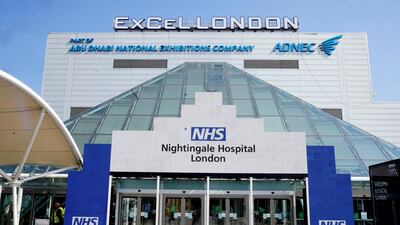
The new NHS Nightingale Hospital, built to fight against the spread of coronavirus, in London. Courtesy: Reuters -
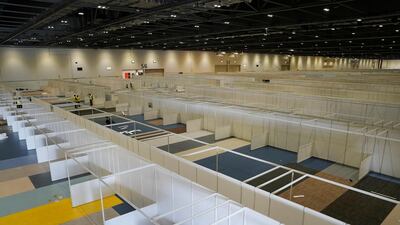
Contractors and members of the armed forces help to build the new NHS Nightingale Hospital. Courtesy: Reuters -
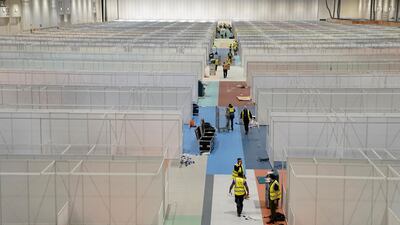
Vital use is being made of the spacious exhibition centre. Courtesy: Reuters -
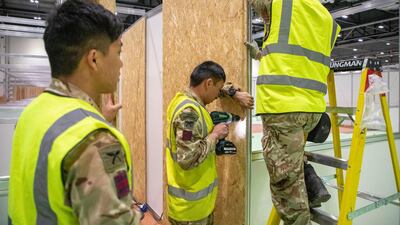
Members of the Queen's Ghurka Engineers Regiment have been enlisted for the task of turning an exhibition space into a medical facility. Courtesy EPA -

A member of the Queen's Ghurka Engineers Regiment helps to build the new NHS Nightingale Hospital. Courtesy Reuters -
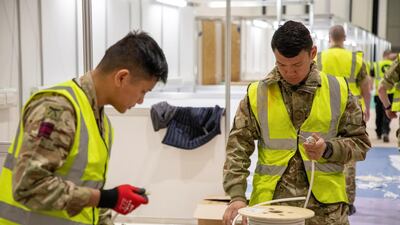
Members of the Queen's Ghurka Engineers Regiment, 36 Engineer Regiment, help to build the new NHS Nightingale Hospital. REUTERS -
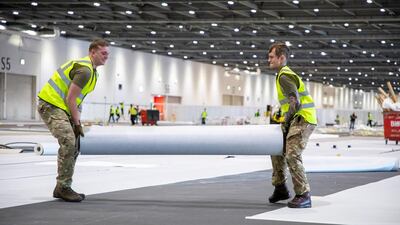
Soldiers from 1 Royal Anglian Regiment gt to work on constructing the emergency hospital. Courtesy EPA -
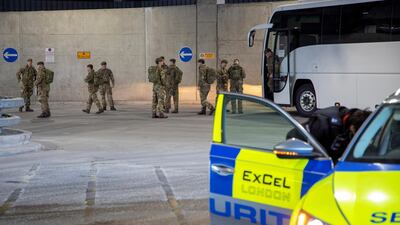
Soldiers from 1 Royal Anglian Regiment arrive at the Excel Centre to build the new NHS Nightingale Hospital. Courtesy Reuters -
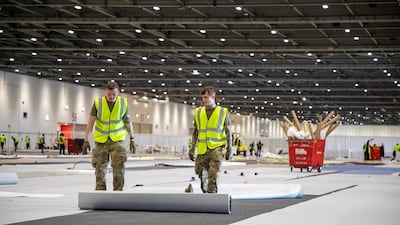
Soldiers from 1 Royal Anglian Regiment assist with the construction of the new NHS Nightingale Hospital. Courtesy Reuters -

Members of the Queen's Ghurka Engineers Regiment lend a vital helping hand to efforts to tackle the coronavirus pandemic. Courtesy Reuters -
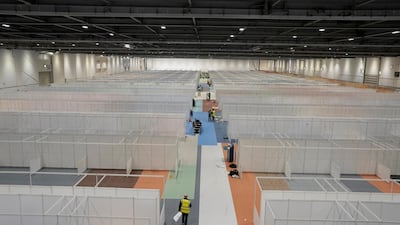
ExCel London is being transformed into a 4,000-bed field hospital. Courtesy: Reuters -

Soldiers from 1 Royal Anglian Regiment arrive at the Excel Centre to build the new NHS Nightingale Hospital. Courtesy Reuters -
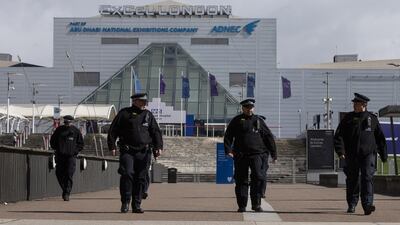
Metropolitan Police officers stand outside the new NHS Nightingale Hospital at ExCeL London. Courtesy Getty Images


The company underwent a huge transformation in late March when it spent nine days converting the centre into the UK's first Nightingale Hospital, which was opened in April by the country's future king, Prince Charles, who had himself only just recovered from the virus.
ADNEC did not charge any rent and offered to cover running costs at the site, and Mr Rees said the company was extremely “proud to have played a role” in supporting the UK government, NHS and frontline workers.
“It was an enormous privilege to make our facilities available to help the national effort in combatting coronavirus and helping to save lives,” he said.
The plan to transform the venue into the world’s largest field hospital with a capacity of up to 4,000 beds had the full support of ADNEC, with work starting the day after the agreement was made with the UK government.
“Our engineers, security officers, cleaners, riggers and traffic management team – more accustomed to hosting the world’s leading events – worked alongside the NHS, the military, as well as event industry contractors, to transform ExCeL into NHS Nightingale London,” said Mr Rees.
“An incredible team of 360 people worked round the clock to install the first 500 beds, fully equipped with ventilators and oxygen."
ADNEC offered similar support in the UAE, turning its group centres in Abu Dhabi and Al Ain into a field hospital and the Covid-19 Prime Assessment Centre. Adnec is now hosting the UAE's Department of Health for the Abu Dhabi Covid-19 vaccination campaign.
Looking ahead to 2021, Mr Rees said the “desire to get back to business is overwhelmingly strong”, and he expects the events industry to not only return to pre-pandemic levels but exceed previous targets.
Events already lined up include the World Travel Market, ICE Totally Gaming, corporate events for tech giants such as Google and Amazon Web Services and world-renowned medical congresses.
From next year, it will also host the ABB FIA Formula E Championship, which complements Abu Dhabi’s hosting of Formula One.
“Looking ahead, the biggest driver for us is that our customers want to run safe, successful, organised events. We will be supporting them in their aspirations to get back to business and begin their and our recovery as soon as possible,” Mr Rees said.
ExCeL's location by the Royal Docks in London is one of the venue's chief assets, he added, because the UK capital remains extremely attractive to event organisers.
"It’s a place that people genuinely want to visit and do business in," he said. "The city is open for business, with a time zone and language that enables trade on a truly global scale. When you bring your event to London, you are instantly within easy reach of a talent pool of 14 million people, working in world-leading sectors, from technology and fintech to finance and life sciences."

With more than 100,000 square metres of flexible space, making it the largest event space in London, ExCeL has plenty to offer event organisers, however, Mr Rees said the team will not rest on its laurels and is exploring how to diversify its business further, such as expanding its property portfolio.
"As demand to run large-scale events in London remains high, work is also under way to add significant capacity to the ExCeL site, which will ensure we remain a major player on the world stage for business events and congresses," he said.
When the Crossrail line eventually opens, it will help the centre transport thousands of visitors across London to its venue within 15 minutes.
"We have ambitious plans for growth beyond our core business. Our vision is to make ExCeL more of a destination, attracting new audiences, by working with globally recognised brands to deliver world-class entertainment and attractions," he said.
Another focus will be on sustainability and protecting the environment, something ExCeL has already put in motion, installing new water fountains last year and unveiling a #NoPlastic campaign.
"This year, we switched 100 per cent of our electricity supply to renewable sources, while our gas supply has been carbon offset," Mr Rees said.
"I believe we have every reason to be optimistic about the future and that within time, and when it is safe to do so, London will once again be a world-leading destination for meetings and events."

