


Chinese plane maker Comac is set to display its passenger jets at the Dubai Airshow next month in a Middle East debut, as it seeks to attract regional buyers and expand its reach beyond mainly Asian airline customers.
Shanghai-based Comac will bring its C919 narrow-body and its C909 regional jet to the expo's static display, according to a presentation by the organisers of the Dubai Airshow at a media conference on Tuesday.
“They will be coming to the air show for the very first time. They will have four aircraft on display, as well as taking part in the actual flying display,” Timothy Hawes, managing director of Informa Markets that organises the air show, said.
-
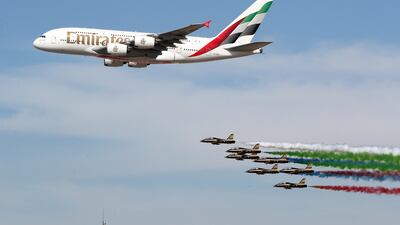
An Emirates plane accompanied by the UAE's Al Fursan aerobatic team during a flying display at the Dubai Airshow. Pawan Singh / The National -
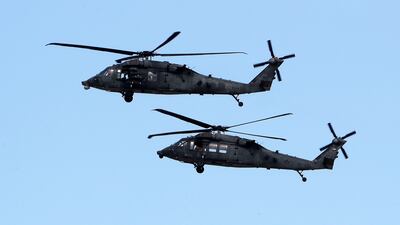
UAE craft flying in formation during a flying display at the Dubai Airshow. Pawan Singh / The National -
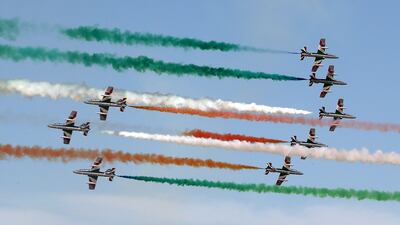
The Italian Air Force during a display at the Dubai Air show at DWC in Dubai. Pawan Singh / The National -
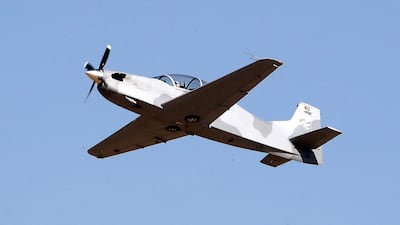
A Bader 250 craft during the flying display at the Dubai Air show. Pawan Singh / The National -
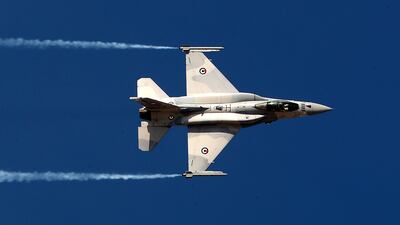
An F16-60 during a display at the Dubai Airshow. Pawan Singh / The National -
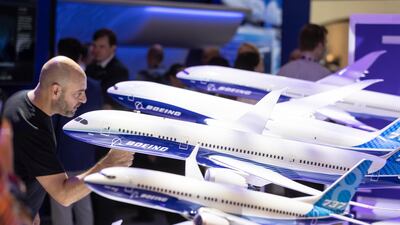
Day one of the Dubai Airshow at Al Maktoum Airport. Antonie Robertson / The National -
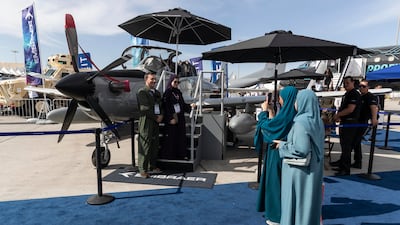
The Embraer stand. Antonie Robertson / The National -
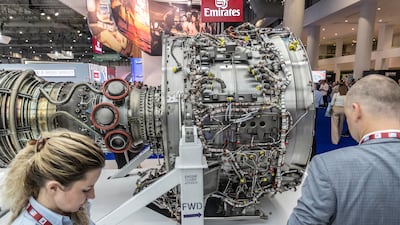
The SANAD stand. Antonie Robertson / The National -
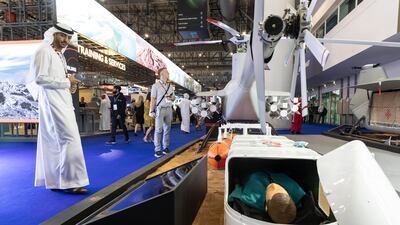
Exhibits on show on day one. Antonie Robertson / The National -
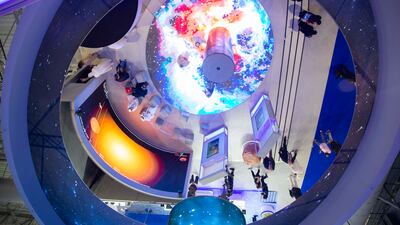
The space agency stand at Dubai Airshow. Leslie Pableo for The National -
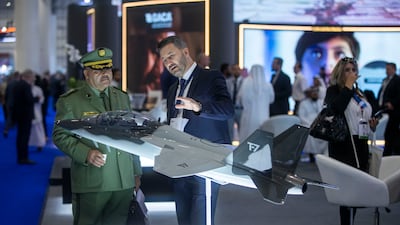
Military aircraft on show. Leslie Pableo for The National -
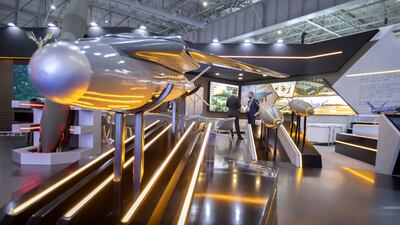
Visitors at Dubai Airshow. Leslie Pableo for The National -
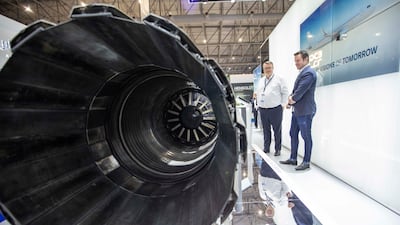
The engine of a plane on display at Dubai Airshow. Leslie Pableo for The National -
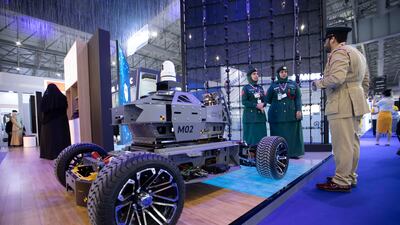
The Dubai Police stand. Leslie Pableo for The National -
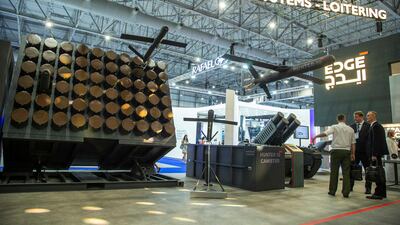
Visitors looking at missiles at Dubai Airshow. Leslie Pableo for The National -
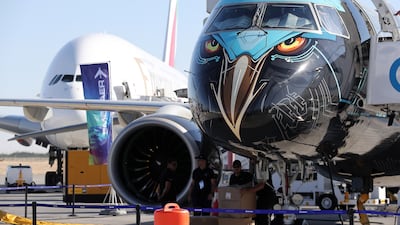
An exhibit with a bird-themed paint scheme the Dubai Airshow at Dubai World Central. Pawan Singh / The National -
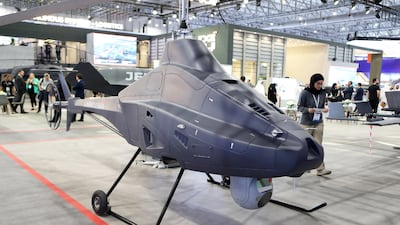
A drone on display at the stand of UAE military technology company EDGE, at Dubai Airshow. Pawan Singh / The National -

Visitors at the Dubai Airshow. The event has attracted more than 1,400 exhibitors from 95 countries. Pawan Singh / The National -
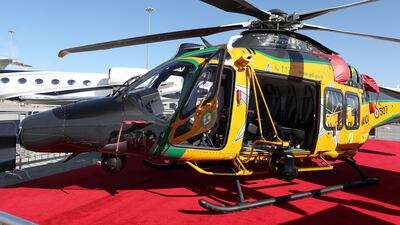
A helicopter on display at the Dubai Airshow. Pawan Singh / The National -
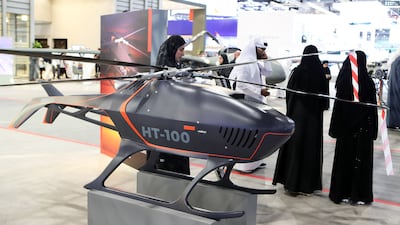
An EDGE drone at Dubai Airshow. Pawan Singh / The National -

An Etihad Airways passenger jet on display at Dubai Airshow. Pawan Singh / The National -
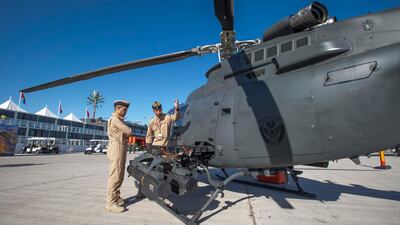
UAE military aircraft at Dubai Airshow, Al Maktoum International Airport. Leslie Pableo for The National -

Emirates crew with an Emirates plane at the Dubai Airshow, Al Maktoum International Airport. Leslie Pableo for The National -
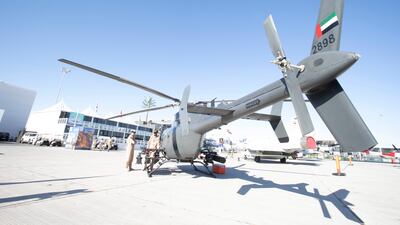
UAE military aircraft at the Dubai Airshow. Leslie Pableo for The National -

Abu Dhabi Police aircraft at the Dubai Airshow. Leslie Pableo for The National -
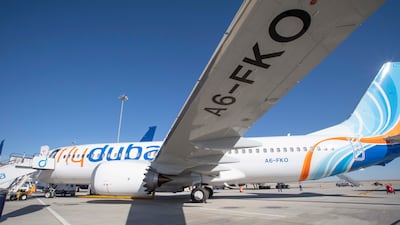
A flydubai plane at the Dubai Airshow. Leslie Pableo for The National -
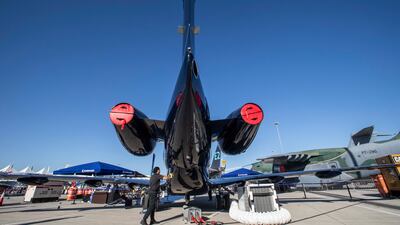
Crew preparing an aircraft for Dubai Airshow. Leslie Pableo for The National -
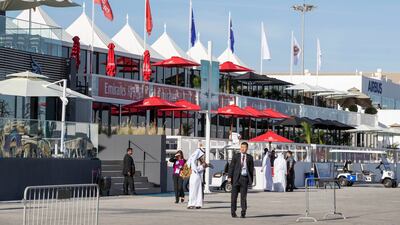
Emirates chalet at the Dubai Airshow. Leslie Pableo for The National -
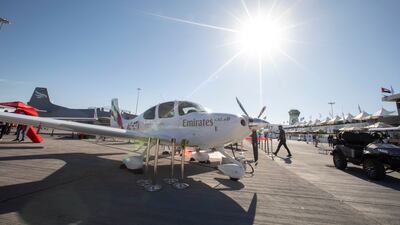
Emirates planes on display at the Dubai Airshow. Leslie Pableo for The National -
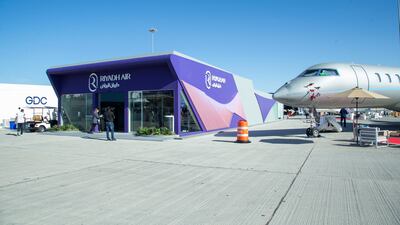
Riyadh Air's chalet at Dubai Airshow, Al Maktoum International Airport. Leslie Pableo for The National -
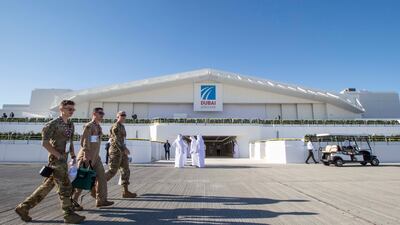
Visitors attend the Dubai Airshow. Leslie Pableo for The National -
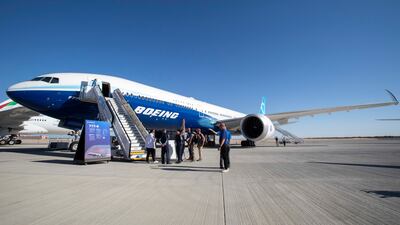
A Boeing plane on display at the Dubai Airshow. Leslie Pableo for The National -

UAE military aircraft at the Dubai Airshow. Leslie Pableo for The National


The state-owned plane maker is developing its own commercial planes to rival the duopoly of Boeing and Airbus, but has yet to cinch deals outside of China and Chinese-allied countries in South-East Asia. Comac's C919, which is designed to compete against the Airbus A320 Neo and Boeing 737 Max models, is currently operated only by Chinese airlines.
Comac has also been eyeing Saudi Arabia for its global expansion push, as the kingdom outlines ambitious plans to develop its aviation sector.
In July, Saif Al Suwaidi, director general of the UAE's General Civil Aviation Authority (GCAA), led an official delegation to China, where they conducted high-level meetings and field visits with several Chinese aerospace manufacturers, including Comac, according to UAE state news agency Wam.
Mr Al Suwaidi toured Comac's production centres and met Shen Bo, vice chairman of Comac, and had a “high-level discussion that reviewed the company’s forward-looking plans and explored joint industrial opportunities”, the UAE news agency reported at the time.
Paul Griffiths, chief executive of Dubai Airports, on Tuesday said it would be interesting to gauge Comac's technical strategy when they display their products at the air show.
“If you look at the number of automotive products that are coming out of China and how impressive those are, they may well be making quite a statement in the aerospace industry,” he told The National. “We'll know at the air show in November.”
The aviation industry is debating Comac's viability as a rival to the western duopoly of Boeing and Airbus as airlines are struggling to meet soaring travel demand amid supply chain problems that have constrained capacity.
Dubai Airshow 2025: What to expect
The Dubai Airshow will take place from November 17 to 21 under the theme 'The Future Is Here', organisers said.
The aviation, space and defence event will highlight advancements in AI, eVTOLs, the private sector's space ventures, sustainability and the development of a new generation of young talent.
The biennial expo, a bellwether for the aviation industry's health, is a major global platform for the announcement of aircraft deals by UAE and Middle Eastern carriers, as Boeing and its European rival, Airbus, compete for the highest sales at the keenly watched year-end event.
“We do expect it to be a very fruitful week in terms of contracts and orders,” Mr Hawes said, pointing to the size of the event, its expansion and the growing number of international companies participating this year.
The Dubai Airshow in 2023 recorded more than $101 billion in deals announced through the week.
More than 200 aircraft will be displayed at this year's expo, up from 192 in 2023, amid participation from manufacturers including Boeing, Airbus, Bombardier, Dassault and Embraer.
Global leaders from the aerospace, space and defence industries will descend on Dubai during the week, with the number of visitors this year expected to reach 148,000 people, up from 135,000 in 2023.
The halls will be packed with more than 1,500 exhibitors from 98 countries, according to the organisers.
With more than 490 military and civil delegations from 98 countries, 440 new exhibitors, 18 country pavilions, almost 100 chalets and 8,000 square metres of added exhibition space, this year's air show will be its largest yet, said the organisers.
French company Thales said it will show its latest solutions across military, civil aviation and space sectors, all underpinned by the use of artificial intelligence.
“Thales will highlight how AI is ethical, explainable, and secure by design. Whether supporting operators in a fast-moving conflict or reducing aviation’s carbon footprint, it brings unprecedented scale, speed, and clarity to the most complex environments,” it said.
“Thales is bringing a cognitive edge to the skies and beyond to civil and military ecosystems by using artificial intelligence to support human intelligence, opening up new frontiers: a more sovereign space, better connected civil aviation and more collaborative defence,” it added.

