

Israel's attack on Iran is the latest in a series of global conflicts that are ratcheting airlines' security concerns, while weighing on their operations and profitability.
An increasing number of conflict zones around the world means airlines are forced to take longer and costlier routes – impacting fuel, emissions and passengers.
For passengers, this means flight cancellations and delays or longer journeys as jets are diverted away from conflict areas. Airlines are grappling with more airspace closures, threats from missiles or drones and GPS jamming.
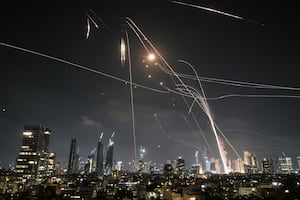
Israel's attack on Friday is part of a broader trend of escalating geopolitical tensions that are “directly impacting global aviation”, following the situations in Ukraine and the Red Sea, according to independent security, aviation, maritime and energy analyst Dean Mikkelsen.
“We’re witnessing a growing patchwork of restricted airspace and this is putting considerable pressure on airlines and passengers alike,” he told The National.
For travellers, the most immediate impact will be on fares as aviation disruption results in longer flight times due to rerouting. In this case, routes need to be adapted around Iranian, Syrian and at times even Iraqi airspace, Mr Mikkelsen said.
'No straight answer'
Fuel consumption is also expected to rise significantly. Jet fuel already makes up around 30 per cent of an airline's operating costs and that burden only grows when 30 to 90 minutes of extra flight time is needed.
Mr Mikkelsen estimates that routes from Asia to Europe or the Gulf to North America could translate to a 7 per cent to 15 per cent increase in fares, particularly on long-haul itineraries, especially as the peak summer season approaches.
Other knock-on effects are those on crew hours, insurance premiums and scheduling complexity, all of which erode profitability, he noted. “Carriers already operating on tight post-pandemic margins will feel this sharply,” he added.
Some airlines may choose to pass the cost onto the onto the passengers in the form of increased air fares, said Tatevik Revazian, a senior vice president at Osprey Flight Solutions.
"However, such a step can also influence their profitability so it is an individual airlines decision. There is no straight answer here," she told The National.
The Israel-Iran conflict throws the region's aviation industry into question, especially with the uncertainty about how long the hostility will last.
Airspaces should always remain neutral and accessible when it is safe to do so, according to the International Air Travel Association.
Closures, in addition to using them in retaliatory ways, “fragment global connectivity, disrupt operations and hurt passengers and economies”, the Geneva-based Iata said.
Conflict zones substantially add to the disruption risks: in 2024, geopolitical conflicts led to significant airspace restrictions, affecting a substantial portion of long-haul routes, according to Iata data.
For instance, the Russia-Ukraine conflict, now in its fourth year, forced the rerouting of about 1,100 daily flights, leading to longer flight times and increased operational challenges, it said.
Rerouting would also increase maintenance requirements, crew rest issues and slot time adjustments for air operators, which in turn "can also lead to flight cancellations if the aircraft reaches its flight limits", Osprey chief intelligence officer Matthew Borie said.
"The routes can also simply become unprofitable", he added.
Fuel and emissions have also surged. Detours around conflict zones can lead to an average fuel consumption increase of 13 per cent on affected routes, Iata added.
When British Airways had to suspend flights to Beijing because it needed to avoid Russian airspace, the flight time was almost three hours longer and fuel costs increased by a fifth.
In October 2024 alone, multiple flights encountered Iranian missiles aimed at Israel, leading to diversions and emergency manoeuvres, Iata said.
The effect that conflict zones have on airspaces is also reflected in the shift of activity to other areas. For instance, countries like Egypt, with many rerouted flights passing through its airspace, would result in increased overflight fees and greater regional air traffic.
“The Cairo Flight Information Region is becoming a crucial alternative corridor, alongside Jordan and Saudi Arabia,” Mr Mikkelsen said.
As such, both Egypt and Saudi Arabia are likely to see a significantly increased amount of overflight traffic over the next month, Mr Borie added Ms Revazian, who had also served as the head of Armenia's Civil Aviation Authority.
"More traffic does mean increased revenues for the air navigation services provider, but it can also lead to capacity issues," she said.
Airlines across the region have delayed and cancelled flights following Israel’s early morning attack on Iran.
Ben Gurion Airport in Tel Aviv has shut down until further notice, Iran has declared its airspace closed and Iraq has temporarily suspended civilian operations at all its airports.
In the UAE, Etihad Airways cancelled its services to and from Tel Aviv, as Israel placed its air defence systems on high alert in anticipation of possible retaliation.
Other major airlines, including Emirates, Lufthansa and Air India, rerouted services mid-flight on Friday. An Emirates flight from Manchester was diverted to Istanbul, while an Air India flight from New York to Delhi was diverted to Sharjah.

