The global economy continues to feel the heat one week after the US and Israel launched strikes on Tehran. The aviation and energy sectors are bearing the brunt, while there are expectations of higher inflation amid supply chain disruption if the war drags on, analysts say.
The International Monetary Fund has raised concerns this week that the global economy could be affected amid the escalating Middle East conflict and soaring oil prices.
IMF managing director Kristalina Georgieva on Thursday said the world is in a “potentially prolonged period of flux”. If the conflict is prolonged, it has “obvious potential to affect global energy prices, market sentiment, growth and inflation”.

-
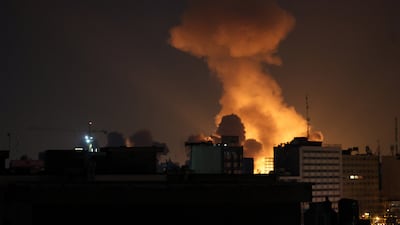
Smoke rises after an air strike in central Tehran. A joint Israeli and US military operation continues to target multiple locations across Iran. EPA -

Projectiles fly through the sky. Reuters -

Smoke rises during air strikes in Tehran. AFP -
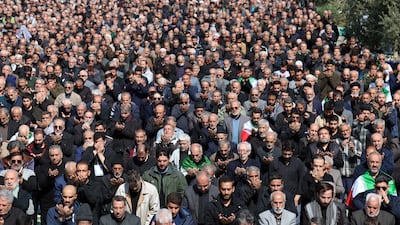
Iranians attend Friday prayers at Mosallah mosque in Tehran. EPA -
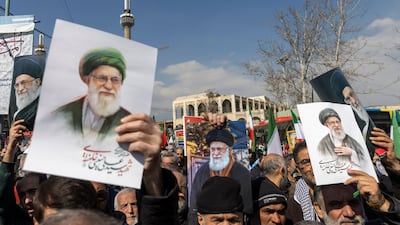
Iranians hold images of Ayatollah Ali Khamenei as they take part in a demonstration against the US and Israel in Tehran. Getty Images -
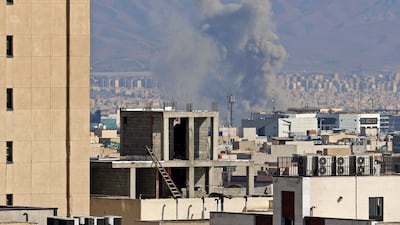
Smoke rises from the site of air strikes in Tehran. AFP -
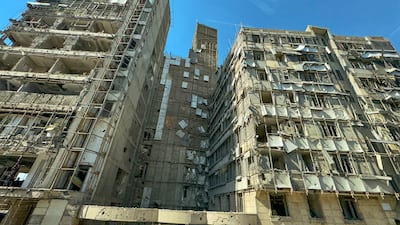
A view of the damaged Gandi Hospital in Tehran. AFP -

An Iranian man attends his damaged office in Tehran. AFP -
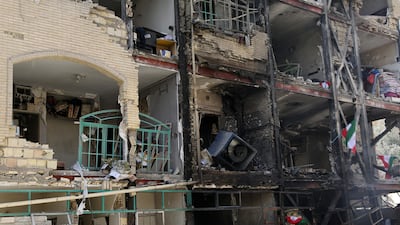
A residential complex in Tehran damaged by intense bombardment. AFP -
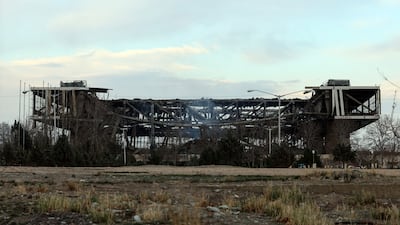
A damaged building at Tehran's Azadi Sport Complex. AFP


Energy reverberations
Oil prices surged following the attack, with Brent, the benchmark for two-thirds of the world's seaborne oil, currently trading more than $90 per barrel on supply concerns as the Strait of Hormuz effectively remains closed for shipping traffic.
Brent jumped 11 per cent on Monday when markets opened following the start of attacks by the US and Israel on Tehran and has remained above $80 per barrel due to continuing supply risks.
Energy infrastructure including refineries, port installations and LNG production centres suffered damage as Iran launched retaliatory attacks on Gulf states, including the UAE, Saudi Arabia, Qatar, Bahrain, Kuwait and Oman, with drones and missiles.
QatarEnergy has declared force majeure on liquefied natural gas (LNG) deliveries to affected buyers after halting production, pushing European gas prices by more than 52 per cent, following the Iranian strike on Ras Laffan complex.
Saudi Arabia’s Ras Tanura refinery, which handles 550,000 barrels per day, was also shut down after a fire broke out as a result of a drone attack. Blazes were also reported at Bahrain’s Bapco Energy refineries and the Fujairah oil export hub.
Iraq also shut down oil production at Rumaila, its largest oil field, and halted crude exports through the Ceyhan pipeline on Tuesday following strikes by Iran.
“Brent surged this week, adding about 18 per cent in risk premium, reflecting the risk of disruption through the Strait of Hormuz and oil export infrastructure as well as tightened trade flows,” Ahmad Assiri, research strategist at brokerage Pepperstone, said.
Ships are avoiding sailing through the narrow waterway, through which about one fifth of the world's seaborne oil passes, amid the regional conflict and threats from the Iranian army. Although not formally closed, vessel traffic has almost come to a halt along the strait.
“The next phase will depend largely on how long the conflict lasts and whether key energy infrastructure or shipping routes are materially disrupted,” Mr Assiri said.
If energy infrastructure remains largely intact and shipping through the Strait of Hormuz resumes, crude prices may stabilise or retrace part of the surge as markets reassess the worst-case supply disruption scenarios.
However, if shipping is disrupted, oil is forecast to rise, with some analysts saying Brent could even touch $120 per barrel.
“Sustained higher oil and gas prices would push headline inflation to unfavourable elevated levels. Higher energy costs for long would weigh on household spending and in turn broader economic activity,” Mr Assiri said.
Global economy risks
Rania Gule, senior market analyst at XS.com also flagged concerns on global economic growth and said losses could reach hundreds of billions of dollars if the war continues for several months and oil prices rise above $100 per barrel.
“The coming weeks will be critical not only for the future trajectory of the war, but also for the direction of the global economy, energy prices, and inflation worldwide,” she said.
There will be “significant economic implications” both globally and regionally, with their scope depending on the scale and length of the conflict, said Monica Malik, chief economist at Abu Dhabi Commercial Bank (ADCB).
While ADCB is not changing its economic forecasts at this point, given the fluid situation, it highlighted the risks to the oil and non-oil sectors.
“The surge in oil and LNG prices has consequences for global inflation, potentially spilling over into global growth and external and fiscal balances,” Ms Malik said.
Gulf countries are in a “strong position” to withstand the uncertainty, given robust government balance sheets, although there are variations across the region on the degree of this strength, she added.
However, the downside risks could affect several sectors, especially trade, tourism, hospitality and tourism, she said.
The extent of the impact will depend heavily on how the conflict develops. “Capital flows and foreign direct investment could also become more cautious in the aftermath of the conflict,” Ms Malik said.
Aviation sector headwinds
The week-long escalating conflict in the Middle East resulted in an unprecedented crisis for airlines in the region, with shock-waves for the wider global aviation industry.
The Iran conflict forced the major three Gulf carriers, Emirates, Etihad Airways and Qatar Airways to suspend commercial scheduled flights as their countries closed their airspace to regular air traffic as missiles flew overhead.
The biggest risk for Gulf airlines currently is the loss of revenue after seven days of suspensions in regular operations, analysts say.
While aviation insurance covers physical damage to aircraft or passenger liability, it typically does not cover lost air ticket sales caused by war or political events, Nolwenn Allano, chief commercial officer at global insurance brokerage and risk management company EIRS, told The National.
“This means airlines must absorb the cost of cancelled flights, refunds, and rebooking passengers,” he said. “Airlines are also dealing with extra operational costs, including repositioning aircraft, organising repatriation flights, and supporting stranded passengers.”
Airlines are also facing higher war-risk insurance costs and rising jet fuel prices, which have increased sharply due to tensions in the region.
“If the disruption continues, we believe losses for the wider airline industry could reach hundreds of millions of dollars. That said, airlines based in the UAE generally have strong financial backing and diversified international demand, which helps them manage short-term shocks better than many other carriers,” Mr Allano said.
Since February 28, when the war started, to March 6 included, there were more than 51,000 flights scheduled in and out of the Middle East, with more than 29,500 flights canceled so far, according to aviation data firm Cirium.
As well as lost revenue, airlines are likely to be affected by higher fuel prices. Most carriers, including those in the Middle East, typically maintain relatively high fuel-hedging coverage. Hedge levels for the next three months range from around 50 per cent to more than 80 per cent, according to a report by Fitch Ratings this week.
Insurers regionally and globally are now charging additional premium for flights operating close to the conflict zone, according to Mr Allano.
“However, the aviation insurance market is used to managing geopolitical risk. Governments in the region, especially the UAE, are working closely with airlines and regulators to maintain safe operations and stable airspace management, which helps reduce long-term insurance risk,” he said.
Airlines that fly direct routes between Europe and Asia without relying on Gulf hubs could benefit the most, analysts say. This includes carriers such as Singapore Airlines, which operates strong long-haul networks. Some traffic may also move through other hubs across Europe or Southeast Asia.
“However, this advantage is likely to be temporary as Gulf airlines still have very strong global networks and strategic locations connecting East and West,” Mr Allano said.
“Airports in the UAE, especially Dubai International Airport, remain among the busiest transit hubs in the world. Once the situation stabilises, many passengers are expected to return to these routes because of their convenience and connectivity.”
On Friday, Emirates said it expects to restore its full network operations in the “coming days”, subject to “airspace availability and the fulfilment of all operational requirements.”
By March 7, Emirates will have 106 return daily flights operating to 83 destinations, representing almost 60 per cent of its route network.
Also on Friday, Etihad Airways said it will resume limited flights between Abu Dhabi and nearly 70 destinations across Europe, Asia and the Middle East.
Analysts said that the Gulf airlines are well-positioned to recover from the crisis. “The UAE particularly has a reputation for swift co-ordination between regulators, airports and airlines, which helps restore operations quickly when disruptions happen,” Mr Allano said.
Historically, Gulf airlines have recovered quickly from past challenges, including the pandemic and other regional conflicts.
“If the disruption lasts only a few weeks, most airlines should be able to manage the impact,” Mr Allano said. “However, if the conflict continues for a longer period, pressure could increase due to higher fuel costs, insurance premiums, and operational inefficiencies.”