


Sharjah’s Faya palaeolandscape has won Unesco World Heritage Status. The ancient desert in central Sharjah boasts one of the world’s oldest and most uninterrupted records of human presence, dating back more than 210,000 years.
By placing on the prestigious Unesco list, the site has joined global historical landmarks, such as Taj Mahal in India, the Great Wall of China and the pyramids in Egypt. It is only the second in the UAE to win the World Heritage Status.
In July 2011, Unesco inscribed several sites in Al Ain to its esteemed list. The places were added as a single site: the Cultural Sites of Al Ain. They included cultural locations in Hafeet, Hili, Bidaa Bint Saud and Oases areas, featuring tombs from the Bronze Age and complex ancient irrigation systems that supplied the oasis city.

Al Ain has been inhabited since the Neolithic era and has remnants of several prehistoric cultures dating from the Bronze Age and Iron Age. Its strategic location on ancient trade routes between Oman, the Arabian Gulf and Mesopotamia propelled its development. The sites inscribed on the Unesco list provide “testimony to ancient sedentary human occupation in a desert region”, the agency wrote. It also highlights the shift of regional cultures from hunting and gathering traditions to sedentism with agriculture.
-
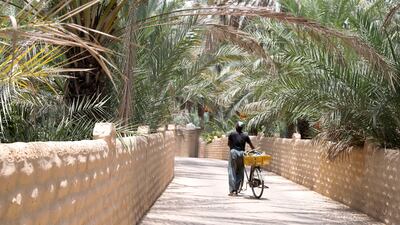
Al Ain Oasis, a Unesco World Heritage site since 2011, is open to the public who can learn about the area’s history of farming and its irrigation system. All photos: Khushnum Bhandari / The National -
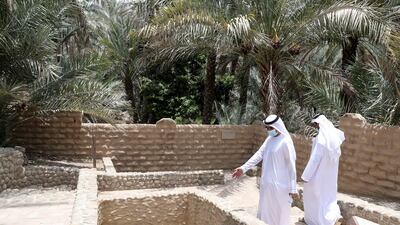
Upkeep at Al Ain Oasis. -
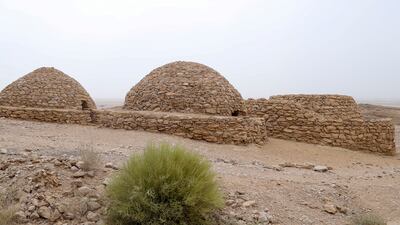
Al Ain’s 5,000-year-old, beehive-shaped Jebel Hafeet Tombs were awarded World Heritage status in 2011. -
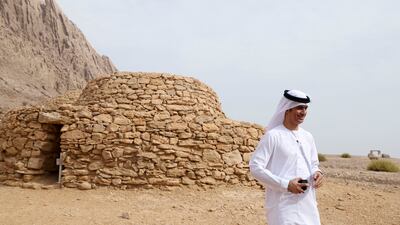
Abdullah Al Kaabi, Unit Head & Archaeological Survey at the Department of Cultural & Tourism Abu Dhabi, is proud of the tombs' heritage status. -
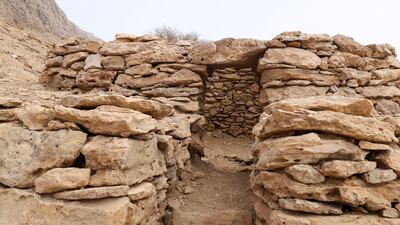
The domes at Jebel Hafeet Tombs are made solely of stone, no plaster was used in their construction. -
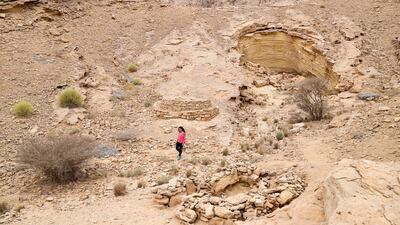
The tombs sit at the foot of Jebel Hafeet mountain in Al Ain. -
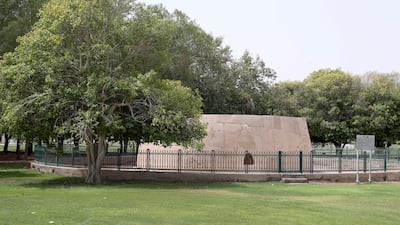
The Great Tomb at Hili Archaeological Park, Al Ain, is more than 4,000 years old and is 12 metres across. -
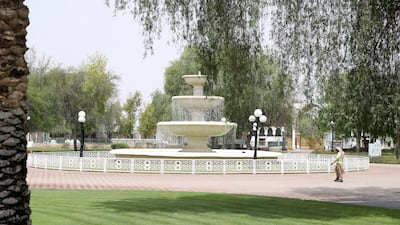
The Hili Archaeological grounds are rich in UAE history. -
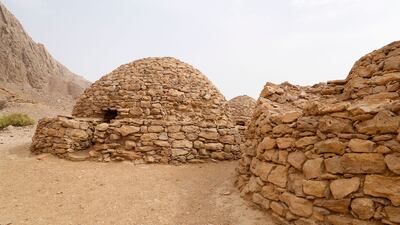
Jebel Hafeet Tombs. -
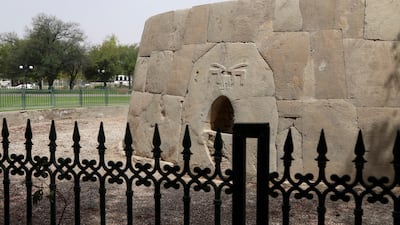
Another view of the Great Tomb. -

The tombs are a tourist attraction, part of an initiative to preserve UAE history. -
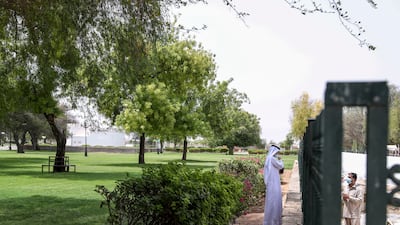
Hili Archaeological Park was recognised by Unesco, which awards World Heritage status to preserve cultural history across the world. -

Al Ain Oasis consists of palm plantations, many of which are still working farms, and a falaj irrigation water system.


Among the places inscribed on the list were the Jebel Hafeet Tombs.
The site was the first to be excavated in Al Ain, after being discovered by a Danish team in 1961. The dome-shaped tombs date back 5,000 years and mark the beginning of the Bronze Age in the UAE. They housed the remains of two to five people, who were buried in crouched positions with artefacts and personal belongings. The tombs were discovered as collapsed stones. Meticulous restorations were conducted to bring the tombs to a form that resembles their original state. Forty of the tombs, which are about three metres tall, have been restored.
Another entry on the Unesco list was the Hili Archaeological Site, which shows the earliest evidence of an agricultural village in the UAE, dating back to 2,500BC. The site features the famous ancient irrigation system, known as al falaj. The channels carry water from underground and provide a constant flow throughout the oasis. The site also has the largest collection of ancient tombs and buildings in the country.

The largest of them is the Grand Tomb, which has a carving of two people and an oryx above the entrance. In its day, it stood four metres tall and was 14 metres in diameter. More than 500 objects, including beads and pottery, were found when the site was excavated by a Danish group in 1965. A team from Iraq led the restoration efforts a decade later.
While the tombs and the archaeological sites in Al Ain provide ample evidence of the city’s ancient life, its oases are also troves in themselves, providing information about how people lived in the area millennia ago. The largest one, Al Ain Oasis, covers 1,200 hectares and has more than 147,000 date palms. While the oasis is famous for its palms, there are also mango, banana, lemon and fig trees.
The oasis is irrigated by al falaj system, which serves hundreds of farms. The farms were passed on from generation to generation and are now run by more than 500 farmers. The farms have now been largely endowed to charity, and are managed by the UAE's General Authority of Islamic Affairs and Endowments.
Even before Unesco added the oases to the heritage list, authorities were careful to keep the historical places intact when they conducted the urban planning for Al Ain. The city was built around the oases in a way that would preserve the ancient sites.
A version of this story was first published on September 22, 2023

