


Ithin carries multiple meanings encompassing spirituality and society.
To understand its significance, we begin with its linguistic roots. The letters in ithin form the basis of several related words. The most prominent of which is ithin - which means Adhina means "to permit" or "to allow", while adhan refers to the Islamic call to prayer, and mu’adhin is the person who delivers it.
Ithin also holds significance in social and legal contexts, playing a crucial role in everyday bureaucracy. A work permit is known as ithin amal, while an ithin rasmi from a superior signifies official authorisation. ithin muroor refers to a transit pass, and ithin safar is a travel permit.
Ithin is also mentioned in the Quran to emphasise God's will and authority. This is exemplified in the verse: Wa ma kana li-nafsin an tu’mina illa bi-idhni Allah (And it is not for a soul to believe except by the permission of Allah). Here, ithin signifies divine permission, underscoring Islam’s teaching that faith is not merely something one seeks but is ultimately granted by divine will.
-

The Arabic word for sign is aya. All photos: The National -

The Arabic word for cat is qita -

Laban is the Arabic word for milk -

Mosa, or Moses in English, is mentioned 136 times in the Quran -

The Arabic word for ownership is tamalouk -

The Arabic word for mint is ne’ena’a -

Shuback is the Arabic word for window -

Hilal is Arabic for crescent -

Musafir, the Arabic word for traveller, is often used in music and poetry, evoking a sense of longing and passion -

Raqaba, the Arabic word for neck, can also denote caution and scrutiny -

Ithin, the Arabic word for permission, has many bureaucratic uses -
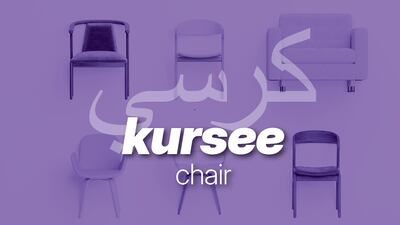
The Arabic word for chair is kursee -

Faten is Arabic name that has many spiritual and poetic meanings -

The Arabic word for embroidery is tatreez -
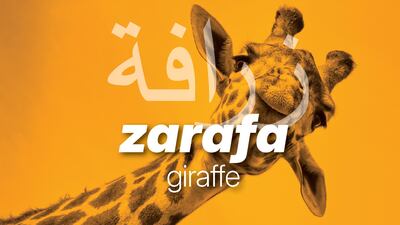
Zarafa is Arabic for giraffe -

The Arabic word for dignity, honour and respect is izza -

Hewi is the Emirati word for front garden -

Lahja is the Arabic word for dialect -

Muratabat is often translated as refreshments -

Handasa is the Arabic word for engineering -

The Arabic word for octopus is akhtaboot -

The Arabic word for mightiness is jabarut -

The Arabic word kibriyaa, often seen in Quranic verses, speaks to might and humility -

Junoon is the Arabic word for madness and obsession -

Adheem is commonly translated as great, magnificent or mighty -

Tanamor is the Arabic word for bullying -

The Arabic word for forgetfulness and oblivion is alnisyan -

Yallah, the Arabic word for 'let's go', is an expression of urgency, encouragement or even impatience -

The Arabic word majlis, rooted in Bedouin tradition, refers to a space for hospitality and dialogue -

Falaj is Arabic for water channel -

Ne'meh is Arabic for blessing -

The Arabic word sumud means resilience and steadfastness -

The Arabic word for mountain is jabal -

Kibreet is Arabic for matchstick -

Sahaba means cloud in Arabic -

Qilada is the Arabic word for necklace


Along with its variations, ithin is commonly used in everyday conversations and expressions. A well-known Islamic phrase is "bi’ithni Allah", meaning “by God’s will”.
A slight modification of the word, ithan, meaning “therefore” or “then,” introduces a range of other phrases. These include "ithan fal nabda" (then let’s begin); idha kunta turidu an-najah; ithan alayka bil-ijtihad (if you want success, then you must work hard); and idha kunta tuhibbuni, ithan athbit dhalik (if you love me, then prove it).
Ithin appears in the Arabic titles of international films, such as the 1967 French comedy A Flea in Her Ear (Barghuth fi Udhuniha) and the 2017 Canadian drama Permission (Al Ithin). Expansive in meaning and use, ithin is another Arabic word that means more than it appears.

