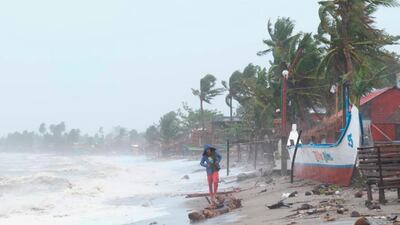
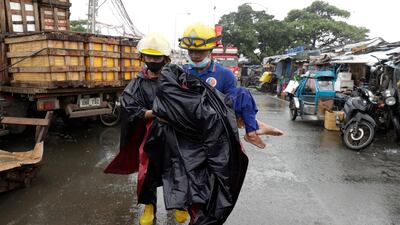
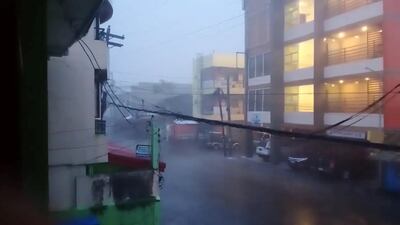
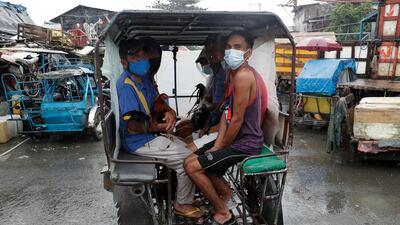
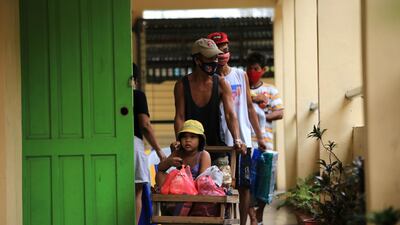
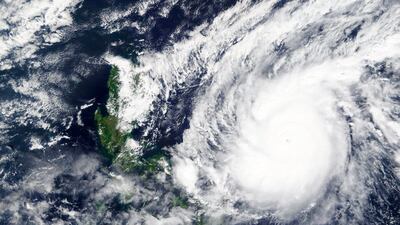
Super typhoon Goni caused multiple deaths and millions of dollars’ worth of damage when early this week it became the most powerful storm to make landfall in the Philippines for seven years.
Just days after the devastation left by Goni’s 225kph winds, Hurricane Eta struck Central America with almost as much power, triggering floods and deadly landslides.
What made Eta’s formation especially notable was that it was the 28th named storm in this year’s Atlantic hurricane season – a joint record.
It brings to the fore concerns that tropical cyclones – also called typhoons or hurricanes, according to geographical location – are becoming increasingly common because of climate change.
According to Tom Matthews, a lecturer in climate science at Loughborough University in the UK who researches extreme weather events, the scientific consensus is that the number of tropical cyclones will drop, but the proportion of high category ones – like Goni and Eta – will increase.
“With greater warming, the average intensity moves upward, so the tropical cyclones become more intense on average, and that suggests we should expect to see tropical cyclones emerge that are stronger than anything we’ve seen before,” Mr Matthews says.
Climate modelling predicts wind speed in the most intense tropical cyclones to increase by about 5 per cent – which means 16 per cent more power.
For every 1°C rise in global average temperature, a 2013 study suggested there would be a 25 to 30 per cent rise in category four and five storms, which are the most severe.
Indeed, the forecasts of climate models are now a reality, says Bob Ward, policy and communications director at the Grantham Research Institute on Climate Change and the Environment, part of the London School of Economics.
“It was a key paper published earlier this year, in May, that showed that we can now see a trend in many basins of the world towards the stronger tropical cyclones. That’s something that’s just started to emerge,” he said.
As well as becoming more powerful, tropical cyclones will drop more rain because a warmer atmosphere can hold more moisture – 7 per cent more for each 1°C temperature increase – and will act on a higher seas as sea levels rise, so storm surges will reach further inland.
“In the last couple of years, there’s been key research showing, particularly in the Atlantic basin ... rapid intensification, where storms very quickly go from weak to strong. We’ve seen that in the last couple of days with Hurricane Eta,” Mr Ward says.
There is also the risk that, thanks to climate change, tropical cyclones could more often coincide with heatwaves, compounding the dangers.
“The world that we’re moving into, yes, it means more of the familiar,” says Mr Matthews. “It may also mean some novel threats out there, like the interaction of climate hazards in a way we haven’t seen before.”
The downing of power grids could coincide more frequently with heatwaves in places that are already some of the warmest parts of the world – a potentially dangerous combination.
With the effects of climate change on extreme weather events already apparent, and with researchers forecasting more severe consequences to come, the question arises of what can be done to halt or mitigate them.
“Climate change is, unfortunately, locked in for the next three or four decades. The climate will continue to get worse in terms of these extreme weather events,” says Mr Ward.
“We’re going to have to adapt and become more resilient. We’re seeing better use of early-warning systems that allow you to evacuate populations before they’re hit. That’s helped to reduce the number of deaths.”
Beyond this, he says questions will increasingly be asked about how to manage populations in vulnerable coastal locations over the long term. While not realistic for major cities, moving some communities away from the coast may become necessary.
“If you look at a country like Bangladesh, which is very low lying, it can be very vulnerable to strong storms. Sea-level rises and storms are a real threat,” says Mr Ward.
“A very major hurricane hitting Miami head on, a category five hurricane hitting Miami, would cause hundreds of billions of dollars of damage, perhaps reaching a trillion dollars.
“That would cause disruption to lives and livelihoods that could have major impacts on the US economy and could affect the global insurance industry … It could possibly bankrupt the state of Florida and would have a major impact on the US economy, so even rich countries are not going to be immune to these impacts and need to take this threat seriously.”
In this context, the pressure is for nations to cut carbon emissions to net zero, something China recently declared it would do by 2060.
“In the long term, if we want to avoid the possibility of storm surges that are simply too difficult to deal with even for well-defended areas, global emissions have to go down effectively to zero,” says Mr Ward.
“It’s only when they go down effectively to zero that climate change will stop. While we continue to raise [emission] concentrations in the atmosphere, the impact of climate change will continue to get worse and become more frequent."

UK's plans to cut net migration
Under the UK government’s proposals, migrants will have to spend 10 years in the UK before being able to apply for citizenship.
Skilled worker visas will require a university degree, and there will be tighter restrictions on recruitment for jobs with skills shortages.
But what are described as "high-contributing" individuals such as doctors and nurses could be fast-tracked through the system.
Language requirements will be increased for all immigration routes to ensure a higher level of English.
Rules will also be laid out for adult dependants, meaning they will have to demonstrate a basic understanding of the language.
The plans also call for stricter tests for colleges and universities offering places to foreign students and a reduction in the time graduates can remain in the UK after their studies from two years to 18 months.
Global state-owned investor ranking by size
|
1.
|
United States
|
|
2.
|
China
|
|
3.
|
UAE
|
|
4.
|
Japan
|
|
5
|
Norway
|
|
6.
|
Canada
|
|
7.
|
Singapore
|
|
8.
|
Australia
|
|
9.
|
Saudi Arabia
|
|
10.
|
South Korea
|
The Al Barzakh Festival takes place on Wednesday and Thursday at 7.30pm in the Red Theatre, NYUAD, Saadiyat Island. Tickets cost Dh105 for adults from platinumlist.net
UAE tour of Zimbabwe
All matches in Bulawayo
Friday, Sept 26 – UAE won by 36 runs
Sunday, Sept 28 – Second ODI
Tuesday, Sept 30 – Third ODI
Thursday, Oct 2 – Fourth ODI
Sunday, Oct 5 – First T20I
Monday, Oct 6 – Second T20I
More from Neighbourhood Watch:
Profile of Bitex UAE
Date of launch: November 2018
Founder: Monark Modi
Based: Business Bay, Dubai
Sector: Financial services
Size: Eight employees
Investors: Self-funded to date with $1m of personal savings
COMPANY%20PROFILE
%3Cp%3E%0D%3Cbr%3E%3Cstrong%3ECompany%20name%3A%20%3C%2Fstrong%3EClara%0D%3Cbr%3E%3Cstrong%3EStarted%3A%20%3C%2Fstrong%3E2019%0D%3Cbr%3E%3Cstrong%3EFounders%3A%20%3C%2Fstrong%3EPatrick%20Rogers%2C%20Lee%20McMahon%2C%20Arthur%20Guest%2C%20Ahmed%20Arif%0D%3Cbr%3E%3Cstrong%3EBased%3A%20%3C%2Fstrong%3EDubai%0D%3Cbr%3E%3Cstrong%3EIndustry%3A%20%3C%2Fstrong%3ELegalTech%0D%3Cbr%3E%3Cstrong%3EFunding%20size%3A%3C%2Fstrong%3E%20%244%20million%20of%20seed%20financing%0D%3Cbr%3E%3Cstrong%3EInvestors%3A%20%3C%2Fstrong%3EWamda%20Capital%2C%20Shorooq%20Partners%2C%20Techstars%2C%20500%20Global%2C%20OTF%2C%20Venture%20Souq%2C%20Knuru%20Capital%2C%20Plug%20and%20Play%20and%20The%20LegalTech%20Fund%3C%2Fp%3E%0A
The specs
Engine: 77.4kW all-wheel-drive dual motor
Power: 320bhp
Torque: 605Nm
Transmission: Single-speed automatic
Price: From Dh219,000
On sale: Now
Why%20all%20the%20lefties%3F
%3Cp%3ESix%20of%20the%20eight%20fast%20bowlers%20used%20in%20the%20ILT20%20match%20between%20Desert%20Vipers%20and%20MI%20Emirates%20were%20left-handed.%20So%2075%20per%20cent%20of%20those%20involved.%0D%3Cbr%3EAnd%20that%20despite%20the%20fact%2010-12%20per%20cent%20of%20the%20world%E2%80%99s%20population%20is%20said%20to%20be%20left-handed.%0D%3Cbr%3EIt%20is%20an%20extension%20of%20a%20trend%20which%20has%20seen%20left-arm%20pacers%20become%20highly%20valued%20%E2%80%93%20and%20over-represented%2C%20relative%20to%20other%20formats%20%E2%80%93%20in%20T20%20cricket.%0D%3Cbr%3EIt%20is%20all%20to%20do%20with%20the%20fact%20most%20batters%20are%20naturally%20attuned%20to%20the%20angles%20created%20by%20right-arm%20bowlers%2C%20given%20that%20is%20generally%20what%20they%20grow%20up%20facing%20more%20of.%0D%3Cbr%3EIn%20their%20book%2C%20%3Cem%3EHitting%20Against%20the%20Spin%3C%2Fem%3E%2C%20cricket%20data%20analysts%20Nathan%20Leamon%20and%20Ben%20Jones%20suggest%20the%20advantage%20for%20a%20left-arm%20pace%20bowler%20in%20T20%20is%20amplified%20because%20of%20the%20obligation%20on%20the%20batter%20to%20attack.%0D%3Cbr%3E%E2%80%9CThe%20more%20attacking%20the%20batsman%2C%20the%20more%20reliant%20they%20are%20on%20anticipation%2C%E2%80%9D%20they%20write.%0D%3Cbr%3E%E2%80%9CThis%20effectively%20increases%20the%20time%20pressure%20on%20the%20batsman%2C%20so%20increases%20the%20reliance%20on%20anticipation%2C%20and%20therefore%20increases%20the%20left-arm%20bowler%E2%80%99s%20advantage.%E2%80%9D%0D%3Cbr%3E%3C%2Fp%3E%0A
The%20Little%20Mermaid%20
%3Cp%3E%3Cstrong%3EDirector%3A%3C%2Fstrong%3E%20Rob%20Marshall%3Cbr%3E%3Cstrong%3EStars%3A%20%3C%2Fstrong%3EHalle%20Bailey%2C%20Jonah%20Hauer-King%2C%20Melissa%20McCarthy%2C%20Javier%20Bardem%3Cbr%3E%3Cstrong%3ERating%3A%20%3C%2Fstrong%3E2%2F5%3Cbr%3E%3Cbr%3E%3C%2Fp%3E%0A
The%20specs
%3Cp%3E%3Cstrong%3EPowertrain%3A%20%3C%2Fstrong%3ESingle%20electric%20motor%0D%3Cbr%3E%3Cstrong%3EPower%3A%20%3C%2Fstrong%3E201hp%0D%3Cbr%3E%3Cstrong%3ETorque%3A%20%3C%2Fstrong%3E310Nm%0D%3Cbr%3E%3Cstrong%3ETransmission%3A%20%3C%2Fstrong%3ESingle-speed%20auto%0D%3Cbr%3E%3Cstrong%3EBattery%3A%20%3C%2Fstrong%3E53kWh%20lithium-ion%20battery%20pack%20(GS%20base%20model)%3B%2070kWh%20battery%20pack%20(GF)%0D%3Cbr%3E%3Cstrong%3ETouring%20range%3A%20%3C%2Fstrong%3E350km%20(GS)%3B%20480km%20(GF)%0D%3Cbr%3E%3Cstrong%3EPrice%3A%20%3C%2Fstrong%3EFrom%20Dh129%2C900%20(GS)%3B%20Dh149%2C000%20(GF)%0D%3Cbr%3E%3Cstrong%3EOn%20sale%3A%3C%2Fstrong%3E%20Now%3C%2Fp%3E%0A
Mercer, the investment consulting arm of US services company Marsh & McLennan, expects its wealth division to at least double its assets under management (AUM) in the Middle East as wealth in the region continues to grow despite economic headwinds, a company official said.
Mercer Wealth, which globally has $160 billion in AUM, plans to boost its AUM in the region to $2-$3bn in the next 2-3 years from the present $1bn, said Yasir AbuShaban, a Dubai-based principal with Mercer Wealth.
“Within the next two to three years, we are looking at reaching $2 to $3 billion as a conservative estimate and we do see an opportunity to do so,” said Mr AbuShaban.
Mercer does not directly make investments, but allocates clients’ money they have discretion to, to professional asset managers. They also provide advice to clients.
“We have buying power. We can negotiate on their (client’s) behalf with asset managers to provide them lower fees than they otherwise would have to get on their own,” he added.
Mercer Wealth’s clients include sovereign wealth funds, family offices, and insurance companies among others.
From its office in Dubai, Mercer also looks after Africa, India and Turkey, where they also see opportunity for growth.
Wealth creation in Middle East and Africa (MEA) grew 8.5 per cent to $8.1 trillion last year from $7.5tn in 2015, higher than last year’s global average of 6 per cent and the second-highest growth in a region after Asia-Pacific which grew 9.9 per cent, according to consultancy Boston Consulting Group (BCG). In the region, where wealth grew just 1.9 per cent in 2015 compared with 2014, a pickup in oil prices has helped in wealth generation.
BCG is forecasting MEA wealth will rise to $12tn by 2021, growing at an annual average of 8 per cent.
Drivers of wealth generation in the region will be split evenly between new wealth creation and growth of performance of existing assets, according to BCG.
Another general trend in the region is clients’ looking for a comprehensive approach to investing, according to Mr AbuShaban.
“Institutional investors or some of the families are seeing a slowdown in the available capital they have to invest and in that sense they are looking at optimizing the way they manage their portfolios and making sure they are not investing haphazardly and different parts of their investment are working together,” said Mr AbuShaban.
Some clients also have a higher appetite for risk, given the low interest-rate environment that does not provide enough yield for some institutional investors. These clients are keen to invest in illiquid assets, such as private equity and infrastructure.
“What we have seen is a desire for higher returns in what has been a low-return environment specifically in various fixed income or bonds,” he said.
“In this environment, we have seen a de facto increase in the risk that clients are taking in things like illiquid investments, private equity investments, infrastructure and private debt, those kind of investments were higher illiquidity results in incrementally higher returns.”
The Abu Dhabi Investment Authority, one of the largest sovereign wealth funds, said in its 2016 report that has gradually increased its exposure in direct private equity and private credit transactions, mainly in Asian markets and especially in China and India. The authority’s private equity department focused on structured equities owing to “their defensive characteristics.”
Cryopreservation: A timeline
- Keyhole surgery under general anaesthetic
- Ovarian tissue surgically removed
- Tissue processed in a high-tech facility
- Tissue re-implanted at a time of the patient’s choosing
- Full hormone production regained within 4-6 months
THE SPECS
Engine: 6.75-litre twin-turbocharged V12 petrol engine
Power: 420kW
Torque: 780Nm
Transmission: 8-speed automatic
Price: From Dh1,350,000
On sale: Available for preorder now
The specs
Engine: 2.0-litre 4cyl turbo
Power: 261hp at 5,500rpm
Torque: 405Nm at 1,750-3,500rpm
Transmission: 9-speed auto
Fuel consumption: 6.9L/100km
On sale: Now
Price: From Dh117,059
RESULTS
1.45pm: Maiden Dh75,000 1,200m
Winner: Lady Parma, Richard Mullen (jockey), Satish Seemar (trainer).
2.15pm: Maiden Dh75,000 1,200m
Winner: Tabernas, Connor Beasley, Ahmed bin Harmash.
2.45pm: Handicap Dh95,000 1,200m
Winner: Night Castle, Connor Beasley, Satish Seemar.
3.15pm: Handicap Dh120,000 1,400m
Winner: Mystique Moon, Sam Hitchcott, Doug Watson.
3.45pm: Handicap Dh80,000 1,400m
Winner: Mutawakked, Szczepan Mazur, Musabah Al Muhairi.
4.15pm: Handicap Dh90,000 1,800m
Winner: Tafaakhor, Sandro Paiva, Ali Rashid Al Raihe.
4.45pm: Handicap Dh80,000 1,950m
Winner: Cranesbill, Fabrice Veron, Erwan Charpy.
Scoreline
Swansea 2
Grimes 20' (pen), Celina, 29'
Man City 3
Silva 69', Nordfeldt 78' (og), Aguero 88'
11 cabbie-recommended restaurants and dishes to try in Abu Dhabi
Iqbal Restaurant behind Wendy’s on Hamdan Street for the chicken karahi (Dh14)
Pathemari in Navy Gate for prawn biryani (from Dh12 to Dh35)
Abu Al Nasar near Abu Dhabi Mall, for biryani (from Dh12 to Dh20)
Bonna Annee at Navy Gate for Ethiopian food (the Bonna Annee special costs Dh42 and comes with a mix of six house stews – key wet, minchet abesh, kekel, meser be sega, tibs fir fir and shiro).
Al Habasha in Tanker Mai for Ethiopian food (tibs, a hearty stew with meat, is a popular dish; here it costs Dh36.75 for lamb and beef versions)
Himalayan Restaurant in Mussaffa for Nepalese (the momos and chowmein noodles are best-selling items, and go for between Dh14 and Dh20)
Makalu in Mussaffa for Nepalese (get the chicken curry or chicken fry for Dh11)
Al Shaheen Cafeteria near Guardian Towers for a quick morning bite, especially the egg sandwich in paratha (Dh3.50)
Pinky Food Restaurant in Tanker Mai for tilapia
Tasty Zone for Nepalese-style noodles (Dh15)
Ibrahimi for Pakistani food (a quarter chicken tikka with roti costs Dh16)