


ISIS carried out acts of genocide when it attacked the Yazidi people, the UK government said on Tuesday.
The Islamic extremist group held large swathes of territory in Iraq and Syria when it persecuted members of the Yazidi religious minority in 2014, killing thousands, enslaving 7,000 women and girls and displacing most of the 550,000-strong community from their ancestral home in northern Iraq.
The House of Commons voted to condemn ISIS’s treatment of Yazidis and Christians in Iraq as genocide two years later in 2016, in a rare instance of parliamentary determination of the practice.
But at the time the foreign ministry refused to acknowledge it officially, in keeping with a long-standing policy on the determination of genocide by “competent courts” rather than governments.
This occurred this year in Germany, when the conviction of a former ISIS fighter for acts of genocide and crimes against humanity was confirmed.
The verdict, originally delivered in 2021, was upheld in January after the court rejected the defendant's appeal.
The UK Government's ruling, the first worldwide to recognise crimes against the Yazidi community as genocide, was praised by activists as a historic win for the minority.
“The Yazidi population suffered immensely at the hands of [ISIS] nine years ago and the repercussions are still felt to this day. Justice and accountability are key for those whose lives have been devastated,” said the UK's Minister of State for the Middle East, Lord Ahmad.
“Today we have made the historic acknowledgement that acts of genocide were committed against the Yazidi people. This determination only strengthens our commitment to ensuring that they receive the compensation owed to them and are able to access meaningful justice.
“The UK will continue to play a leading role in eradicating [ISIS], including through rebuilding communities affected by its terrorism and leading global efforts against its poisonous propaganda.”
The decision marks the fifth time the UK has acknowledged the occurrence of genocidal acts, after the Holocaust, Rwanda, Srebrenica and Cambodia.
Yazidis, who are ethnically Kurdish, follow a religion derived from elements of Zoroastrianism – an ancient Persian faith, Christianity, Islam and Judaism.
Iraqi artist depicts Yazidi heritage – in pictures
-
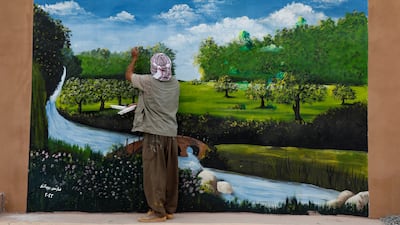
Artist Fares Bibani, 55, paints a colourful mural on the wall of a house in Beban village in Mosul, Iraq. All photos: Reuters -

Several walls in the main square of the village have murals depicting the Yazidi way of life as a farming community before the rise of extremist group ISIS -
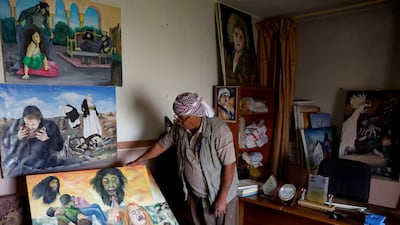
Bibani says the aim of the project is to make new generations aware of their heritage -
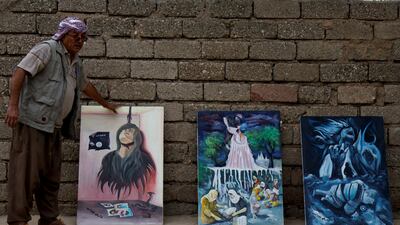
Some of his paintings depict what a UN-appointed commission of independent war crimes investigators said was genocide against the Yazidis -

A woman buys vegetables near one of Bibani's murals -
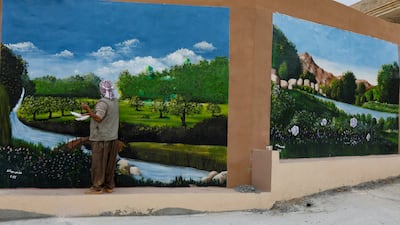
Bibani started his project in March 2022 and says he will continue to paint until he decorates the entire village


Yazidis believe in a supreme being, known as Yasdan, the creator, who has seven angels. They include Melek Tawwus, or the Peacock angel, who fell from grace but was forgiven and returned to God, to whom he is considered inseparable.
Yazidis pray to Melek Tawwus five times a day. He is also known as Shaytan, meaning devil in Arabic, which led to unjust claims that members are devil worshippers.
UN investigators had claimed to have found clear evidence that genocide was committed by ISIS against Yazidis.
A UN report in 2016 found an ISIS offensive against the group which began in August 2014 “sought to destroy the Yazidis”, with killings and “sexual slavery, enslavement, torture and inhuman and degrading treatment and forcible transfer”.
More than 5,000 people were reportedly killed by the terrorist group.
Lord Ahmad made the announcement ahead of events marking the nine-year anniversary of the atrocities.
A commemoration event in Baghdad to mark the decision has been organised by Yazidi civil society organisations.
The UK’s Ambassador to Iraq, Steve Hitchen, will attend and confirm the UK’s announcement, said the government.
Drought in Iraq reveals Yazidi shrine, cemetery and school – in pictures
-

The ruins of Khanki Primary School, submerged about 40 years ago, have appeared after water levels at Iraq's biggest dam fell. All photos: Ismael Adnan for The National -

A Yazidi man travels by boat on the receding waters of the dam in northern Iraq -

Sheikh Bazid's cemetery in Khanki village also reappeared after water levels hit 40-year lows -

Hamza Eido is the mukhtar, or head, of the new Khanki village -

Mr Eido visits Khanki Primary School, which is now accessible as climate change has reduced the dam's water levels -

The ruins reappeared last month for the second time since they were covered by the dam’s waters in 1985 -

Iraq's climate and water supply problems are bringing to light some of the Kurdish region's historical landmarks -

A grave at Sheikh Bazid's cemetery, which dates back more than a thousand years -

The cemetery used to have more than a thousand graves but only 400 remain -

Mr Eido, the village head, pauses by a memorial stone at the cemetery -

A replica of the Yazidi shrine of Sheikh Bazid in Khanki village. The shrine was built in 1985, after the village was submerged by the dam's waters



