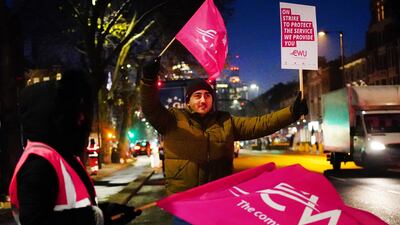
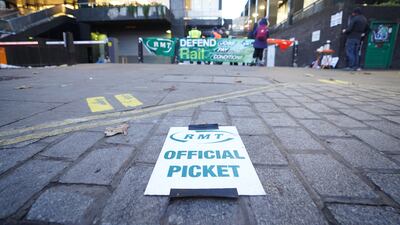
Airlines have been ordered by the UK's aviation regulator to “look after their passengers” ahead of a strike by border workers.
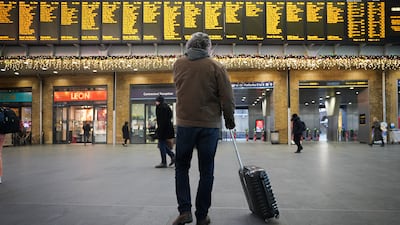
Flight cancellations and large queues are expected at major airports due to the action which takes place amid widespread industrial unrest in Britain.
The Civil Aviation Authority said travellers should be given food, drinks and overnight accommodation as required if flights are delayed or cancelled, but warned that customers are unlikely to be entitled to compensation.
Around 1,000 Border Force staff who are members of the Public and Commercial Services Union at Heathrow, Birmingham, Cardiff, Gatwick, Glasgow and Manchester airports will strike every day from December 23 to the end of the year, except December 27.
The action is part of a bitter dispute over pay, pensions and jobs.
There are fears that delays in checking the passports of arriving passengers could lead to long queues and even people being held on planes, disrupting subsequent departures.
CAA consumer director Paul Smith said that he expected the strikes to lead to longer queues and wait times than normal when arriving at the UK border, as well as possible flight disruption.
“In the event of delays and cancellations, airlines have an obligation to look after their passengers”, he said.
“Where a flight is cancelled, airlines also have an obligation to help passengers find an alternative flight or to provide a refund, although, given the circumstances, passengers may be unable to get to their destinations as quickly as we or airlines would like.
“We expect airlines to do what they can to minimise the overall disruption to passengers, and this includes proactively providing passengers with updates and information about their rights when flights are disrupted.”
He also said that the planned strikes were outside of the control of airlines so it is unlikely that customers will be entitled to compensation for any delays.
Military personnel are being trained to step in at airports if required during the strikes.
The Home Office has warned passengers to “be prepared to face longer wait times at UK border control”.
“We are ready to welcome millions of passengers heading off to enjoy the holidays with family and friends,” Heathrow chief executive John Holland-Kaye said.
“We have extra people in the terminals on the busiest days, including me and my management team, to ensure we get people on their way as smoothly as possible and start to bring the joy back into travel.
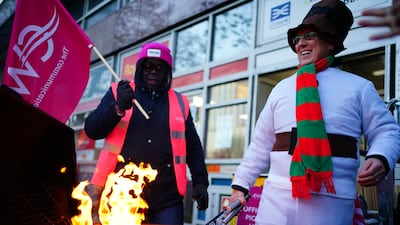
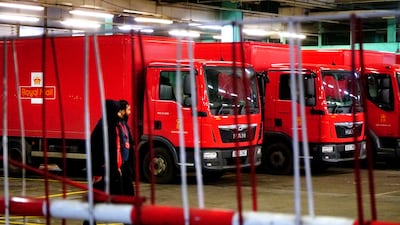
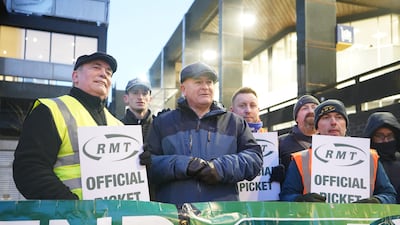
UK strikes – in pictures
“We are doing everything we can to protect full operating schedules on Border Force strike days and departing journeys and the vast majority of arriving journeys should be unaffected.”

Heathrow is confident most travellers will be not be affected by the strike by Border Force officials over the Christmas period.
“We are doing everything we can to protect a full flight schedule on strike days, so departing passengers should expect to travel as normal,” Heathrow said.
“We are ready to welcome millions of passengers heading off to enjoy the holidays with family and friends,” Heathrow chief executive John Holland-Kaye said.
“We have extra people in the terminals on the busiest days, including me and my management team, to ensure we get people on their way as smoothly as possible and start to bring the joy back into travel.
“We are doing everything we can to protect full operating schedules on Border Force strike days and departing journeys and the vast majority of arriving journeys should be unaffected.”

AIR
%3Cp%3E%3Cstrong%3EDirector%3A%20%3C%2Fstrong%3EBen%20Affleck%3Cbr%3E%3Cbr%3E%3Cstrong%3EStars%3A%20%3C%2Fstrong%3EMatt%20Damon%2C%20Jason%20Bateman%2C%20Ben%20Affleck%2C%20Viola%20Davis%3Cbr%3E%3Cbr%3E%3Cstrong%3ERating%3A%3C%2Fstrong%3E%204%2F5%3C%2Fp%3E%0A
HEADLINE HERE
- I would recommend writing out the text in the body
- And then copy into this box
- It can be as long as you link
- But I recommend you use the bullet point function (see red square)
- Or try to keep the word count down
- Be wary of other embeds lengthy fact boxes could crash into
- That's about it
Evacuations to France hit by controversy
- Over 500 Gazans have been evacuated to France since November 2023
- Evacuations were paused after a student already in France posted anti-Semitic content and was subsequently expelled to Qatar
- The Foreign Ministry launched a review to determine how authorities failed to detect the posts before her entry
- Artists and researchers fall under a programme called Pause that began in 2017
- It has benefited more than 700 people from 44 countries, including Syria, Turkey, Iran, and Sudan
- Since the start of the Gaza war, it has also included 45 Gazan beneficiaries
- Unlike students, they are allowed to bring their families to France
The%20Mother%20
%3Cp%3E%3Cstrong%3EDirector%3A%3C%2Fstrong%3E%20Niki%20Caro%26nbsp%3B%3C%2Fp%3E%0A%3Cp%3E%3Cstrong%3EStars%3A%3C%2Fstrong%3E%20Jennifer%20Lopez%2C%20Joseph%20Fiennes%2C%20Gael%20Garcia%20Bernal%2C%20Omari%20Hardwick%20and%20Lucy%20Paez%3C%2Fp%3E%0A%3Cp%3E%3Cstrong%3ERating%3A%3C%2Fstrong%3E%203%2F5%3C%2Fp%3E%0A
Lexus LX700h specs
Engine: 3.4-litre twin-turbo V6 plus supplementary electric motor
Power: 464hp at 5,200rpm
Torque: 790Nm from 2,000-3,600rpm
Transmission: 10-speed auto
Fuel consumption: 11.7L/100km
On sale: Now
Price: From Dh590,000
Mercer, the investment consulting arm of US services company Marsh & McLennan, expects its wealth division to at least double its assets under management (AUM) in the Middle East as wealth in the region continues to grow despite economic headwinds, a company official said.
Mercer Wealth, which globally has $160 billion in AUM, plans to boost its AUM in the region to $2-$3bn in the next 2-3 years from the present $1bn, said Yasir AbuShaban, a Dubai-based principal with Mercer Wealth.
“Within the next two to three years, we are looking at reaching $2 to $3 billion as a conservative estimate and we do see an opportunity to do so,” said Mr AbuShaban.
Mercer does not directly make investments, but allocates clients’ money they have discretion to, to professional asset managers. They also provide advice to clients.
“We have buying power. We can negotiate on their (client’s) behalf with asset managers to provide them lower fees than they otherwise would have to get on their own,” he added.
Mercer Wealth’s clients include sovereign wealth funds, family offices, and insurance companies among others.
From its office in Dubai, Mercer also looks after Africa, India and Turkey, where they also see opportunity for growth.
Wealth creation in Middle East and Africa (MEA) grew 8.5 per cent to $8.1 trillion last year from $7.5tn in 2015, higher than last year’s global average of 6 per cent and the second-highest growth in a region after Asia-Pacific which grew 9.9 per cent, according to consultancy Boston Consulting Group (BCG). In the region, where wealth grew just 1.9 per cent in 2015 compared with 2014, a pickup in oil prices has helped in wealth generation.
BCG is forecasting MEA wealth will rise to $12tn by 2021, growing at an annual average of 8 per cent.
Drivers of wealth generation in the region will be split evenly between new wealth creation and growth of performance of existing assets, according to BCG.
Another general trend in the region is clients’ looking for a comprehensive approach to investing, according to Mr AbuShaban.
“Institutional investors or some of the families are seeing a slowdown in the available capital they have to invest and in that sense they are looking at optimizing the way they manage their portfolios and making sure they are not investing haphazardly and different parts of their investment are working together,” said Mr AbuShaban.
Some clients also have a higher appetite for risk, given the low interest-rate environment that does not provide enough yield for some institutional investors. These clients are keen to invest in illiquid assets, such as private equity and infrastructure.
“What we have seen is a desire for higher returns in what has been a low-return environment specifically in various fixed income or bonds,” he said.
“In this environment, we have seen a de facto increase in the risk that clients are taking in things like illiquid investments, private equity investments, infrastructure and private debt, those kind of investments were higher illiquidity results in incrementally higher returns.”
The Abu Dhabi Investment Authority, one of the largest sovereign wealth funds, said in its 2016 report that has gradually increased its exposure in direct private equity and private credit transactions, mainly in Asian markets and especially in China and India. The authority’s private equity department focused on structured equities owing to “their defensive characteristics.”
In%20the%20Land%20of%20Saints%20and%20Sinners
%3Cp%3E%3Cstrong%3EDirector%3A%20%3C%2Fstrong%3ERobert%20Lorenz%3C%2Fp%3E%0A%3Cp%3E%3Cstrong%3EStarring%3A%3C%2Fstrong%3E%20Liam%20Neeson%2C%20Kerry%20Condon%2C%20Jack%20Gleeson%2C%20Ciaran%20Hinds%3C%2Fp%3E%0A%3Cp%3E%3Cstrong%3ERating%3A%20%3C%2Fstrong%3E2%2F5%3C%2Fp%3E%0A
NO OTHER LAND
Director: Basel Adra, Yuval Abraham, Rachel Szor, Hamdan Ballal
Stars: Basel Adra, Yuval Abraham
Rating: 3.5/5
The specs
Engine: 5.0-litre supercharged V8
Transmission: Eight-speed auto
Power: 575bhp
Torque: 700Nm
Price: Dh554,000
On sale: now
The specs
Engine: Turbocharged four-cylinder 2.7-litre
Power: 325hp
Torque: 500Nm
Transmission: 10-speed automatic
Price: From Dh189,700
On sale: now
Email sent to Uber team from chief executive Dara Khosrowshahi
From: Dara
To: Team@
Date: March 25, 2019 at 11:45pm PT
Subj: Accelerating in the Middle East
Five years ago, Uber launched in the Middle East. It was the start of an incredible journey, with millions of riders and drivers finding new ways to move and work in a dynamic region that’s become so important to Uber. Now Pakistan is one of our fastest-growing markets in the world, women are driving with Uber across Saudi Arabia, and we chose Cairo to launch our first Uber Bus product late last year.
Today we are taking the next step in this journey—well, it’s more like a leap, and a big one: in a few minutes, we’ll announce that we’ve agreed to acquire Careem. Importantly, we intend to operate Careem independently, under the leadership of co-founder and current CEO Mudassir Sheikha. I’ve gotten to know both co-founders, Mudassir and Magnus Olsson, and what they have built is truly extraordinary. They are first-class entrepreneurs who share our platform vision and, like us, have launched a wide range of products—from digital payments to food delivery—to serve consumers.
I expect many of you will ask how we arrived at this structure, meaning allowing Careem to maintain an independent brand and operate separately. After careful consideration, we decided that this framework has the advantage of letting us build new products and try new ideas across not one, but two, strong brands, with strong operators within each. Over time, by integrating parts of our networks, we can operate more efficiently, achieve even lower wait times, expand new products like high-capacity vehicles and payments, and quicken the already remarkable pace of innovation in the region.
This acquisition is subject to regulatory approval in various countries, which we don’t expect before Q1 2020. Until then, nothing changes. And since both companies will continue to largely operate separately after the acquisition, very little will change in either teams’ day-to-day operations post-close. Today’s news is a testament to the incredible business our team has worked so hard to build.
It’s a great day for the Middle East, for the region’s thriving tech sector, for Careem, and for Uber.
Uber on,
Dara