Portugal is bracing for a series of summer heatwaves, after Spain experienced its hottest May on record. Reuters

Global warming predicted to ruin farming and tourism in parts of Spain and Portugal


Layla Maghribi
  • English
  • Arabic

Climate change has made parts of Portugal and Spain the driest they have been in more than 1,000 years, researchers revealed this week.

They say that human-caused global warming has reduced vital winter rains, with “severe implications for farming and tourism”, including the production of olive oil.

A new modelling study publishing in the Nature Geoscience journal shows that the Azores High, an atmospheric high-pressure system referred to as a “gatekeeper” for European rainfall, has expanded as the planet has warmed.

Researchers said the Azores High, which influences the weather and climatic patterns of vast areas of North Africa and Southern and Western Europe, had “changed dramatically in the past century” to create conditions “unprecedented within the past millennium".

Using climate model simulations over the past 1,200 years, the study found that the high-pressure system, typically found south of the Portuguese Azores archipelago in the Atlantic Ocean, started to grow to cover a greater area about 200 years ago, as human greenhouse gas pollution began to increase.

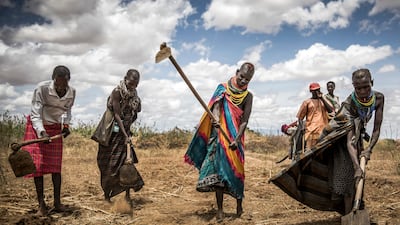
  • Members of the Turkana community plough a dry field as they prepare to grow sorghum near Lodwar, Kenya, in 2019. Save the Children says that 3.5 million people in Kenya are short of food this year. All photos: AFP
    Members of the Turkana community plough a dry field as they prepare to grow sorghum near Lodwar, Kenya, in 2019. Save the Children says that 3.5 million people in Kenya are short of food this year. All photos: AFP
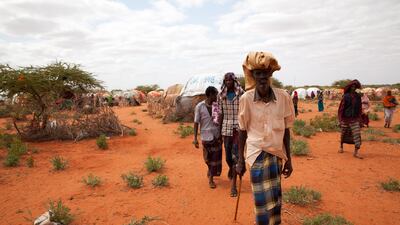
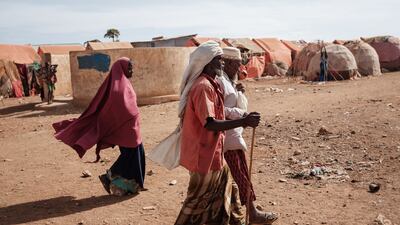
  • People displaced by Ethiopia's drought walk at a camp for displaced people in Werder. The Somali people of Ethiopia's sout-heast have a name for the drought that has killed livestock, dried up wells and forced hundreds of thousands into camps: sima, which means "equalised". It's an appropriate name, they say, because this drought has left no person untouched, spared no corner of their arid region. And it has forced 7.8 million people across Ethiopia to rely on emergency food handouts to stay alive.
    People displaced by Ethiopia's drought walk at a camp for displaced people in Werder. The Somali people of Ethiopia's sout-heast have a name for the drought that has killed livestock, dried up wells and forced hundreds of thousands into camps: sima, which means "equalised". It's an appropriate name, they say, because this drought has left no person untouched, spared no corner of their arid region. And it has forced 7.8 million people across Ethiopia to rely on emergency food handouts to stay alive.
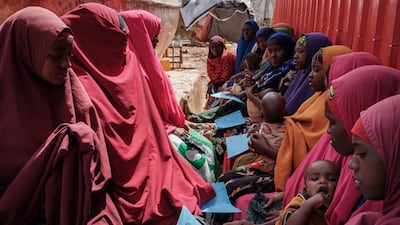
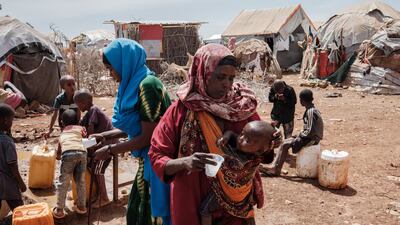
  • Mothers wait for food relief and health services at Tawkal 2 Dinsoor camp for internally displaced people in Baidoa, Somalia, in February. Insufficient rainfall since late 2020 has come as a fatal blow to populations already suffering from a locust invasion between 2019 and 2021, and the Covid-19 pandemic.
    Mothers wait for food relief and health services at Tawkal 2 Dinsoor camp for internally displaced people in Baidoa, Somalia, in February. Insufficient rainfall since late 2020 has come as a fatal blow to populations already suffering from a locust invasion between 2019 and 2021, and the Covid-19 pandemic.
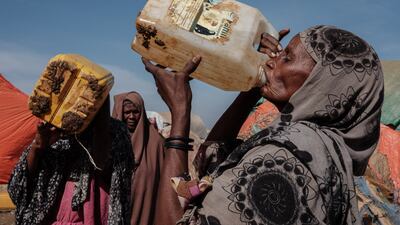
  • Hawa Mohamed Isack, 60, drinks water at Muuri, one of the 500 camps for internally displaced people, in Baidoa. For several weeks, humanitarian organisations have multiplied alerts on the situation in the Horn of Africa, which raises fears of a tragedy similar to that of 2011, the last famine that killed 260,000 people in Somalia.
    Hawa Mohamed Isack, 60, drinks water at Muuri, one of the 500 camps for internally displaced people, in Baidoa. For several weeks, humanitarian organisations have multiplied alerts on the situation in the Horn of Africa, which raises fears of a tragedy similar to that of 2011, the last famine that killed 260,000 people in Somalia.
  • Bulley Hassanow Alliyow,30, gives water to her child at Tawkal 2 Dinsoor camp for internally displaced people in Baidoa.
    Bulley Hassanow Alliyow,30, gives water to her child at Tawkal 2 Dinsoor camp for internally displaced people in Baidoa.
  • Desperate, hungry and thirsty, more and more people are flocking to Baidoa from rural areas of southern Somalia.
    Desperate, hungry and thirsty, more and more people are flocking to Baidoa from rural areas of southern Somalia.
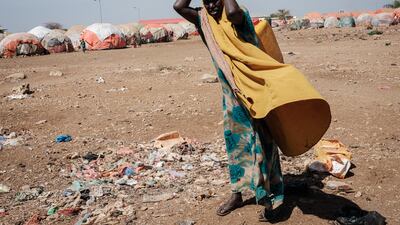
  • Somalia is one of the countries hardest hit by the drought that is engulfing the Horn of Africa.
    Somalia is one of the countries hardest hit by the drought that is engulfing the Horn of Africa.
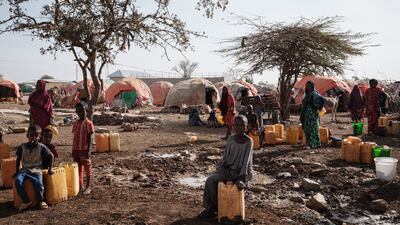
  • People wait for water with containers at a camp, in Baidoa.
    People wait for water with containers at a camp, in Baidoa.
  • A field worked by Othman Cheikh Idriss, 60, a Sudanese farmer, in the capital Khartoum's district of Jureif Gharb.
    A field worked by Othman Cheikh Idriss, 60, a Sudanese farmer, in the capital Khartoum's district of Jureif Gharb.
  • An aerial veiw of the town of Baidoa, Somalia.
    An aerial veiw of the town of Baidoa, Somalia.

It extended its reach even further in the 20th century in step with global warming.

“The number of extremely large Azores highs in the last 100 years is really unprecedented when you look at the previous 1,000 years,” said Dr Caroline Ummenhofer, of Woods Hole Oceanographic Institution in the US, part of the research team.

“That has big implications because an extremely large Azores high means relatively dry conditions for the Iberian Peninsula and the Mediterranean.”

Those regions have been hit by an increasing number of heatwaves and droughts in recent years. This May was the hottest on record in Spain and Portugal is bracing for another heatwave as much of the country experiences severe drought.

The study cites projections that the level of precipitation could fall by another 10 per cent to 20 per cent by the end of this century, which the authors say would make Iberian agriculture "some of the most vulnerable in Europe".

A study cited in the latest research estimates that the area suitable for growing grapes in the Iberian Peninsula could shrink by at least a quarter and potentially vanish completely by 2050 because of severe water shortages.

Meanwhile, researchers have predicted a 30 per cent drop in production for olive regions in southern Spain by the year 2100.

Last year, scientists found that a severe spring frost that ravaged grape vines in France was made more likely by climate change, with plants budding earlier and therefore being more susceptible to damage from the colder weather.


UAE currency: the story behind the money in your pockets

GOLF’S RAHMBO

- 5 wins in 22 months as pro
- Three wins in past 10 starts
- 45 pro starts worldwide: 5 wins, 17 top 5s
- Ranked 551th in world on debut, now No 4 (was No 2 earlier this year)
- 5th player in last 30 years to win 3 European Tour and 2 PGA Tour titles before age 24 (Woods, Garcia, McIlroy, Spieth)

What drives subscription retailing?

Once the domain of newspaper home deliveries, subscription model retailing has combined with e-commerce to permeate myriad products and services.

The concept has grown tremendously around the world and is forecast to thrive further, according to UnivDatos Market Insights’ report on recent and predicted trends in the sector.

The global subscription e-commerce market was valued at $13.2 billion (Dh48.5bn) in 2018. It is forecast to touch $478.2bn in 2025, and include the entertainment, fitness, food, cosmetics, baby care and fashion sectors.

The report says subscription-based services currently constitute “a small trend within e-commerce”. The US hosts almost 70 per cent of recurring plan firms, including leaders Dollar Shave Club, Hello Fresh and Netflix. Walmart and Sephora are among longer established retailers entering the space.

UnivDatos cites younger and affluent urbanites as prime subscription targets, with women currently the largest share of end-users.

That’s expected to remain unchanged until 2025, when women will represent a $246.6bn market share, owing to increasing numbers of start-ups targeting women.

Personal care and beauty occupy the largest chunk of the worldwide subscription e-commerce market, with changing lifestyles, work schedules, customisation and convenience among the chief future drivers.

UAE v Gibraltar

What: International friendly

When: 7pm kick off

Where: Rugby Park, Dubai Sports City

Admission: Free

Online: The match will be broadcast live on Dubai Exiles’ Facebook page

UAE squad: Lucas Waddington (Dubai Exiles), Gio Fourie (Exiles), Craig Nutt (Abu Dhabi Harlequins), Phil Brady (Harlequins), Daniel Perry (Dubai Hurricanes), Esekaia Dranibota (Harlequins), Matt Mills (Exiles), Jaen Botes (Exiles), Kristian Stinson (Exiles), Murray Reason (Abu Dhabi Saracens), Dave Knight (Hurricanes), Ross Samson (Jebel Ali Dragons), DuRandt Gerber (Exiles), Saki Naisau (Dragons), Andrew Powell (Hurricanes), Emosi Vacanau (Harlequins), Niko Volavola (Dragons), Matt Richards (Dragons), Luke Stevenson (Harlequins), Josh Ives (Dubai Sports City Eagles), Sean Stevens (Saracens), Thinus Steyn (Exiles)

Updated: July 05, 2022, 4:57 PM