

The latest climate report from the UN sets out the action needed to tackle the global warming crisis.
Here are answers to some key questions about the report.
What is the report?
It is the third part of a global assessment of climate science by the Intergovernmental Panel on Climate Change, the sixth such assessment the UN body has conducted, with the most recent one being in 2013-2014.
This third report looks at “mitigation” or the action needed to curb global warming by cutting greenhouse gas emissions.
The first part, labelled a “code red for humanity” when it was published last August, examined the physical basis of climate change.
The second report in February this year spelt out the effects of rising temperatures and the options for, and limits to, adapting to them.
What is the IPCC?
It is the UN body for assessing the science related to climate change. It was established in 1988 to provide political leaders with scientific assessments on climate change, to help them make policy.
About 195 countries are members of the IPCC.
What is different about this report?
The IPCC reports are an assessment of all the available science on climate change.
This latest study refers to more than 18,000 studies and sources, and has involved hundreds of authors from around the world who have received tens of thousands of comments on earlier drafts from scientists and governments.
-
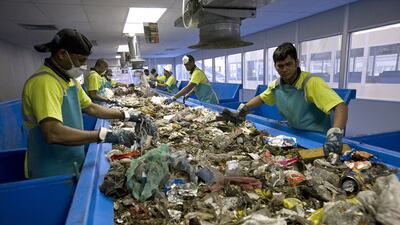
Workers sift through the rubbish from the Sharjah landfill to separate the recyclables. Jeff Topping / The National -

The UAE aims to recycle or reuse 75 per cent of municipal solid waste by the end of 2021. Silvia Razgova / The National -

Organisers and volunteers fill bags with used water bottles, old cans, bits of wood and a huge haul of plastic rubbish as they work their way along Hameem Beach in Al Dhafra. Delores Johnson / The National -
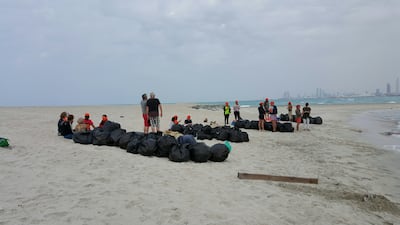
Every year the Netherlands embassy in Abu Dhabi, together with the Consulate General in Dubai, organises a teambuilding event. This was a beach clean-up in which 100 bags of rubbish were filled. Photo: Embassy of the Netherlands in Abu Dhabi -
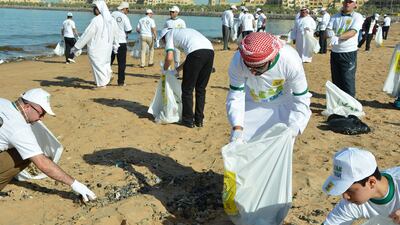
Two tonnes of waste were collected by hundreds of volunteers for the 14th Clean Up UAE by the Emirates Environmental Group. The National -
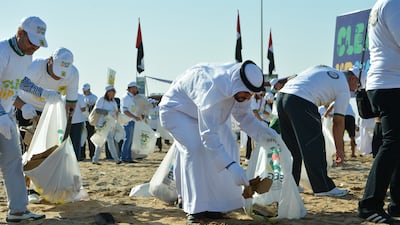
More from Clean Up UAE. Photo: Emirates Environmental Group -
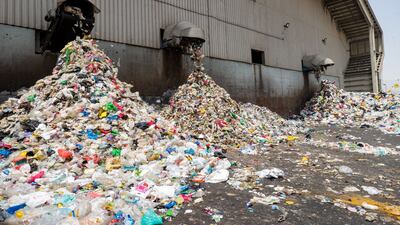
Solid waste bound for landfill at the Bee'ah waste management complex in Sharjah. The UAE is building one of the world’s largest waste-to-energy plants to process its growing amount of rubbish. Christopher Pike / Bloomberg -
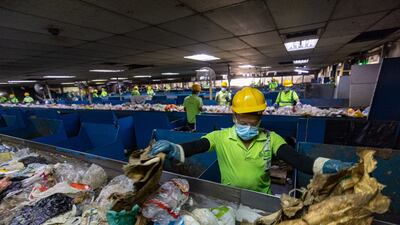
Workers sort solid waste material at the Bee'ah waste management complex in Sharjah. Christopher Pike / Bloomberg


Most importantly, the 63-page summary of the report has been subject to a line-by-line approval process involving scientists and representatives of the 195 governments before publication, which has taken place online over the last two weeks.
It significantly overran its scheduled Friday finishing time, wrapping up the approval process late on Sunday evening, but it does mean that governments have approved the findings.
What does the report say?
It warns that without deep and immediate cuts to greenhouse gas emissions in all sectors, it will be impossible to limit global warming to 1.5°C above pre-industrial levels, beyond which the most catastrophic impacts of climate change will be felt.
That means substantial reduction in the use of fossil fuels, a switch to clean energy such as increasingly cheap renewables, technology to capture carbon and increasing factors including electric cars and energy efficiency in buildings.
It also highlights ways to encourage people to make greener choices, such as plant-based diets or choosing to walk and cycle, and warns that measures to take carbon from the atmosphere, including tree planting and new technology, will also be needed.
What effect will it have?
The first part of the assessment came out in the run-up to the Cop26 climate summit in Glasgow, which aimed – and just about managed – to keep limiting global warming to 1.5°C within reach.
The second part of the report landed just days after the world was plunged into a geopolitical crisis with Russia’s invasion of Ukraine.
The war, which worsened already soaring energy prices as western nations rushed to shift away from Russian oil and gas, has put security of supplies and fuel costs at the top of the agenda for many countries, including the UK.

