
The rapid spread of coronavirus across the world has been accompanied by a flood of stories about the new disease. Disinformation and rumours have been rife and the difficulty of distinguishing fact from fiction within the torrent of Whatsapp forwards, Twitter updates and Facebook posts has prompted many governments and health authorities to issue warnings.
“We’re not just fighting an epidemic; we’re fighting an infodemic," head of the World Health Organisation (WHO) Dr Tedros Adhanom Ghebreyesus reiterated at the beginning of March. As the number of cases climbs, fuelling more dialogue around the disease, big technology platforms have responded with services to help users identify misinformation and prevent them from passing it on.
A joint industry statement from Facebook, Google, LinkedIn, Microsoft, Reddit, Twitter and YouTube on March 16 said they were working closely together on response efforts to the disease.
"We’re helping millions of people stay connected while also jointly combating fraud and misinformation about the virus, elevating authoritative content on our platforms, and sharing critical updates in co-ordination with government healthcare agencies around the world. We invite other companies to join us as we work to keep our communities healthy and safe," the statement said.
Facebook Coronavirus Information Centre
On March 18, Facebook launched its Coronavirus (Covid-19) Information Centre to be featured at the top of news feeds so users can access real-time updates from national health authorities and global organisations. This was followed by the Messenger Coronavirus Community Hub, with tips, resources and advice on spotting scams and misinformation online.
Facebook has also launched a US$1 million programme with the International Fact-Checking Network to provide flash grants worth up to $50,000 to organisations working on Covid-19 related misinformation.
-
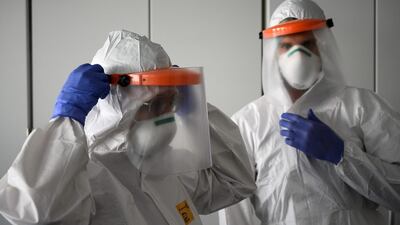
Nurses put on their Personal Protective Equipment (PPE) before starting to work on the preparation of the Intensive care unit in the new Covid-19 Hospital in Verduno, near Alba, Northwestern Italy on the eve of its official opening. AFP -
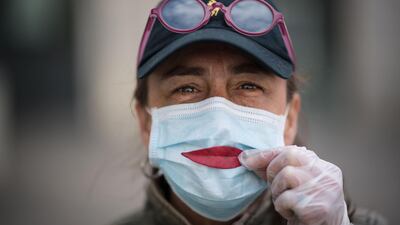
A woman wearing a protective mask holds a leaf as a smile in Nantes, western France, on the thirteenth day of a lockdown. AFP -

A lady is seen with binoculars in a hotel room at Crown Promenade Hotel in Melbourne. Travellers and Australian residents who arrive into the country from overseas are being sent straight to makeshift quarantine facilities across Australia, and will spend 14 days of quarantine in state-funded hotel rooms, with doors guarded by state police, defence personnel or private security guards. EPA -
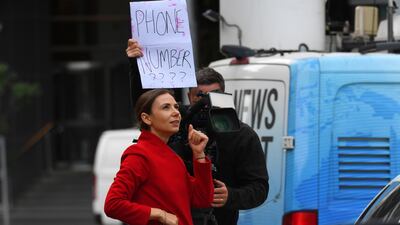
A television journalist attempts to get a phone number of someone in quarantine at Crown Promenade Hotel in Melbourne. EPA -

A medical professional wearing protective gear prepares drugs for a patient infected with coronavirus (COVID-19) in the intensive care unit of the General University Hospital in Prague, Czech Republic. Getty Images -

People wearing face masks are seen outside a Giorgio Armani store at a shopping mall in Wuhan, Hubei province, the epicentre of China's coronavirus disease (COVID-19) outbreak. REUTERS -
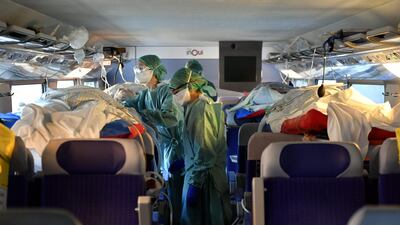
French nurses take care of four patients infected with the novel coronavirus (COVID-19) in a medicalised TGV (high-speed train) at Nancy train station as 24 patients from Nancy and Metz are being transfered from Nancy and Metz towards Bordeaux, Libourne, Pau and Bayonne. AFP -
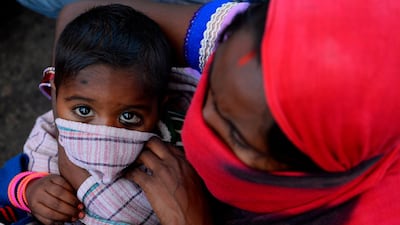
A mother covers her child's face with a cloth outside Anand Vihar bus terminal as they leave India's capital for their homes during a government-imposed nationwide lockdown as a preventive measure against the COVID-19 coronavirus, in New Delhi. AFP -

Medical staff move a patient infected with the novel coronavirus, COVID-19, into a German medicalised Airbus A400M transport plane in Strasbourg, eastern France, to be evacuated to the German cities of Stuttgart and Ulm for medical attention. AFP -
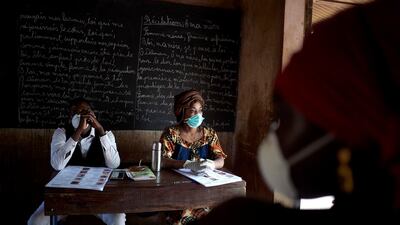
Electoral officials wear masks and gloves as a preventive measure against the spread of the COVID-19 coronavirus during the parliamentary elections in Bamako. AFP -
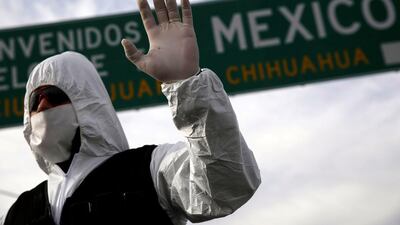
A member of traffic police wearing a protective suit gestures during the coronavirus disease (COVID-19) outbreak at the Mexico and United States border, in Ciudad Juarez, Mexico. REUTERS -

A worker inspects a disinfection chamber installed on a sidewalk as part of measures against the spreading of coronavirus disease (COVID-19), in Escobedo, on the outskirts of Monterrey, Mexico. REUTERS -
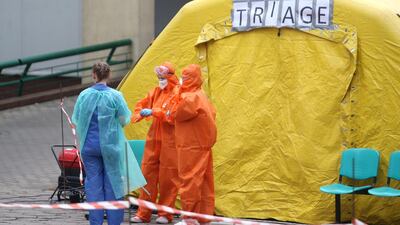
Medics wait outside a special tent during the coronavirus disease (COVID-19) outbreak, outside a hospital in Warsaw, Poland. REUTERS -

A woman wearing a face mask, runs in front of a truck spraying disinfectant on the street as part of measures to prevent the potential spread of coronavirus (COVID-19), in Addis Ababa, Ethiopia. REUTERS -
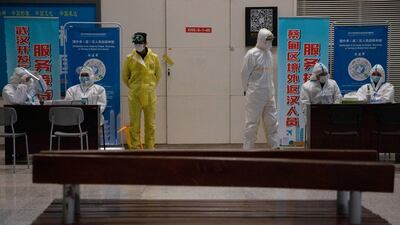
Workers in protective gear wait for arrivals at a train station in Wuhan in central China's Hubei province. AP Photo -

Passengers wearing face masks, amid concerns of the COVID-19 coronavirus, queueing up to check-in before boarding flights at Yichang Sanxia Airport in Yichang in China's central Hubei province. AFP


Users in some countries may have noticed information from the WHO and local health ministries appear at the top of their Instagram feed. On March 13, Instagram said they were clamping down on the kind of coronavirus-related material that could be searched on the platform.
“We will no longer allow people to search for Covid-19 related [augmented reality] effects on Instagram, unless they were developed in partnership with a recognised health organisation. This is part of our ongoing effort to better connect people with credible health information,” the company said in a post.
Instagram also pledged to remove harmful material related to the pandemic, block hashtags being used to spread misinformation and send posts that may be misleading to fact-checking organisations.
Whatsapp Information Hub
Parent company Facebook almost doubled the server capacity for Whatsapp in mid-March to accommodate the growing number of video and voice calls around the world as people replace social engagements with social media. It also announced the Whatsapp Hub with tips on how healthcare workers, educators and local businesses can stay connected using the platform.
Users can sign up to receive the WHO Health Alert — a daily report featuring the latest numbers of coronavirus cases. This includes advice on preventing the spread of the disease and answers to commonly asked questions, which people are encouraged to share with family and friends.
Microsoft coronavirus chat bot
The US Centre for Disease Control and Prevention has partnered with Microsoft to develop a coronavirus self-checker called Clara that helps people with symptoms decide whether they should go to hospital.
The artificial intelligence-powered chat tool, which applies to users in the US, asks a series of questions about age, location and symptoms before offering advice on whether they need urgent medical attention.
Google coronavirus testing website
There has been some confusion over the scope of Google’s Covid-19 screening website after US President Donald Trump claimed in a press conference that the tech giant would be providing a platform directing people to testing sites. This turned out to be incorrect.
Google’s sister company Verily was developing a screening site, but tests were only available for a small number of people.
Since then, Google has introduced a website offering education, prevention advice and local resources. The company has also upgraded its search format with a bar at the top of the screen to make coronavirus data more accessible.
On March 18, Twitter updated its safety policy to prohibit tweets that “could place people at a higher risk of transmitting Covid-19.” The company said it requires people to remove posts denying expert guidance, encouraging people to use fake or ineffective treatments, and misleading content purporting to be from experts or authorities.

