


![“See this old dukan [store]?,” Mr Al Noubayt asks The National. “I recreated all the products that were around here in the 1970s – you see them here along the store aisles,” he says, pointing to miniature boxes of Pampers, Tide detergent, Abu Waza tea and many others. His traditional miniature Saudi homes, made from mud, sugar, cushioning foam and other, “secret” ingredients, sell for Dh200 upwards, depending on the complexity of the design. Rym Ghazel / The National](https://www.thenationalnews.com/resizer/v2/6CI7GOKSCTURKK4HZTQ3VJCC4Y.jpg?smart=true&auth=38480e4e08067c7c356668d4e997c33b5f22b83f201f982313c89bb8d8c053ef&width=800&height=450)
Saudi Arabia’s King Abdulaziz Camel Festival, the largest such event in the region, is being held this year from March 19 until April 15. According to organisers, the festival has so far brought an average of more than 35,000 visitors a day to Al Sayaheed, a small village in the Rumah governorate of Riyadh province that was this year designated the event’s permanent home.
-

-

The location was for centuries a meeting point for camel caravans arriving from all points on the Arabian peninsula, carrying goods and trading animals. Now the King Abdulaziz Foundation for Research and Archives that organises the festival wants to make Al Sayaheed the camel capital of the world and part of the transformation of Saudi Arabia’s oil-dependent economy. Courtesy King Abdulaziz Camel Festival -

A group of camels get ready for the festival’s camel auction. Rym Ghazel / The National -

One of the stalls in the festival’s Heritage Market is run by Umm Saad, a friendly 60-year-old Saudi Bedouin who sells decorative camel trappings that she has been making for the past 45 years. Rym Ghazel / The National -

A man leads camels at the festival, where this year there are about 30,000 of the animals taking part, with more than 1,300 owners from across the GCC. Fayez Nureldine / AFP Photo -

A Saudi boy poses for a photo with a camel at the festival. This year the event is open to visitors from around the world for the first time, with special visas on arrival being issued through the festival’s website. Fayez Nureldine / AFP Photo -
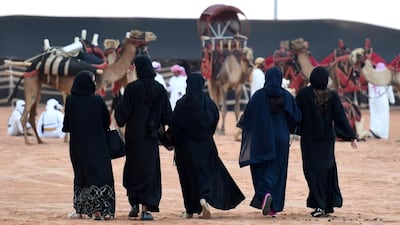
Saudi women attend the festival. The prize money for the “Miss Camel” beauty contests (in which male camels also compete) totals more than Dh112 million. Fayez Nureldine / AFP Photo -
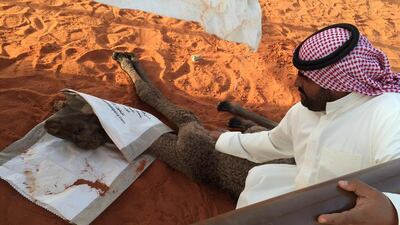
Saudi camel herder Abdullah Tamim is pictured trying to comfort his sick baby camel. Rym Ghazel / The National -

At another stall in the Heritage Market is artist Saleh Ibrahim Al Noubayt, 43, a self-described “father of miniatures” who has taken it upon himself to research old traditional homes and make miniature models of them. Rym Ghazel / The National -
![“See this old dukan [store]?,” Mr Al Noubayt asks The National. “I recreated all the products that were around here in the 1970s – you see them here along the store aisles,” he says, pointing to miniature boxes of Pampers, Tide detergent, Abu Waza tea and many others. His traditional miniature Saudi homes, made from mud, sugar, cushioning foam and other, “secret” ingredients, sell for Dh200 upwards, depending on the complexity of the design. Rym Ghazel / The National](https://www.thenationalnews.com/resizer/v2/6CI7GOKSCTURKK4HZTQ3VJCC4Y.jpg?smart=true&auth=38480e4e08067c7c356668d4e997c33b5f22b83f201f982313c89bb8d8c053ef&width=400&height=225)
“See this old dukan [store]?,” Mr Al Noubayt asks The National. “I recreated all the products that were around here in the 1970s – you see them here along the store aisles,” he says, pointing to miniature boxes of Pampers, Tide detergent, Abu Waza tea and many others. His traditional miniature Saudi homes, made from mud, sugar, cushioning foam and other, “secret” ingredients, sell for Dh200 upwards, depending on the complexity of the design. Rym Ghazel / The National
Saudi Arabia’s King Abdulaziz Camel Festival – in pictures
Most popular today

