


Palmyra, the ancient Syrian city that has fallen to the ISIL militant group, has withstood the last 2,000 years with its immaculate temples and colonnaded streets.
-

-

Palmyra, which means City of Palms, is known in Syria as Tadmor, or City of Dates. File photo from March 14, 2014, shows a sculpture in the ancient Syrian oasis city of Palmyra, 215 kilometres north-east of Damascus, displayed at the city’s museum. Joseph Eid / AFP Photo -

Its name first appeared on a tablet in the 19th century BCE as a stopping point for caravans travelling on the Silk Road and between the Gulf and the Mediterranean. File photo from March 14, 2014 showing a partial view of the ancient oasis city. ISIL seized full control of Palmyra on May 21, 2015, putting the world heritage site at risk of destruction. Joseph Eid / AFP Photo -
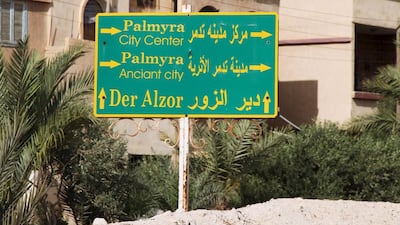
Palmyra rose to prominence during the Roman Empire. Photo from May 19, 2015 shows a road sign in Palmyra city. Reuters -
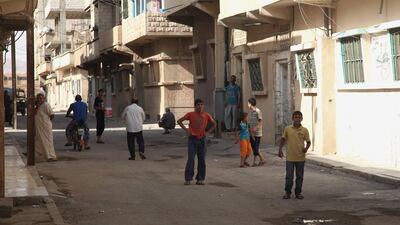
Though surrounded by desert dunes, Palmyra developed into a luxurious metropolis thanks to the trade of spices, perfumes, silk and ivory from the east, and statues and glasswork from Phoenicia. Photo from May 19, 2015 shows residents walking in the city. Reuters -

In the year 129AD, Roman emperor Hadrian declared Palmyra a ‘free city’ within his empire. A general view taken on May 18, 2015. AFP Photo -
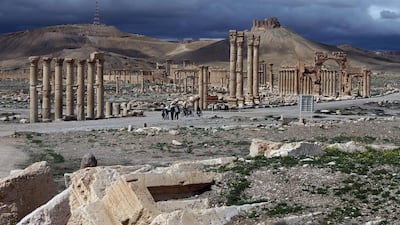
As the Roman Empire faced internal political instability in the third century, Palmyra took the opportunity to declare its independence. File photo from March 14, 2014 shows the citadel of the ancient Palmyra. Joseph Eid / AFP Photo -
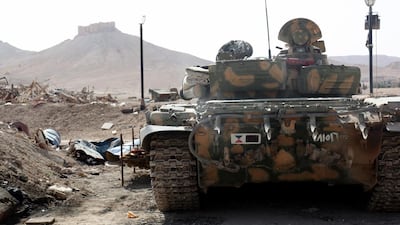
Palmyra bears scars of Syria’s continuing war: clashes between armed rebels and government forces in 2013 left collapsed columns and statues in their wake. Days before its capture, a Syrian armoured tank took up position during battles against ISIL on May 19, 2015. EPA -

According to the governor of Homs province, the inner city is home to about 35,000 people, including those displaced by fighting nearby. Photo handout released on May 17, 2015, by the Syrian official news agency Sana, shows a wide view of the ancient city. Sana via AP -

Another 35,000 live in the city’s suburbs. Seen here on May 19, days before its fall, residents walk near a military lorry that belongs to forces loyal to Syria’s president Bashar Al Assad, near the historical city of Palmyra. Reuters -

Hundreds of statues and artefacts from Palmyra’s museum were transferred out of the city before it fell to ISIL, according to Syria’s antiquities chief Mamoun Abdulkarim. Photo from May 19, 2015 shows Palmyra’s famous graves. Reuters -

Many other priceless archaeological sites, including massive tombs, could not be moved, renewing fears the extremist group will destroy the ruins if they reach them. Photo released on May 17, 2015, by the Syrian official news agency Sana. Sana via AP
Palmyra, Syria’s pearl of the desert — in pictures
Most popular today

