


Allies were split on Tuesday over President Emmanuel Macron's suggestion that sending troops to Ukraine “should not be ruled out” as the French leader recognised that countries were often “six to 12 months late” in delivering military aid to the embattled country.
A number of countries, including close allies of Ukraine such as Poland and Sweden, were quick to clarify that they had no intention of putting soldiers on the ground following Mr Macron's comments on Monday evening. He had been speaking at a press conference following a Ukraine support summit attended by more than 20 leaders.
Reporters questioned Mr Macron on the topic because Slovakia's Prime Minister Robert Fico had said before the meeting that some countries were considering whether to strike bilateral deals to send troops to Ukraine to help it fend off Russian forces, two years after Moscow's full-scale invasion.
Mr Macron warned that “there's no consensus today to officially send, assume and endorse troops on the ground. But … nothing should be excluded”. He declined to clarify France's position, saying that he would maintain “strategic ambiguity”.
Despite his apparent caution, Mr Macron's comments seem to have irked some European countries. Austria's Foreign Affairs Minister Alexander Schallenberg reiterated on Tuesday that there was “no consensus” about sending troops to Ukraine and said it was “surprising” to start such “an unnecessary debate”. Austria is not a Nato member.
Even Nato's secretary general Jens Stoltenberg weighed in, saying: “Nato allies are providing unprecedented support to Ukraine. We have done that since 2014 and stepped up after the full-scale invasion. But there are no plans for Nato combat troops on the ground in Ukraine.”
German deputy chancellor Robert Habeck said there was no chance of Berlin deploying forces. “German soldiers won’t go to Ukraine,” he said.
The suggestion that allies were considering sending troops to Ukraine sent alarm bells ringing in Moscow, where Kremlin spokesman Dmitry Peskov told journalists: “The very fact of discussing the possibility of sending certain contingents to Ukraine from Nato countries is a very important new element.”
Ukraine, however, welcomed Mr Macron's statement. Presidential adviser Mykhailo Podolyak said in a written comment that it showed “an absolute awareness of the risks posed to Europe by a militaristic, aggressive Russia”.
Germany faces criticism
Apparent rifts about how to address the war in Ukraine between Europe's two most influential countries, France and Germany, were also apparent at the Paris summit. Mr Macron made some comments that were widely interpreted as directly pointed at Germany's hesitation to send military aid to Ukraine in the first months of the war.
“Two years ago, many around this table were saying: we are going to offer sleeping bags and helmets,” said the French president. “Today they say: we have to do faster and harder to have missiles and tanks. They have the humility to note that we have often been six to 12 months late.”
The EU has only sent 30 per cent of the million shells it had promised to deliver by March, said Ukraine's President Volodymyr Zelenskyy. “It was undoubtedly an imprudent commitment,” said Mr Macron, who also lauded his country's “discretion” when it comes to support to Ukraine.
In absolute figures, France contributes far less to Ukraine's war effort than Germany, according to the Kiel Institute. It has found that Germany was the second largest donor to the country after the US between January 2022 and October 2023 with over €17.1 billion in military aid. In contrast, France only contributed €0.54 billion.

Despite this contrast in figures, the summit's result seem to have strengthened the perception that France leads Europe's response to the war in Ukraine as German chancellor Olaf Scholz came under fire in his own country for refusing to send Taurus cruise missiles to Ukraine.
Before travelling to Paris, Mr Scholz told reporters that he was against copying “what the British and French are doing in terms of target management and support for target management” with their missiles for Ukraine.
News website Politico has previously reported that Mr Scholz allegedly believes that Taurus missiles would allow Ukraine to target the Kerch bridge linking occupied Crimea with Russia – representing a serious escalation which he is reportedly against.
German politicians criticised Mr Scholz for endangering France and the UK by portraying them as in direct conflict with Russia. Nato allies are bound by Article 5, which states that an attack against one is an attack against all.
Norbert Roettgen, a former chair of the German parliament's foreign affairs committee, described Mr Scholz's comments as irresponsible.
“Both countries provide cruise missiles to Ukraine. Of course that does not make them parties to the conflict,” he said. “Scholz has lost control of his own arguments and is affronting our closest allies.”
Fellow conservative MP Katja Leikert said Mr Scholz was “presenting one spurious argument after another” to block the delivery of Taurus missiles.
“Did France and Britain become parties to the conflict, in his eyes, because they delivered Scalp and Storm Shadow missiles?” she asked. “Does anyone believe that?”
A spokesperson for UK Prime Minister Rishi Sunak said that “beyond the small number of personnel we do have in [the] country supporting the armed forces of Ukraine, we haven't got any plans for large-scale deployment”.
At the Paris summit, some allies also pledged to send more ammunition to Ukraine. The Czech Republic put forward a plan to buy them outside Europe to speed up the process and was publicly supported by the Netherlands, which said it would contribute €100 million to the plan.
Around 15 other countries want to participate in the plan, said Czech Prime Minister Petr Fiala, who did not name the countries. Asked which countries the ammunitions would be bought from, he answered: “It's a secret.”
Two years of the Russia-Ukraine war - in pictures
-
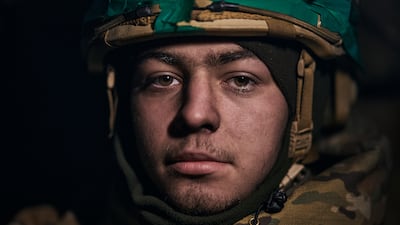
A soldier of the Ukrainian National Guard holds his position in the Serebryan Forest, in temperatures of -15°C in January 2024, in Kreminna, Donetsk Oblast. Getty Images -
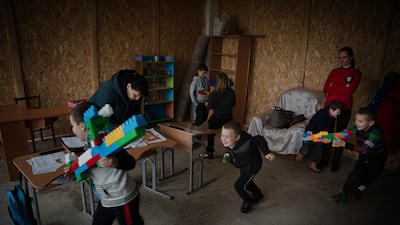
Classmates play with rifles made from Lego blocks after school, in Vysokopillya, December 2023. Getty Images -
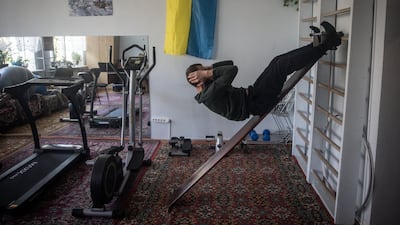
Leonid, a 38-year-old Ukrainian soldier suffering from severe mental trauma, cranial trauma and shrapnel wounds, does his physical training session at a psychiatric hospital in Kyiv, in October 2023. Getty Images -
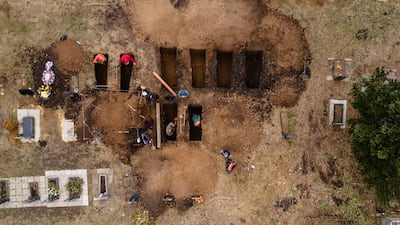
Gravediggers make new graves for the victims of a recent Russian missile strike, at Hroza cemetery, in October 2023. Getty Images -

Oleksander, suffering from a hand injury, relaxes during a speleotherapy session, an alternative medicine respiratory therapy, at a rehabilitation center for soldiers in Kyiv, in October 2023. Getty Images -
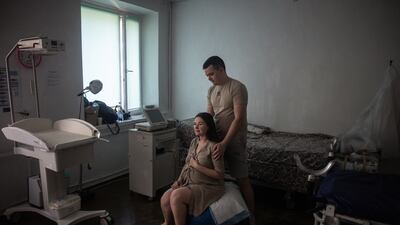
Volodymyr assists his wife Anastasia, as she has contractions before the birth of their first baby, at a maternity hospital in Zaporizhzhia, in September 2023. Ukraine’s birth rate since the start of the war the country's birth rate has plummeted by 28 per cent. Getty Images -
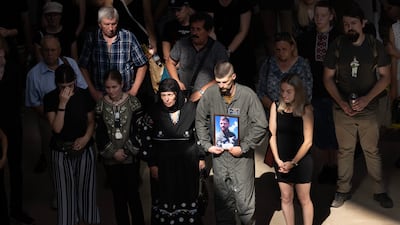
Friends and relatives mourn the death of fighter pilot Andrii Pilshchykov, 30, who was killed along with two other pilots in a mid-air plane crash in Kyiv, in August 2023. Getty Images -

Ukrainian recruits salute the flag as they attend a commemorative service marking Ukraine's Independence Day, in August 2023, in a training camp in the south of England. Getty Images -
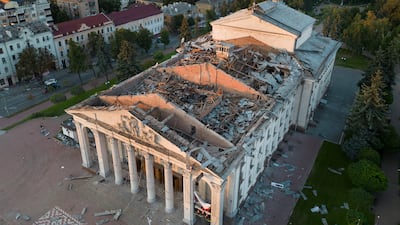
Damage from a missile that hit the Chernihiv Regional Academic Ukrainian Music and Drama Theatre, killilng seven people, in August 2023. Getty Images -
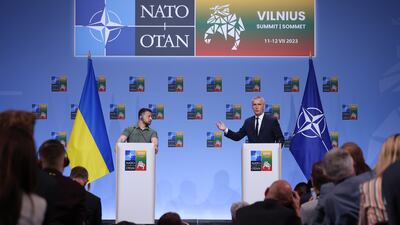
Ukrainian President Volodomyr Zelenskyy and Nato Secretary General Jens Stoltenberg speak to the media at the Nato Summit in July 2023, in Vilnius, Lithuania. Getty Images -
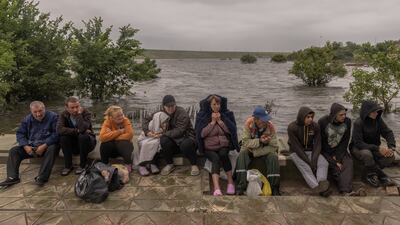
People wait for a transfer on a pontoon in a flooded area as the result of the Kakhovka dam destruction in June 2023 in Afanasiivka village, Mykolaiv region. Getty Images -
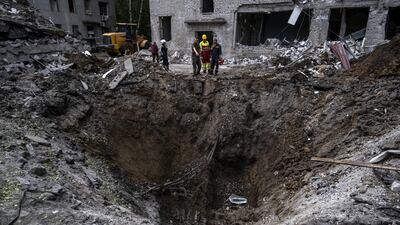
State workers and Ukrainian military personnel inspect the crater left behind by a missile strike in Dnipro, in May 2023. Getty Images -
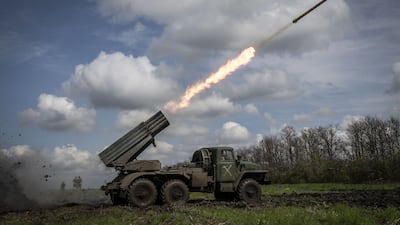
A grad missile is launched on the Donetsk fron tline in April 2023. Getty Images -
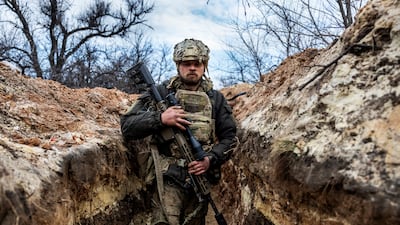
A Ukrainian sniper with the 28th Brigade moves to a fighting position in a front-line trench facing Russian troops in March 2023 outside of Bakhmut. Getty Images -

A damaged bust of Vladimir Lenin lies in the street in March 2023 in in the strategic town of Lyman. Getty Images -
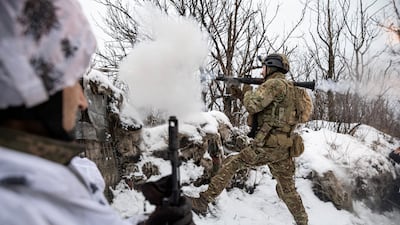
A member of Ukraine's 79th Air Assault Brigade fires a rocket-propelled grenade at Russian positions near Marinka in February 2023. Reuters -
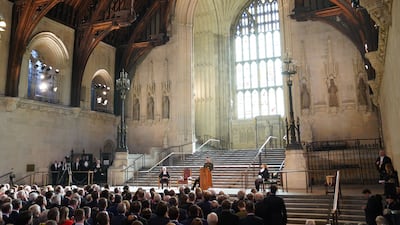
Ukrainian President Volodymyr Zelenskyy addresses MPs in Westminster Hall, London, in February 2023. Getty Images -

Destroyed buildings 32km west of the front lines in Donetsk in January 2023. Getty Images -
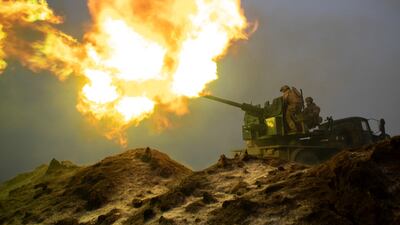
An anti-aircraft gun in January 2023 fires at Russian positions near Bakhmut, Donetsk. Reuters -
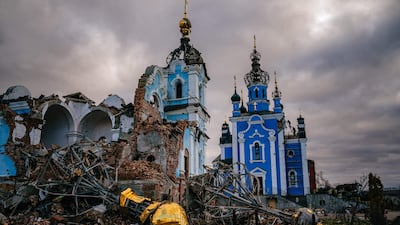
Destruction in the village of Bohorodychne, Donetsk, in January 2023. AFP -

A Ukrainian artilleryman discards an empty shell on the outskirts of Bakhmut, eastern Ukraine, in December 2022. AFP -
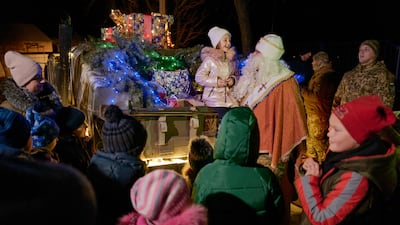
Children receive presents from a Ukrainian soldier dressed as Santa on Christmas Eve 2022 in Sloviansk. Getty Images -
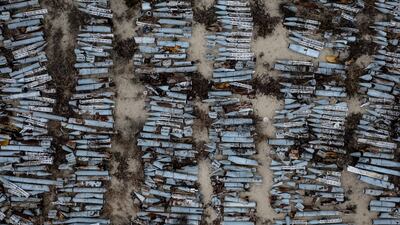
More than 1,000 missiles and rockets fired by Russian forces collected for cataloguing in Kharkiv in December 2022. Getty Images -
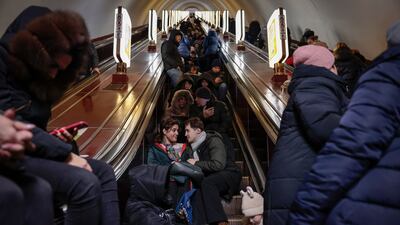
The Metro provides shelter as Russia launches another missile attack on Kyiv, Ukraine's capital, in December 2022. Getty Images -

Children at a PE class in Kyiv after Russia abandoned its attempt to seize the capital in November 2022. Getty Images -
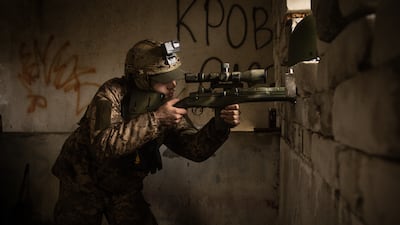
A sniper searches for Russian positions on the bank of the Dnipro river in Kherson in November 2022. Getty Images -
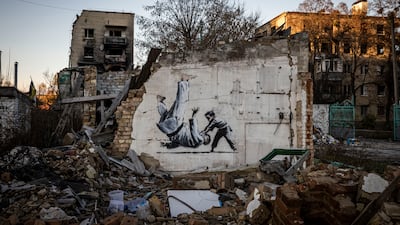
Graffiti by Banksy on a wall among the debris in Borodyanka in November 2022. Getty Images -
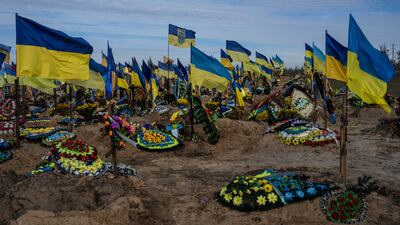
Ukrainian flags flutter around graves in a cemetery for soldiers killed in action in Kharkiv in October 2022. Getty Images -
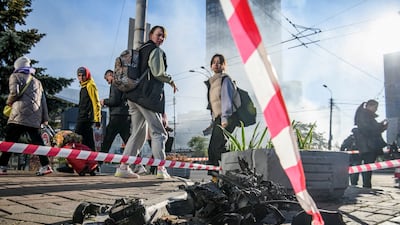
Parts of a drone, which Ukrainian authorities said was Iranian-made, after a Russian strike in Kyiv in October 2022. Reuters -
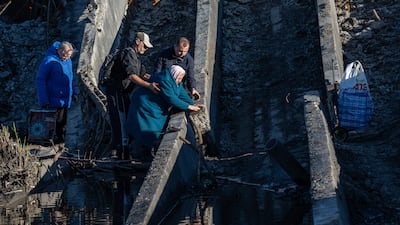
An elderly woman is helped across a damaged bridge in Bakhmut in October 2022. Getty Images -
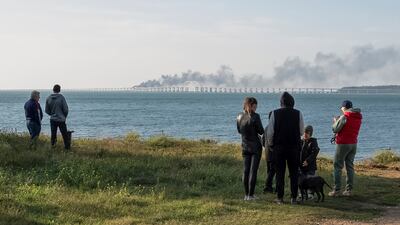
Fuel tanks ablaze on damaged sections of the Kerch bridge in Crimea, in October 2022. Reuters -

A destroyed bridge makes crossing the Donets river difficult, in Staryi Saltiv, east of Kharkiv, in September 2022. AFP -
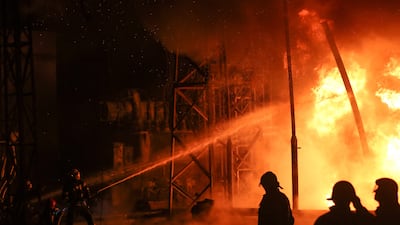
Firefighters at a thermal power plant in Kharkiv damaged by a Russian missile strike in September 2022. Reuters -
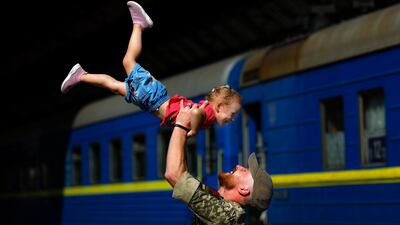
Ukrainian soldier Oleksandr with his daughter Nikole at Lviv railway station in August 2022. Getty Images -
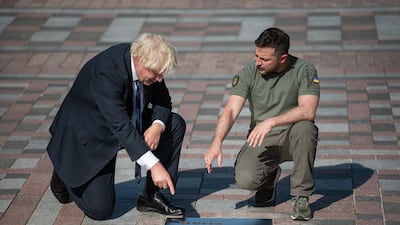
Ukrainian President Volodymyr Zelenskyy and then-British prime minister Boris Johnson read a plaque in Kyiv in August 2022 dedicated to the latter for his support. Getty Images -
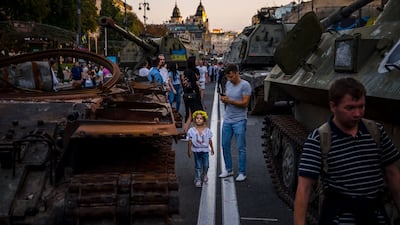
Destroyed Russian military equipment on Khreshchatyk street in Kyiv. The materiel was turned into an open-air military museum ahead of Ukraine's Independence Day on August 24. AFP -
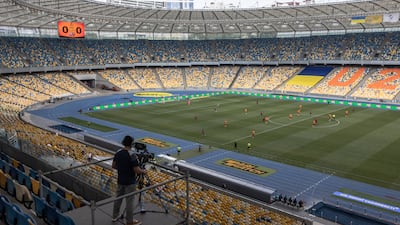
Shakhtar Donetsk v Metalist Kharkiv kicks off the Ukrainian Premier League season in August 2022 amid fears of bomb and missile alerts. EPA -
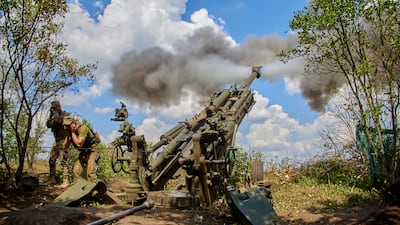
Ukrainian servicemen fire an American-made 155mm M777 howitzer in July 2022 in the Kharkiv area. EPA -
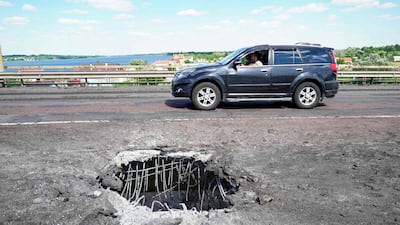
A bomb crater on the Antonovsky bridge across the Dnipro river in Kherson, July 2022. AFP -

Maksym and Andrii with plastic guns at a 'checkpoint' they set up while playing in Kharkiv, July 2022. AP -
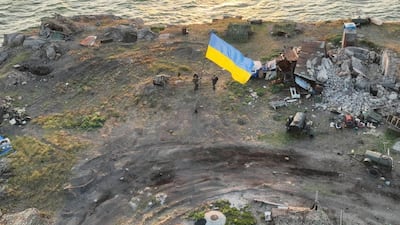
Ukrainian troops on Snake Island in June 2022. Reuters -
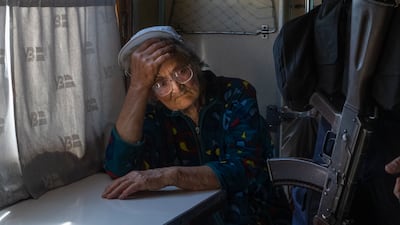
A woman evacuated from an area of conflict in June 2022 contemplates what the next move might be. AP -
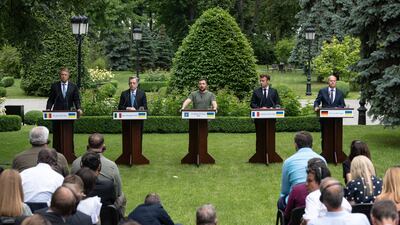
Romanian President Klaus Iohannis, Italian Prime Minister Mario Draghi, Ukrainian President Volodymyr Zelenskyy, French President Emmanuel Macron and German Chancellor Olaf Scholz in Kyiv in June 2022. Getty Images -
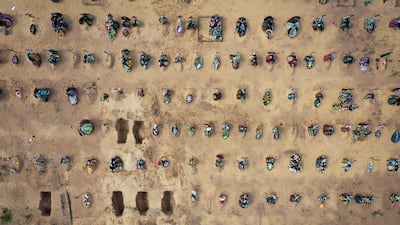
Graves in Irpin cemetery, May 2022. Getty Images -
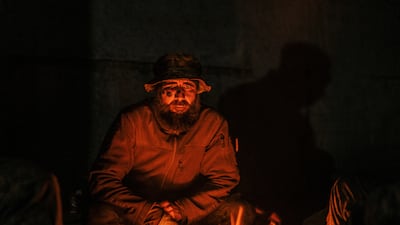
A Ukrainian soldier trapped within the besieged Azovstal Iron and Steel Works complex in Mariupol in May 2022. Reuters -
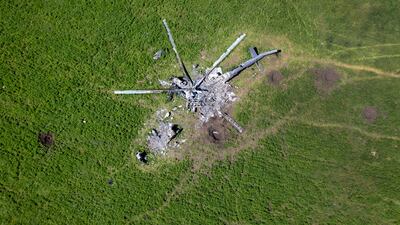
The wreckage of a Russian helicopter in a bomb-cratered field in Biskvitne, May 2022. Getty Images -
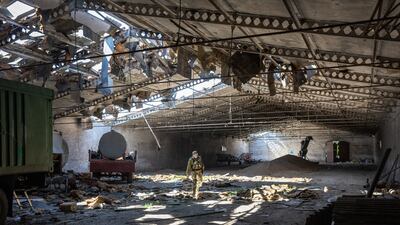
A Ukrainian army officer inspects a grain warehouse shelled by Russian forces in May 2022 near Novovorontsovka, Kherson. Getty Images -
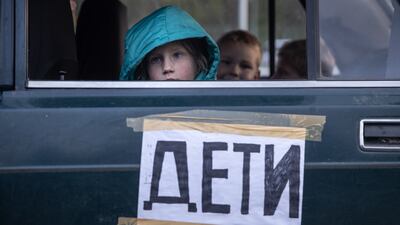
A boy from Mariupol arriving at an evacuation point in Zaporizhzhia in May 2022. Getty Images -
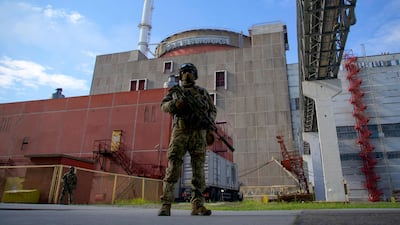
A Russian serviceman on guard outside Zaporizhzhia nuclear power station in May 2022. AFP -
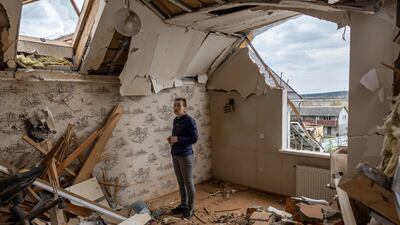
Oksana searches for salvageable items on the destroyed second floor of her home in Hostomel, April 2022. Getty Images -

A floral memorial wall in Lviv for Ukrainian civilians killed during the Russian invasion, April 2022. Getty Images -
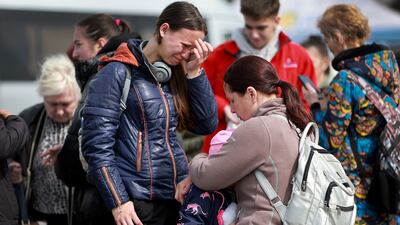
People fleeing Lviv, eastern Ukraine, in April 2022, wait for a bus that will take them to Poland. Getty Images -
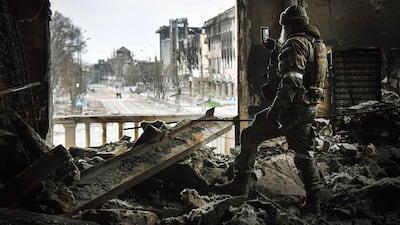
A Russian soldier patrols a bombed Mariupol theatre in April 2022, as Moscow intensified its campaign to take the strategic port city. AFP -
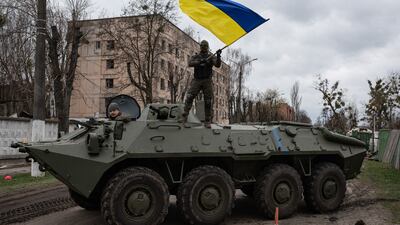
A Ukrainian celebrates success in Hostomel in April 2022. Getty Images -
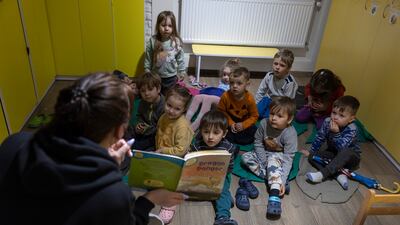
Julia Palovskaya reads to children during an air raid drill in the basement shelter at a preschool in Lviv, April 2022. Getty Images -
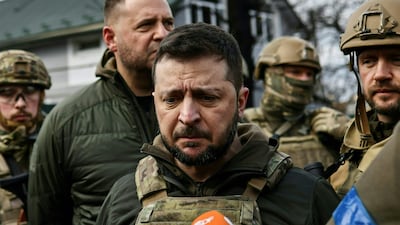
Volodymyr Zelenskyy in Bucha in April 2022, where hundreds of bodies were found in the street and it was claimed the Russian leadership was responsible for killing civilians. AFP -
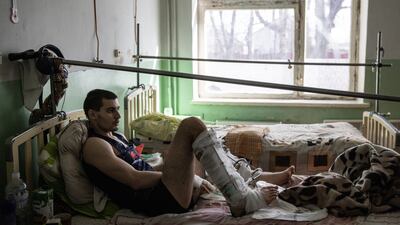
Oleh Smolin, 23, who suffered leg injuries from Russian shelling in April 2022, in hospital in Chuhuiv. Getty Images -
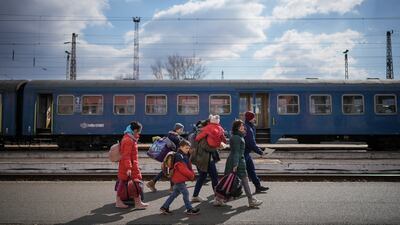
Fleeing refugees arrive at the border train station of Zahony, Hungary, in March 2022. Getty Images -
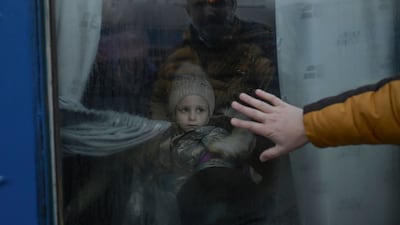
A father says goodbye to his daughter on an evacuation train about to leave Odesa in March 2022. AFP -
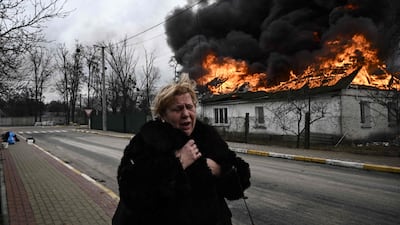
February 24 will be a year since Russia started the Ukraine war. The National picks out the most powerful images from the conflict. AFP -
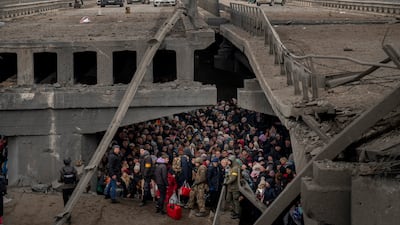
Ukrainians under a destroyed bridge as they try to cross the Irpin river on the outskirts of Kyiv in March 2022. AP -
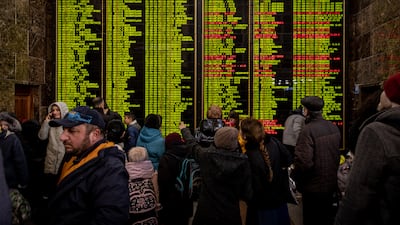
People cram into Kyiv station to catch trains to Poland or to western parts of Ukraine, shortly after the initial invasion in February 2022. Getty Images -
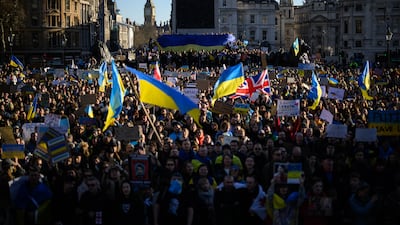
A demonstration in support of Ukraine in Trafalgar Square, London, February 2022 . Getty Images -
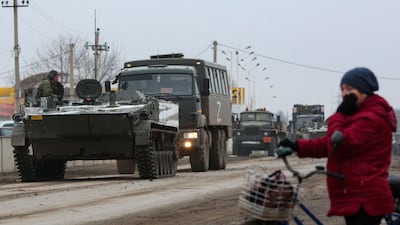
Russian army vehicles in Armyansk, Crimea, in February 2022. AFP -
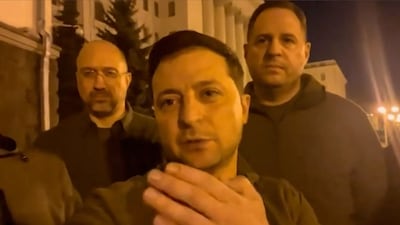
Volodymyr Zelenskyy in Kyiv on February 25, 2022, in a video on Facebook. He said 'we are all here', shortly after the Russian invasion began. AFP -
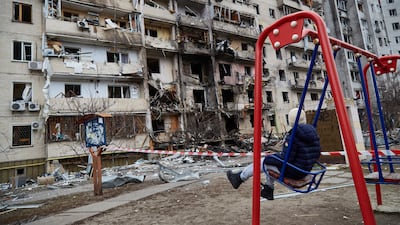
A residential building damaged by a missile strike in Kyiv in February 2022. Getty Images -

A metro station in Kyiv in February 2022, crowded with people trying to escape the invasion. AFP -
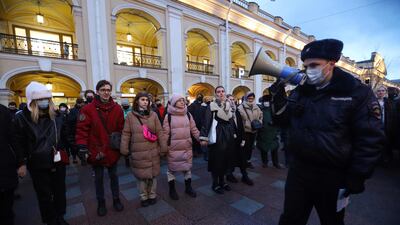
A police officer addresses people gathered to protest against the invasion of Ukraine, in central Saint Petersburg, Russia, February 2022. AFP -
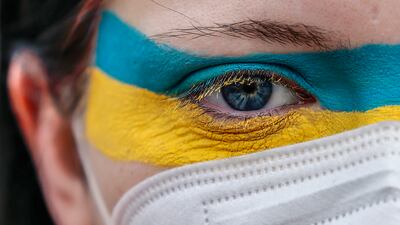
A protester in support of Ukraine, in Berlin, Germany, in February 2022. Getty Images -
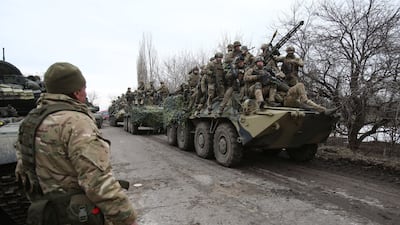
Ukrainian soldiers prepare to repel an attack in Ukraine's Lugansk region on February 24, 2022. AFP -
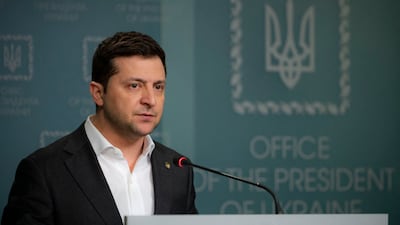
Volodymyr Zelenskyy in Kyiv on February 24, 2022, after Russia launched a full-scale invasion. AFP -
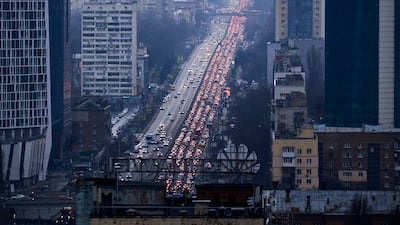
A mass exodus from Kyiv after pre-offensive missile strikes by Russian armed forces on February 24, 2022. Getty Images -
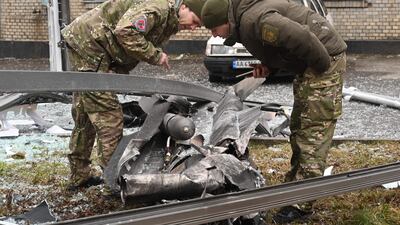
Security personnel inspect the remains of a shell in Kyiv on February 24, 2022, soon after Russian President Vladimir Putin announced a military operation in Ukraine. AFP -
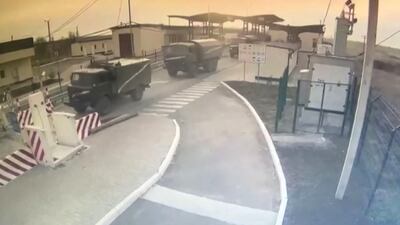
CCTV footage shows Russian military equipment crossing a Crimea border checkpoint on February 24, 2022. AFP -
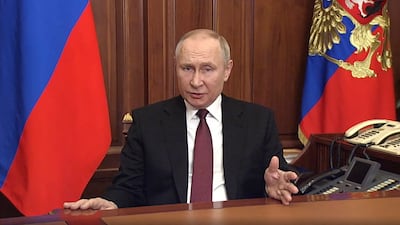
Russian President Vladimir Putin in the Kremlin early on February 24, 2022, when he announced a 'military operation' in Ukraine. AFP



