



Nations must not lose hope and focus in tackling global warming despite the many obstacles to international co-operation, the UN climate chief said on Monday at the start of a 10-day meeting in Bonn, Germany.
Patricia Espinosa, whose second term as head of the UN climate office ends this year, spoke in front of diplomats from around the world who will try, during the international gathering, to lay the foundations for this year’s international climate summit in Egypt.
“I appeal to all of you, especially in these difficult and challenging times, not to lose hope, not to lose focus, but to use our united efforts against climate change as the ultimate act of unity between nations,” she said.
Since signing the 2015 Paris climate accord, most countries have stepped up their efforts to reduce greenhouse gases responsible for human-made global warming.
But, collectively, those pledges still fall far short of what is needed to limit global warming to 1.5ºC above pre-industrial levels by the end of the century.
While Ms Espinosa said that “much more” is needed, she noted that the commitments so far were made during a time of international turmoil — from former US president Donald Trump's decision to pull his country out of the Paris accord, later reversed by the Biden administration, to the first years of the coronavirus pandemic.
“We must never give in to despair,” she said, joining a chorus of scientists and policymakers who reject climate doomism. “We must continue to move forward. Look at what we have accomplished in the last six years.”
Many of the key issues delegates will try to resolve in the coming days centre on financial aid to poor countries struggling to cope with the impact of climate change.
Ms Espinosa made it clear that she expected leaders to provide their delegates with the necessary backing to agree upon what she described as a “balanced package” soon.
“We must understand that climate change is moving exponentially. We can no longer afford to make just incremental progress,” she said. “We must move these negotiations along more quickly. The world expects it.”
-
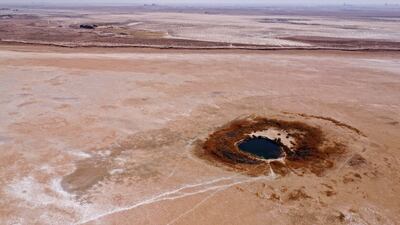
A remaining pond at the dried-up Sawa Lake on the edge of Iraq’s western desert. AFP -
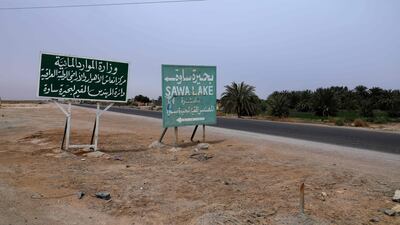
A street sign for Sawa Lake. A sharp drop in rainfall –now only at 30 per cent of what used to be normal for the region – has lowered the underground water table, said a senior advisor at Iraq's water resources ministry. AFP -
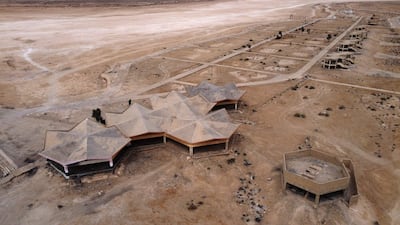
Hotels and tourist facilities near Sawa Lake have been abandoned. AFP -
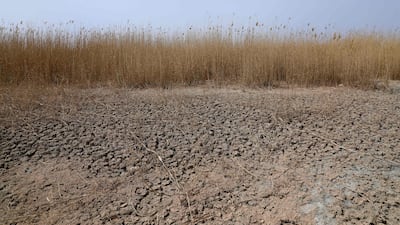
Dry, arid landscape remains. AFP -
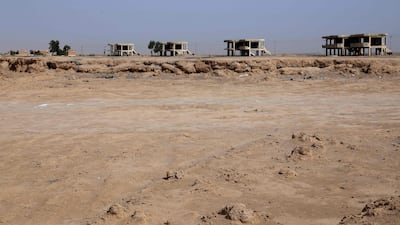
What's left of hotel accommodation. AFP -
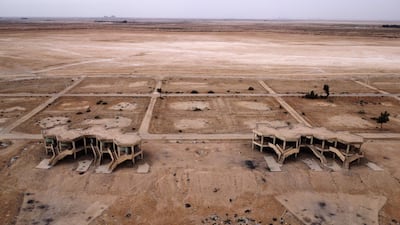
Iraq's Sawa Lake was once a popular tourist destination. AFP -
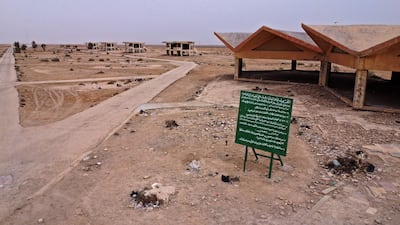
What was once a tourist hotspot now stands empty. AFP -
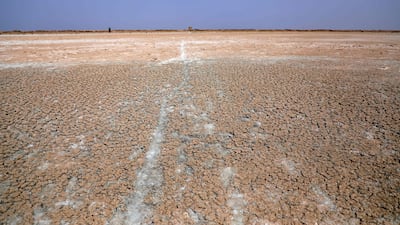
Parts of Sawa Lake are completely dry. AFP -
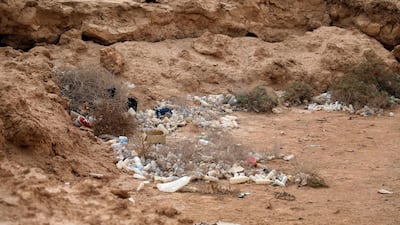
Bottles and plastic bags litter what was once a luscious lake. AFP -
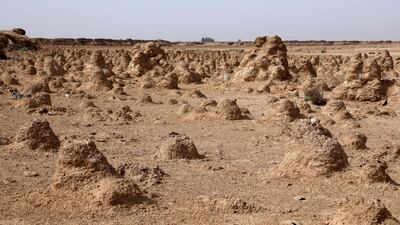
What was once a lake is now dry, arid landscape. AFP -
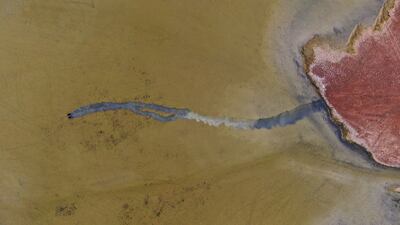
Lake Milh, also known as Razzaza Lake, in Iraq's central province of Karbala is also facing the perils of drought. AFP -
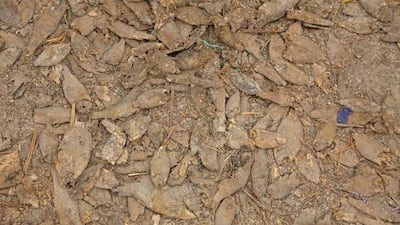
Dead fish litter Iraq's Lake Milh. AFP -
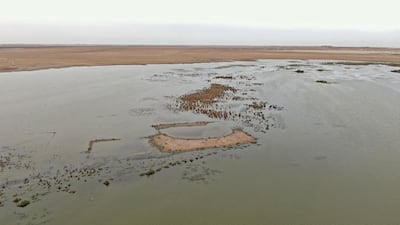
Human activity and climate change have combined to turn the site into a barren wasteland with piles of salt. AFP -
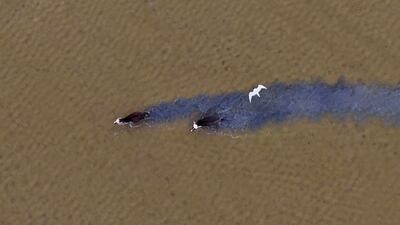
This aerial view shows horses running in Lake Milh. AFP -
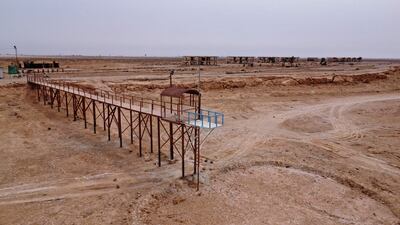
Sawa Lake is now dry due to years of drought. AFP


Representatives of the group of 46 Least Developed Countries demanded that big polluters such as China and the US cut their emissions more strongly and pay for the damage that is already resulting from climate change.
“Countries with much greater responsibility and capabilities than ours must close the funding gap so that when the impacts of climate change hit — when houses and hospitals are washed away, when crops are destroyed, when islands sink and when whole communities are displaced — the costs don’t land on the already vulnerable households,” said the group’s chairperson, Madeleine Diouf Sarr from Senegal.

