


Live updates: follow the latest news on Russia-Ukraine
Hungary and Slovakia said on Tuesday they were not willing to cut off Russian oil imports, raising the question of nations opting out if the EU sought an embargo against Moscow.
EU leaders are under pressure from Ukraine and member states such as Poland to include an oil ban in a sixth round of sanctions, to cut off a lucrative source of funding for Moscow and take a geopolitical weapon out of Russian President Vladimir Putin's hands.
The bloc's foreign policy chief, Josep Borrell, said the sixth package due to be presented shortly would aim to "tackle oil imports" as well as penalising more Russian banks and imposing sanctions on people accused of peddling disinformation.
But while Germany and Austria have warmed to an oil embargo after initially opposing it, Hungary and Slovakia say their economies are too reliant on Russian crude to take part in such a ban.
“It is currently physically impossible for Hungary and its economy to function without Russian oil,” Foreign Minister Peter Szijjarto said on a visit to Kazakhstan on Tuesday.
“No one can expect us to allow the price of the war to be paid by Hungarians.” He said Hungary would not vote for any sanctions that make oil shipments from Russia impossible.
Slovakia’s Economy Minister Richard Sulik said he would seek an opt-out from any embargo because the country’s only refiner, Slovnaft, would need years to make the switch from Russian crude to another kind of oil.

Despite the potential roadblocks, European Council chief Charles Michel said on Tuesday he was “confident that the council will imminently impose further sanctions, notably on Russian oil”. Prices hovered above $100 a barrel as markets braced for a potential import ban.
Any deal on Russian oil would require the consent of all 27 EU members, meaning it could not pass without Hungary and Slovakia’s approval. The bloc agreed on an embargo on Russian coal in the fifth package last month, while it has not yet ventured into gas.
Ministers from other EU states have spoken of sympathising with oil-reliant neighbours but urged unity during the crisis. Hungary and its Russia-friendly leader Viktor Orban have irked Ukraine with an equivocal stance on the war.
As countries seek to find alternative suppliers, Mr Michel toured an import terminal for liquefied natural gas which is under construction in northern Greece and is aimed at weakening Russia’s grip on the energy market.
Supporters of an oil and gas purge say it would weaken Mr Putin’s ability to use energy as a tool of blackmail, after gas supplier Gazprom cut off supplies to Poland and Bulgaria last week.
Poland, one of the strongest supporters of an energy embargo, has proposed a system similar to carbon emissions trading in which countries that continue to buy Russian fossil fuels must pay a levy towards energy reforms.
-
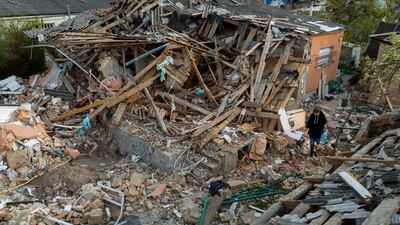
A woman rescues some of her belongings from her house in Irpin, near Kyiv, which was nearly completely destroyed by Russian bombing in late March. AP -

A driver helps a woman board a bus at a reception centre for displaced people in Zaporizhzhia, Ukraine. AP -
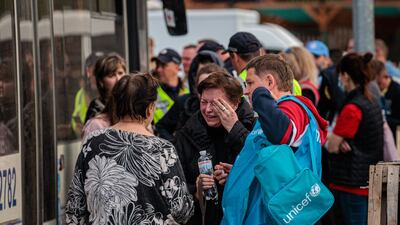
People fleeing Mariupol's Azovstal plant arrive on buses at a registration and processing area for internally displaced people in Zaporizhzhia. AFP -
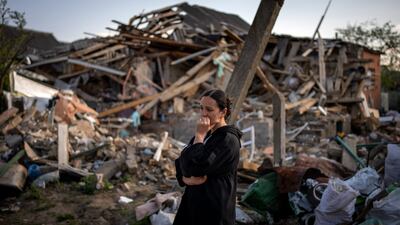
A woman stands next to her home in Irpin, near Kyiv, after it was nearly completely destroyed by Russian bombing. AP -
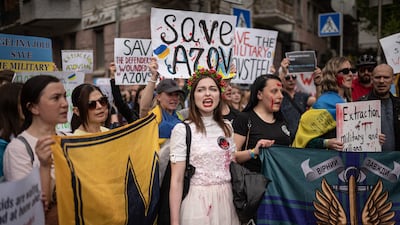
People hold banners and shout slogans during a demonstration in support of Mariupol defenders in Kyiv, Ukraine. Getty Images -
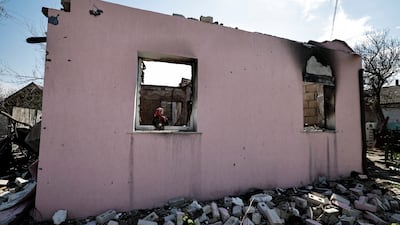
A woman stands near her house that was destroyed by shelling in Sloboda, Chernihiv region, Ukraine. Reuters -
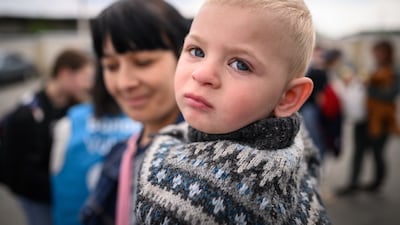
A mother and child in Lviv, Ukraine, wait to board transport destined for Przemysl, Poland. Getty Images -

President Volodymyr Zelenskiy claps as British Prime Minister Boris Johnson addresses the Ukrainian Parliament in Kyiv via videolink. Reuters -

Firefighters work to extinguish flames after a Russian bombardment at a park in Kharkiv, Ukraine. AP Photo -
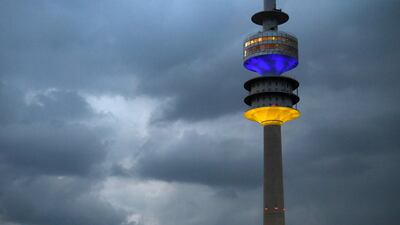
The television tower is illuminated in the national colors of the Ukrainian flag to show solidarity with the country at the Olympic Park in Munich, southern Germany. AFP -
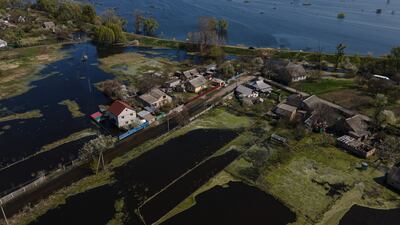
Flooded gardens and fields are shown in Demydiv, Ukraine. To keep Russian armoured columns at bay, Ukrainian forces released water from a nearby hydroelectric dam to intentionally flood Demydiv, a village north of Kyiv. The decision was effective, but efforts to drain the area are complicated. Getty Images -
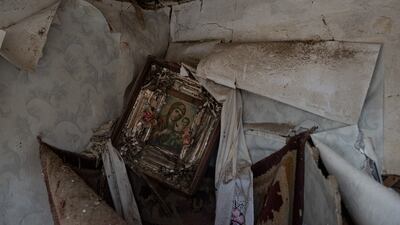
A damaged Orthodox icon is seen in the corner of local resident Yurii's heavily damaged house in Fenevychi, Ukraine. Getty Images -
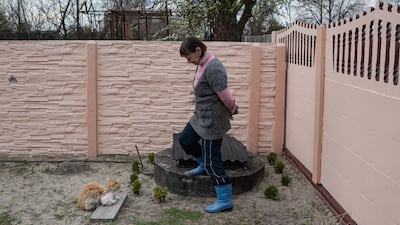
Valentyna, 71, stands by her cat, who was injured in the fighting, in Fenevychi. Getty Images -
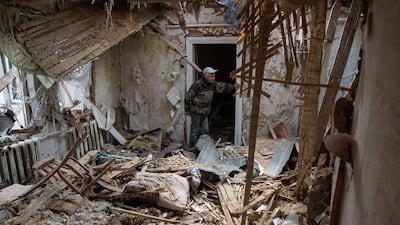
Yurii, 53, stands in his heavily damaged house in Fenevychi. Getty Images -
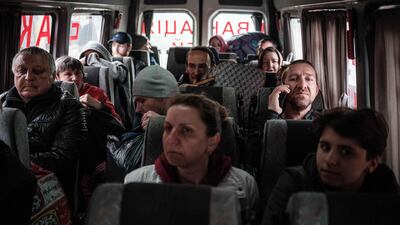
Evacuees from the eastern Ukraine city of Lyman, which has suffered heavy shelling, ride on a bus in Raihorodok. AFP -
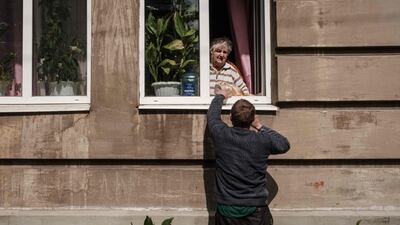
A man delivers loaves of bread to a woman in the eastern Ukraine city of Lyman. AFP -
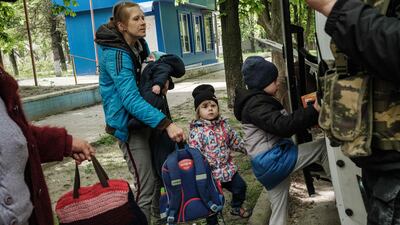
Nazar, right, boards a bulletproof bus to evacuate with his family from the eastern Ukraine city of Lyman. AFP -
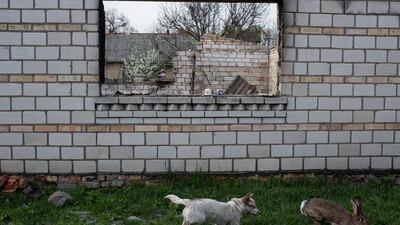
A dog chases a hare by the wall of a burnt house in Fenevychi. Getty Images -
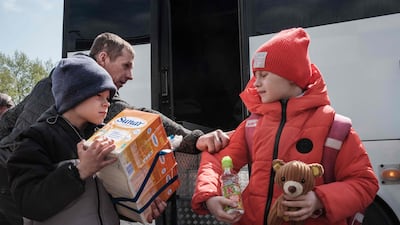
Nine-year-old Galina, right, and Nazar, 8, arrive with their families in Raihorodok. AFP -
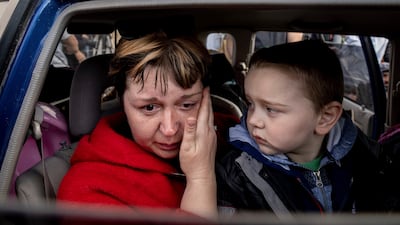
Natalia Pototska, 43, cries as her grandson Matviy looks on in Zaporizhzhia. AP -
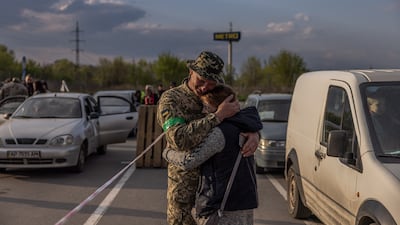
Hryhorii, a member of the Ukrainian military meets his wife Oksana, who fled from the Russian-occupied Novomykhailivka village, at the evacuation point in Zaporizhzhia. EPA -
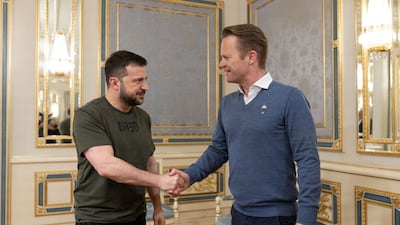
Ukraine's President Volodymyr Zelenskiy welcomes Denmark's Minister of Foreign Affairs Jeppe Kofod to Kyiv. Reuters -
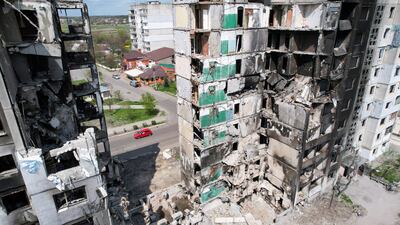
Buildings destroyed by Russian shelling in Borodianka, in Ukraine's Kyiv region. Reuters -
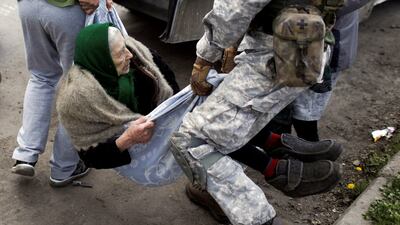
Volunteers carry an elderly woman in a blanket during the evacuation of a frontline village retaken by Ukrainian forces in Kharkiv. Reuters -
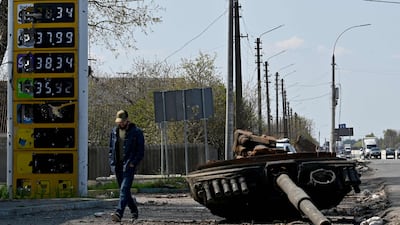
A Ukrainian man walks past the turret of a Russian tank next to a destroyed petrol station in the village of Skybyn, north-east of Kyiv. AFP -
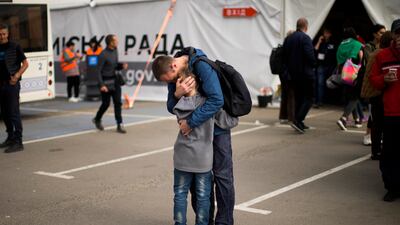
Andrii Fedorov hugs his son Makar as they are reunited in Zaporizhzhia, Ukraine, after the boy and his mother fled besieged Mariupol. AP -
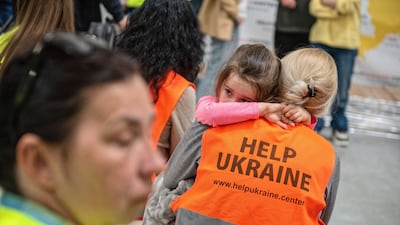
Volunteers at the Help Ukraine Center in Lublin, south-eastern Poland. More than 3 million Ukrainian refugees are now in Poland. EPA -
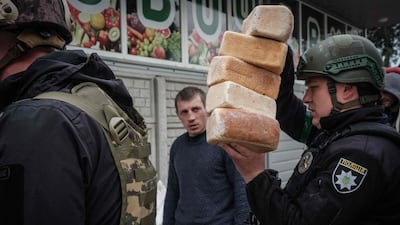
Police officers deliver loaves of bread to residents in the eastern Ukrainian city of Lyman, which is being heavily shelled. AFP -
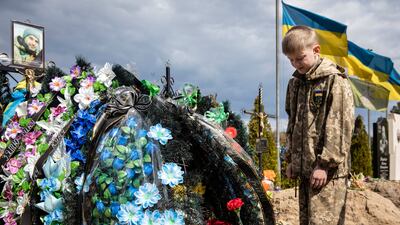
Savelii, 10, mourns at the grave of his father, who died protecting his city as a member of the Territorial Defence, in Irpin, Ukraine. EPA -
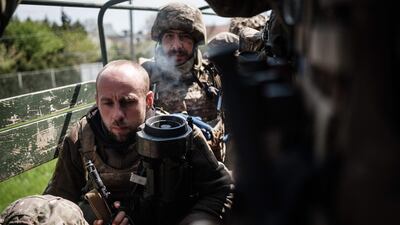
Ukrainian soliders ride on a truck to a resting place after fighting in the front line for two months near Kramatorsk. AFP -
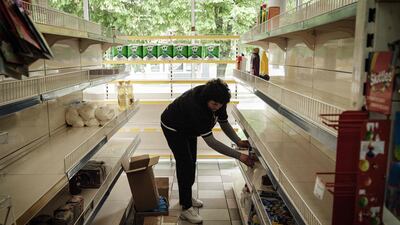
A shopkeeper clears shelves before closing up in Sviatohirsk, eastern Ukraine, amid the Russian invasion. AFP -
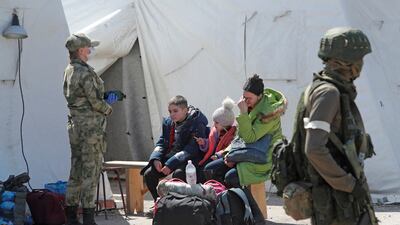
Civilians who left the area near Azovstal steel plant as part of an evacuation of Mariupol arrive at temporary accommodation in Bezimenne, Donetsk region. Reuters -
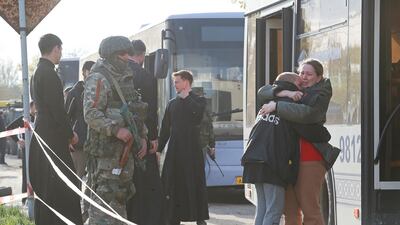
Azovstal steel plant employee Valeria, who was part of an evacuation of Mariupol, hugs her son Matvey, who had earlier left the city with his relatives, as they meet again in Bezimenne, Donetsk. Reuters -
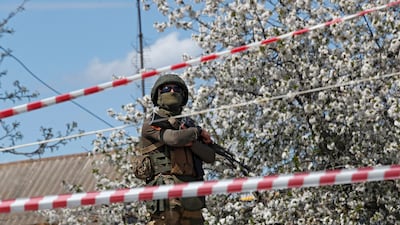
A pro-Russian troop stands guard in Bezimenne, Donetsk. Reuters -
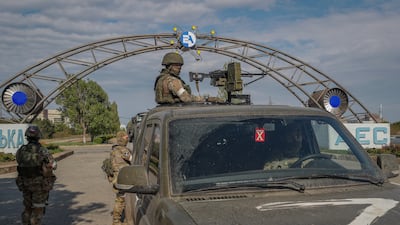
A picture taken during a visit to Mariupol organised by the Russian military shows Russian serviceman on patrol outside the Zaporizhzhia Nuclear Power Station in Enerhodar, south-eastern Ukraine. EPA -
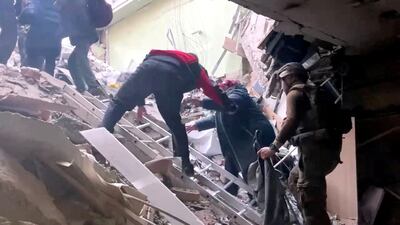
A woman is assisted during the UN-led evacuation of the Azovstal steel plant, after nearly two months of siege warfare on Mariupol by Russia. Reuters -
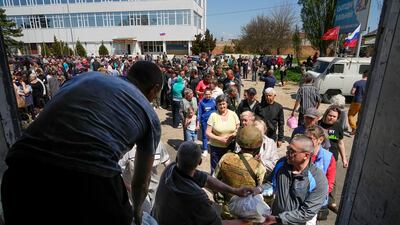
Civilians gather for humanitarian aid, distributed by the Donetsk People Republic Emergency Situations Ministry in Berdyansk, in territory under the government of the Donetsk People's Republic, eastern Ukraine. AP -
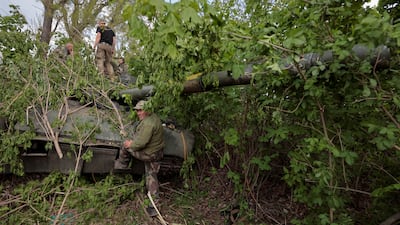
Ukrainian servicemen are seen near a T-80 tank captured from Russian troops in Kharkiv region. Reuters -
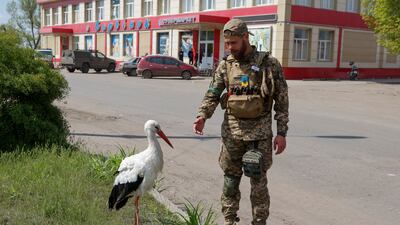
A Ukrainian soldier takes a break from the conflict and tries to pet a stork in Barvinkove, Kharkiv region. Reuters -
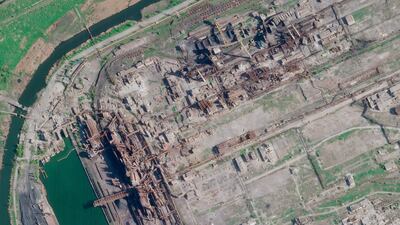
A satellite image shows damage at the Azovstal steelworks in Mariupol, Ukraine. AP


Italian Prime Minister Mario Draghi, meanwhile, used a speech to the European Parliament on Tuesday to urge reforms which would eliminate the right of individual countries to veto such measures.
Although many matters before the European Council can be decided by a so-called qualified majority, sanctions are in the basket of issues that can be blocked by a single vote against.
This does not stop countries such as Hungary and Slovakia from negotiating special treatment. Spain and Portugal were given approval to intervene in their electricity markets at a European Council summit last month.
“The institutions set up by our predecessors in previous decades have served well European citizens, but are inadequate to the current reality we are now facing,” Mr Draghi said.
The EU is preparing for potential further disruptions by urging members to review their contingency plans and proposing a mandatory minimum level of gas storage before next winter.
Mr Putin threatened to create further chaos on Tuesday by signing a decree on tit-for-tat sanctions, banning trade with unfriendly parties on a list to be drawn in the next 10 days.
The decree prevents Russian companies from fulfilling obligations or concluding deals with the parties under sanction or exporting raw materials for their benefit, Russian news agency Tass said.

