


A failure to bring the Taliban into a political settlement for Afghanistan was a key reason why the hardline group was able to topple the Western-backed Afghan government last summer, the UK’s former ambassador to Kabul said.
Laurie Bristow, who helped supervise the Kabul airlift last August as the Taliban seized the country, also said the West had not understood well enough how the loyalty of soldiers could be built in the context of Afghanistan. He was speaking in relation to the collapse of the Nato-trained Afghan military, and the soldiers who stood down and did not fight the Taliban as it rapidly took over Afghanistan.
“I think that at the end of the day what we didn't succeed in doing in those 20 years, was to find a way to bring the Taliban into the future of Afghanistan,” Mr Bristow told a webinar hosted by the Bright Blue think tank.
“They’re Afghans. They don't represent all Afghans, they don't represent all of Afghan society. But they're an important constituency.
“And I think if I wanted to identify — perhaps you could call it a mistake — our biggest mistake was not to find ways of bringing them into a political settlement,” said Mr Bristow.
After the fall of the Afghan capital last August, and with the Taliban outside the gates of Kabul’s airport, Mr Bristow led the evacuation of British nationals and vulnerable Afghan citizens. The efforts of him and his team were widely praised.
Mr Bristow said there had been many Afghan soldiers who had fought very hard and courageously in the face of the Taliban advance. But he also conceded that others had laid down their arms “and went over to the Taliban”.
“I think looking back on it, one of the things that led to that — and if we're looking at our own role in this — we had not understood well enough how loyalty is built in a situation of that sort.
“If you're trying to create a national army that can stand up to the Taliban, where does its loyalties lie? Do its loyalties lie to a central government? Do they lie with a local leader? Do they lie with their own community?
-
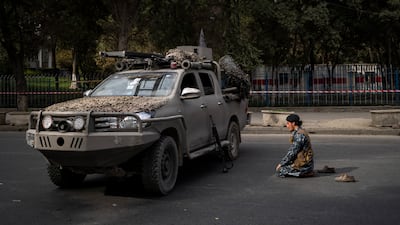
A Taliban fighter prays next to a demonstration organised by the Afghan Society of Muslim Youth, demanding the release of frozen international money in Kabul, Afghanistan. AP Photo -
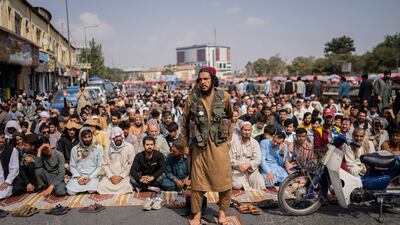
A Taliban fighter and a group of Afghan men attend Friday prayers in Kabul. AP Photo -
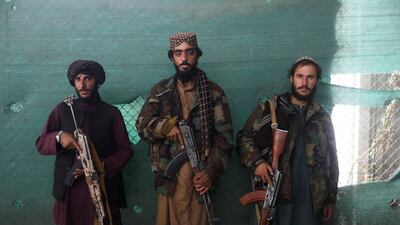
Taliban soldiers in Bagram Air Base in Parwan. Reuters -
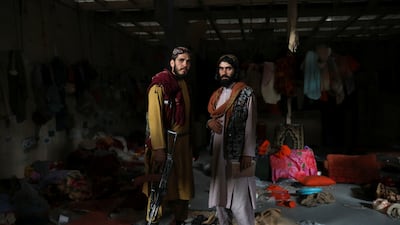
Taliban soldiers Seifatollah and Vasighollah stand in a prison in Bagram Air Base. Reuters -
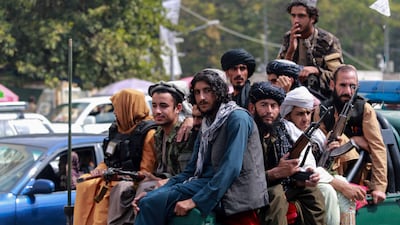
Taliban patrol Kabul. EPA -
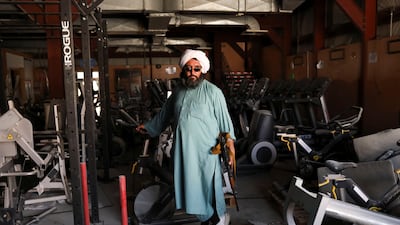
Vahdat, a Taliban soldier and former prisoner, stands next to exercise equipment in Bagram Air Base. Reuters -
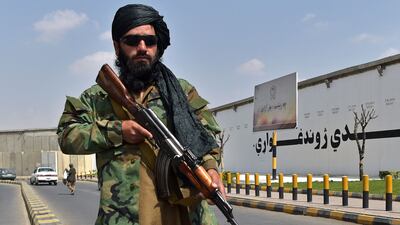
A Taliban fighter stands guard near Zanbaq Square in Kabul. AFP -
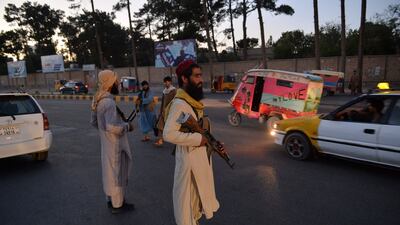
Taliban fighters police a road in Herat. AFP


“Honestly, I don't think we ever really got a strong enough handle on that to build the Afghan national defence and security forces that were capable of standing up to the Taliban.”
But Mr Bristow also said the Taliban had run an effective propaganda and military campaign, which convinced some soldiers to lay down their arms and isolated parts of Afghanistan.

