
The number of cholera cases among cyclone survivors in Mozambique has jumped to 271, authorities said on Saturday, nearly double the figure from the previous day.
The latest tally was announced by National Director of Medical Assistance Ussein Isse, who declared the outbreak of the acute diarrhoeal disease on Wednesday with just five cases, the Portuguese news agency Lusa reported.
So far no cholera deaths have been confirmed, the report said. Another Lusa report said the death toll in central Mozambique from the cyclone that hit on March 14 had risen to 501. Authorities have warned the toll is preliminary as more bodies are expected to be found when flood waters recede.
The cholera cases have been detected in the port city of Beira, which has become the centre of relief operations despite being badly damaged by the cyclone. Its population of about 500,000 residents has been swollen by cyclone survivors streaming in from surrounding areas.
-
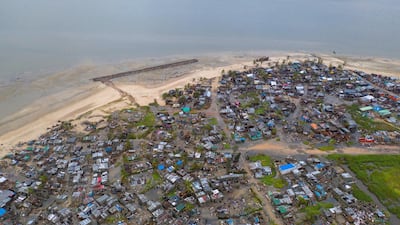
Drone footage of the damaged Praia Nova Village, after Cyclone Idai made landfall in Sofala Province, Central Mozambique. CARE/EPA -
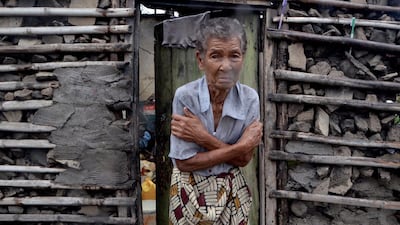
A shivering displaced woman in Beira. AFP -
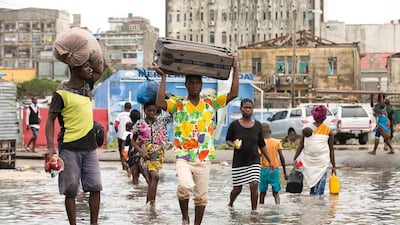
People carry their personal effects through a flooded section of Praia Nova, Beira, Mozambique. IFRC/EPA -
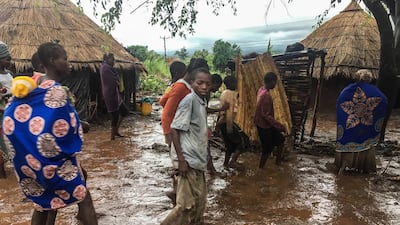
Inhabitants of Chiluvi, a village in central Mozambique, walk along a flooded and muddy street after Cyclone Idai and Floods that hit the region, in Nhamatanda, Mozambique. EPA -
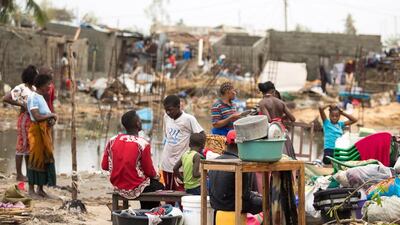
People salvaging iron sheets on the streets of Beira in Praia Nova, Beira, Mozambique. IFRC/EPA -
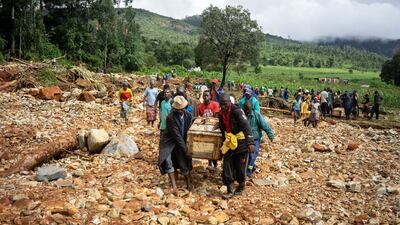
Men carry a coffin along a makeshift path on the river in Ngangu township Chimanimani, Manicaland Province, eastern Zimbabwe, after the area was hit by the cyclone Idai. AFP -
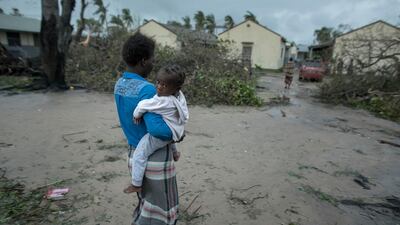
A woman and child near a school building being used as emergency shelter for some 300 local people who are unable to return to their homes following cyclone force winds and heavy rain in the coastal city of Beira, Mozambique. CARE via AP -
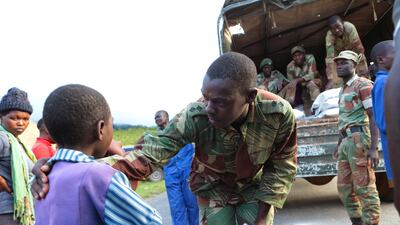
A soldier attends to a child while distributing food supplies in Chimanimani, about 600km southeast of Harare, Zimbabwe. AP Photo -
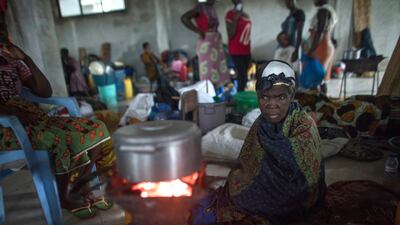
Local residents prepare meal at a temporary shelter after cyclone Idai made landfall in Sofala Province, Central Mozambique. CARE/EPA -
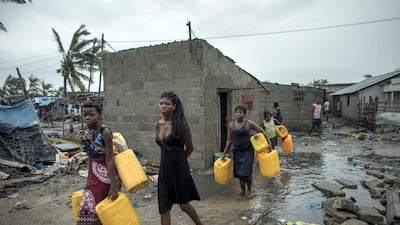
Local residents in search of clean water after cyclone Idai made landfall in Sofala Province, Central Mozambique. CARE/EPA -
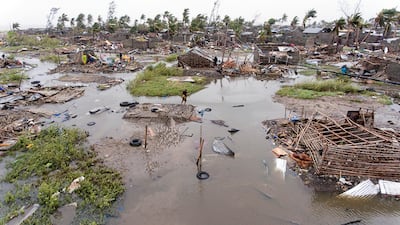
An aerial view of the destruction of homes after Tropical Cyclone Idai, in Beira, Mozambique. IFRC via AP -
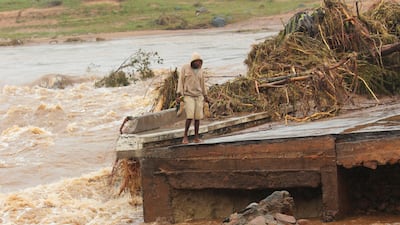
A man stands on the edge of a collapsed bridge in Chimanimani, about 600km southeast of Harare, Zimbabwe. AP Photo -
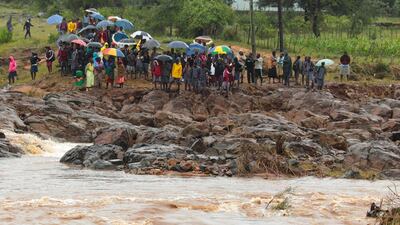
Schoolchildren are stranded across a collapsed bridge in Chimanimani, southeast of Harare, Zimbabwe. AP Photo -
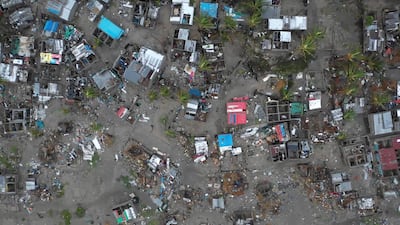
A general view shows destruction after Cyclone Idai in Beira, Mozambique in this still image taken from a social media video on March 19, 2019. REUTERS -
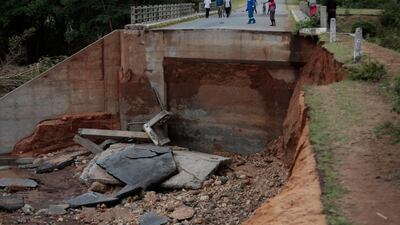
Members of the community walk near one of the many damaged roads and bridges in Chimanimani, 450 km east of the capital Harare, Zimbabwe after Cyclone Idai hit the area. Over 80 people have died, more than 100 still missing and thousands displaced as a result of the disaster. Neighbouring Mozaambique and Malawi have also have been affected by the cyclone. EPA -
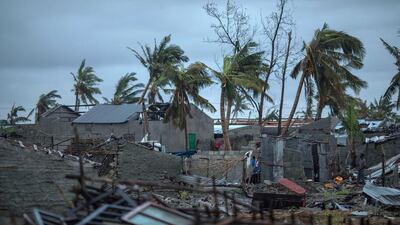
A handout photo made available by CARE, an international humanitarian agency shows local residents inspecting the damages after cyclone Idai made landfall in Sofala Province, Central Mozambique. A Category 4 Cyclone named Idai made land fall wreaking havoc knocking out power across the province and impacting every resident in Central Mozambique. EPA -
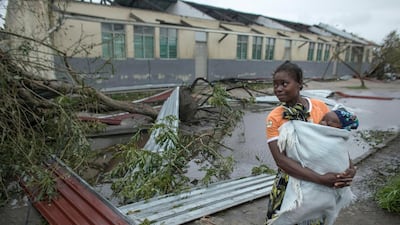
A local resident carries her chilld past debris at the secondary school used as an emergency shelter for local residents in the village of Inhamizua, Mozambique. CARE/ EPA -
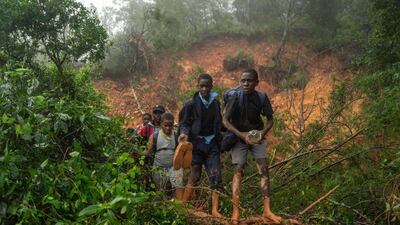
School students of St. Charles Luanga, rescued by members of the Zimbabwe Military, walk past a mudslide, covering a major road at Skyline junction in Chimanimani, Manicaland Province, Zimbabwe. AFP -
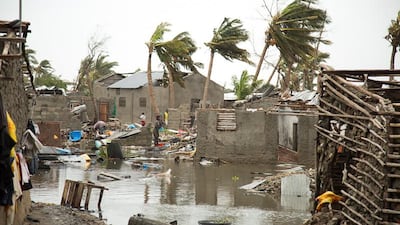
The destroyed neighbourhood of Praia Nova, Beira, Mozambique. IFRC/EPA -
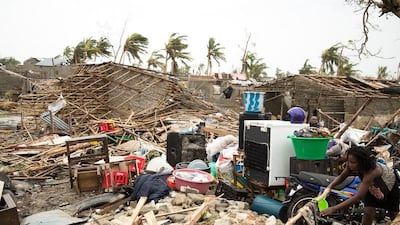
A woman hangs a cloth to dry in a sea of rubble in the Praia Nova area of Beira, Mozambique. IFRC/ EPA


Doctors Without Borders has said it is seeing some 200 probable cholera cases per day in the city, where relief workers are hurrying to restore the damaged water system and bring in additional medical assistance.
The World Health Organisation has said about 900,000 cholera vaccine doses are expected to arrive on Monday, with a vaccination campaign starting later in the week.
Cholera is spread by contaminated food and water and can kill within hours if not treated. The disease is a major concern for the hundreds of thousands of cyclone survivors in the southern African nation now living in squalid conditions in camps, schools or damaged homes. Some drink from contaminated wells or filthy, stagnant water.
"Stranded communities are relying on heavily polluted water. This, combined with widespread flooding and poor sanitation, creates fertile grounds for disease outbreaks, including cholera," the International Committee of the Red Cross said.
As health workers stress the need for better disease surveillance, the United Nations' deputy humanitarian co-ordinator in Mozambique, Sebastian Rhodes Stampa, has said all cases of diarrhoea are being treated as though they are cholera.
Cholera is endemic to the region, and "it breaks out fast and it travels extremely fast", he told reporters on Friday.
Doctors Without Borders has said other suspected cholera cases have been reported outside Beira in the badly hit areas of Buzi, Tica and Nhamathanda but the chance of spread in rural areas is smaller because people are more dispersed.
Mozambican officials have said Cyclone Idai destroyed more than 50 health centres in the region, complicating response efforts.
The cyclone also killed at least 259 people in Zimbabwe and 56 in Malawi.
The United Nations has said some 1.8 million people need urgent help across the sodden, largely rural region.
The US Defence Department said on Friday it had authorised an additional $8.5 million in humanitarian assistance for Mozambique, bringing the total to $15 million. About 50 US military personnel have been sent to Mozambique to assist with logistics, including transporting food and medical supplies.

