


The ISIS-claimed terror attack against the Crocus Concert Hall near Moscow, in which at least 137 people have died, has brought back memories in Europe of previous terror attacks against concert halls.
These include the 2015 attack on the Bataclan in Paris, in which 90 people died, and the 2016 Manchester Arena bombing, in which 22 people lost their lives.
The Crocus Concert Hall shooting is the deadliest terrorist attack in Russia in decades. Attacks in recent years have mainly targeted public transport – the most recent killed 15 people in the St Petersburg metro in 2017.
Here is a breakdown of the major terror attacks that have taken place in Russia in recent decades.
Apartment bombings
In late 1999, a series of bombings in Russian cities killed 307 people over two weeks. Four apartment blocks were targeted in three cities: Buynaksk, Moscow, and Volgodonsk.
Chechen separatists were accused of being behind the attacks, which triggered widespread fear across Russia and played an important role in triggering the Second Chechen War (1999-2009).
But many analysts attribute the bombings to the Russian authorities, who they say orchestrated the bombings to solidify President Vladimir Putin's rise to power. These claims were fuelled by the arrest of three Federal Security Services FSB members suspected of planting explosives in Ryazan.
Others say there is not sufficient evidence to back these claims, and security services later claimed the Ryazan incident was linked to a drill.
Moscow theatre crisis
In 2002, about 40 Chechen attackers took more than 800 people hostage for four days in the Dubrovka Theatre in Moscow.
The siege ended after Russian forces released sleeping gas into the theatre before storming the building. The gas reportedly killed a large number of the 132 hostages who died.
-
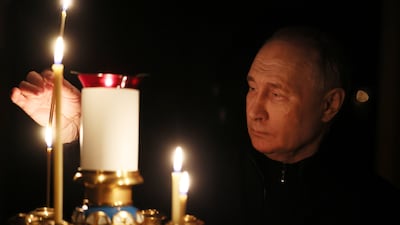
Russian President Vladimir Putin lights a candle to commemorate the victims of a terrorist attack on the Crocus City Hall concert venue on a day of national mourning in Moscow. EPA -

People gather next to a candle-lit memorial outside the concert venue. Reuters -

Mourners at the concert venue. EPA -

At least 137 people were killed when gunmen entered the Crocus City Hall, firing indiscriminately before setting it on fire. Reuters -
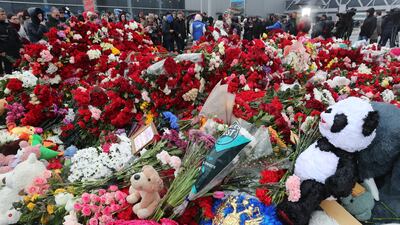
The attack, which left more than 140 wounded, was claimed by ISIS. EPA -

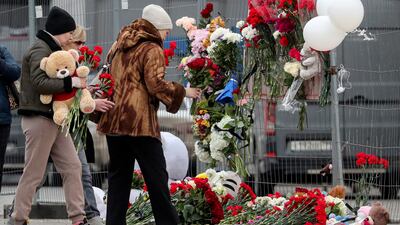
A man lays flowers at a makeshift memorial in Simferopol, Crimea. AFP -

Mourners gather at a makeshift memorial in front of the Russian embassy in Yerevan, Armenia. AFP -
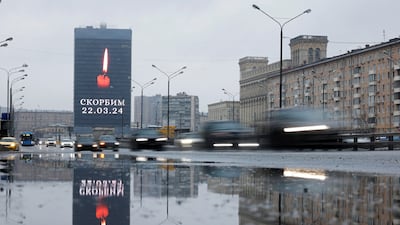
An electronic screen displays the message 'We mourn' in memory of the victims of the shooting attack, in Moscow. Reuters -
Mr Putin condemned the massacre as a 'barbaric terrorist act'. EPA -

Flags fly at half-mast above the Kremlin in Moscow. EPA -

An advertising screen at the VTB Arena displays an image of a lit candle, in Moscow. AFP -
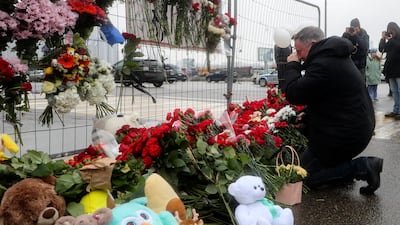
A man mourns outside the concert venue. EPA -

The Russian FSB said 11 people, including all four terrorists directly involved in the terrorist attack, were arrested. EPA -
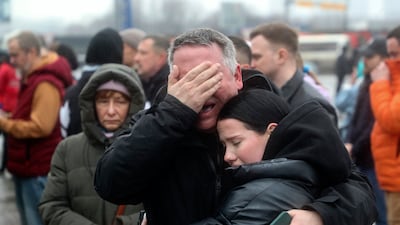
ISIS claimed responsibility for the assault, saying its fighters 'attacked a large gathering' on the outskirts of the Russian capital. EPA -
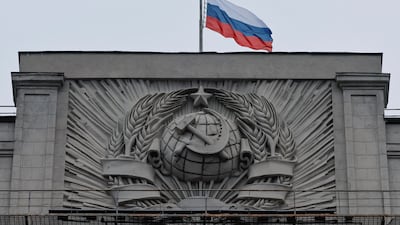
The Russian national flag is lowered at the headquarters of State Duma, the lower house of parliament. Reuters -
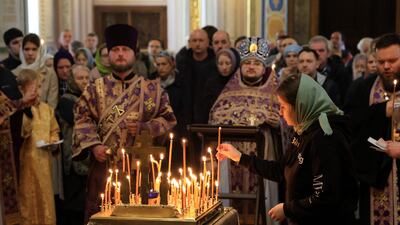
A woman places a lit candle as people attend a memorial service at the Alexander Nevsky Cathedral in Simferopol, Crimea. AFP


The attack triggered a backlash against Chechen rebels in Russia, and led to the cancellation of plans to withdraw 80,000 soldiers from Chechnya.
Beslan school siege
Considered the deadliest school shooting in history, the 2004 attack on a school in Beslan in North Ossetia was carried out by Chechen separatists demanding the withdrawal of Russian troops from the republic.
Led by the Chechen warlord Shamil Basayev, the attackers took around 1,100 hostages on the first day of the new school term in September.
A three-day siege ended with Russian forces storming the building. In the shoot-out, 333 people, including 186 children, were killed.
The siege resulted in increased anti-terrorism laws and the centralisation of previously federally elected legislative bodies within the Kremlin.

