
Huda is far from the only teenager to complain that too many people are telling her what to do, or "ruining her life". But in her case, it's not hyperbole.
Aged 14, Huda is a child of Afghanistan's republic, born seven years after the US invaded her country, overthrew the Taliban government and set up a parliamentary democracy that it promised would be the dawn of a new era for Afghans. Like most other young girls in Kabul, she went to school, developed a diverse group of friends and maintained a vibrant social life.
A year ago, the Taliban took back control over Afghanistan, and Huda's life as she once knew it was over.
From the day they took power, on August 15 last year, the Taliban sent women home from work and from school, and began to institute austere requirements for dress and social interactions. That day, Huda went outside and for the first time came face-to-face with men she had only ever heard about in scary stories. She immediately returned home and didn't leave her house for more than a month.
Huda's parents have struggled with helping their three daughters adapt to the new reality.
"I worry all the time about Huda getting depression and we always try to find ways to make sure it doesn't happen," her mother Najmussama says. "I try to comfort her by telling her the Taliban are not so bad."
But to Huda, who, as a teenage girl has been prohibited by the Taliban from going to school for an entire year, it is difficult to see a bright side.
-
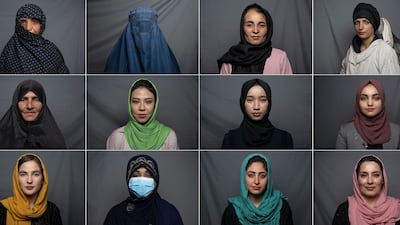
This combination of photos shows women posing for portraits in different cities in Afghanistan. Since their takeover two years ago, the Taliban have squeezed Afghan women out of public life, imposing suffocating restrictions on where they can work, how they can travel and what they can wear. All photos by AFP -
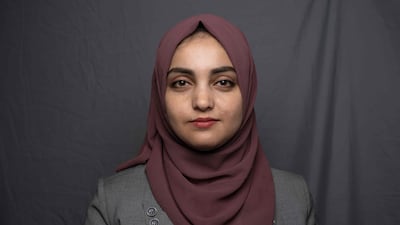
TOLOnews TV anchor Tahmina Usmani, 23, is one of a handful of female journalists who have been able to continue working in the sector. 'I was able to join TOLOnews and be the voice for women in Afghanistan, which makes me feel great,' she says. -
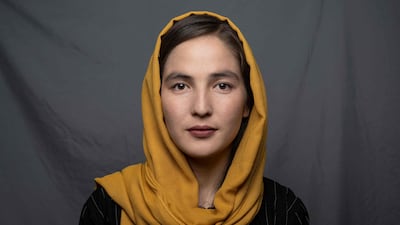
TV journalist and university student Farkhunda Muhibi, 21. Muhibi is one of a small number of female journalists who have been able to continue working under the Taliban regime. -
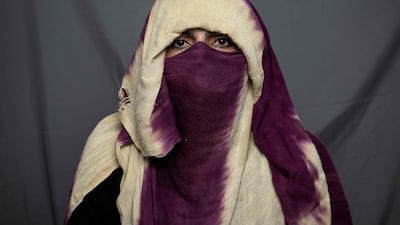
Baker Shapari, 40, poses for a portrait in Kandahar. 'During these hard times, it is my job that has made me happy,' she says. 'My husband is jobless, and staying at home. I am able to find food for my children.' -
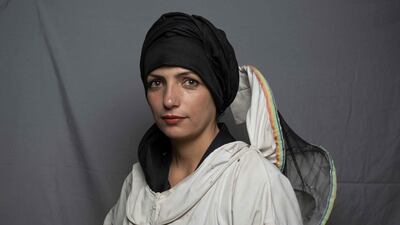
Businesswoman and beekeeper Ghuncha Gul Karimi, 35, poses for a portrait in Herat. Karimi expanded her beekeeping business to produce honey for sale after her husband left the country. 'I've taken up two extra jobs and bought a motorcycle to drive myself from the honey farm and back,' she says. 'I am determined to become the queen of honey bees.' -
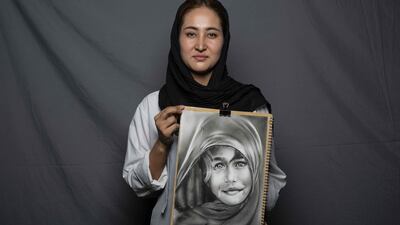
Artist and art teacher Manezha Sultani, 24, poses for a portrait in Herat. 'Before the Taliban took over, I had no fear - I used to attend exhibitions, go to events and see everything I desired. But when the takeover happened, I was afraid of how it would impact my job and my rights,' she says. 'I have not had any good experiences since the Taliban took over.' -
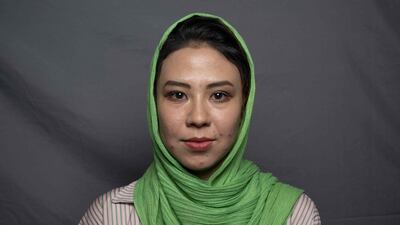
Mathematics and robotics teacher Sumaya Sultani, 27, poses for a portrait in Herat. 'Before the collapse, I participated in international technology events, and I used to work late nights on various projects and coach the Afghan girls’ robotics team. But after the Taliban takeover, everything we worked for and achieved turned to dust.' -
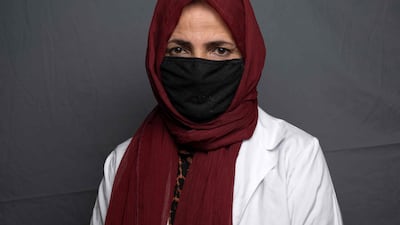
Doctor and mental health counsellor Mursal, 35, poses for a portrait at an undisclosed location in Afghanistan. Since their takeover a year ago, the Taliban have squeezed Afghan women out of public life, imposing suffocating restrictions on where they can work, how they can travel and what they can wear. -
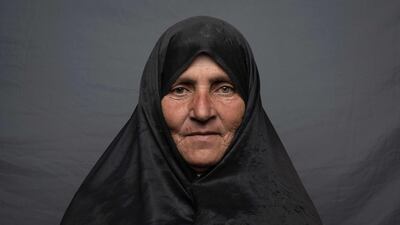
Silk weaver Maryam Osmani, 50, poses for a portrait in Herat. -
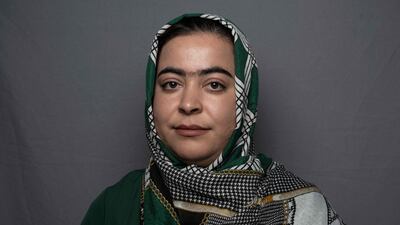
Afghanistan Women’s Chamber of Commerce and Industry director Nargis Hashimi, 27, poses for a portrait in Herat. -
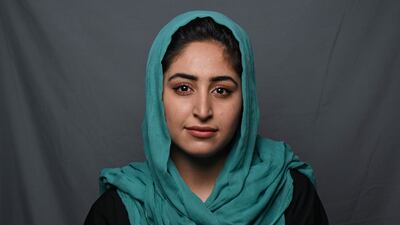
Radio journalist and artist Rozina Sherzad, 19, poses for a portrait in Kandahar. -
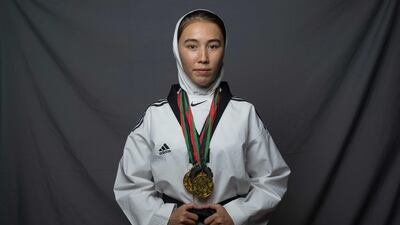
Taekwondo athlete Zarghunna Noori, 23, poses for a portrait in Herat. -
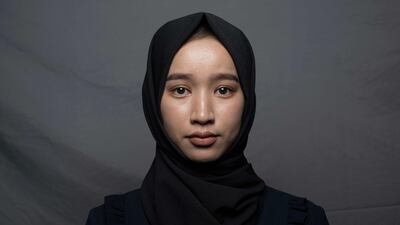
Student Mahtab Jamshidi, 17, poses for a portrait in Herat. -
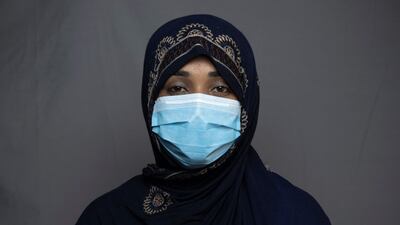
Seamstress Rozia Khpalwak, 23, poses for a portrait in Kandahar. -
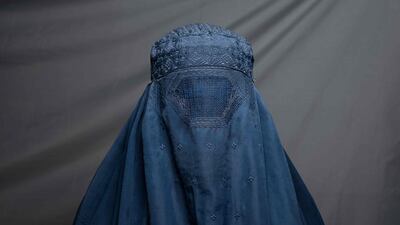
Shampoo factory worker Robina, 40, poses for a portrait in Kandahar. There is hardly a woman in the country who has not lost a male relative in successive wars, while many of their husbands, fathers, sons and brothers have also lost their jobs or seen their income shattered as a result of a deepening economic crisis. -
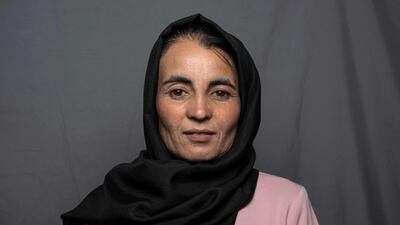
The deputy director of the women’s bazaar in Herat, Freshta Ishaqzai, 32. -
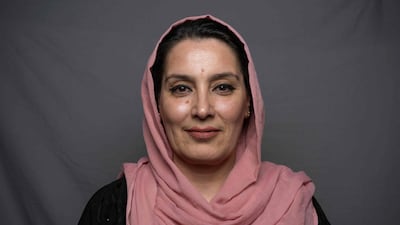
Shaima Wafa, 40, a cultural affairs reporter for an Iranian media outlet, poses for a portrait in Herat. -
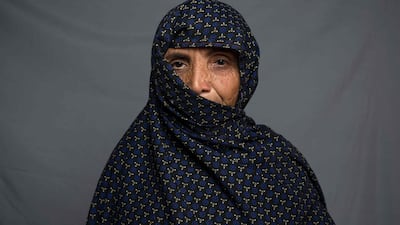
Knitter and garment maker Gul Guti, 55, poses for a portrait in Kandahar.
In an effort to keep her active, her parents have enrolled her in private religious classes where she also learns Arabic, and in the evenings she studies English over Zoom with a tutor in the US.
Even this continued intellectual stimulation, however, can only do so much to fill the void. Huda hasn't seen most of her friends since last year. Many have left the country with their families. Those who remain in Kabul are normally prohibited by their parents from leaving the house, out of fear of what might happen under the Taliban government.
Huda's family have often discussed sending the children to live abroad to complete their studies, but they worry about the costs and consequences. For Najmussama, one of Kabul's most skilled gynaecologists, leaving Afghanistan means abandoning her patients at a time when they have never been more in need.
But Huda dreams of the day she will be able to leave, and to live a normal teenage girl's life, even if it is far from home. In Kabul, her hopes are fading by the day.

ULTRA PROCESSED FOODS
- Carbonated drinks, sweet or savoury packaged snacks, confectionery, mass-produced packaged breads and buns
- margarines and spreads; cookies, biscuits, pastries, cakes, and cake mixes, breakfast cereals, cereal and energy bars;
- energy drinks, milk drinks, fruit yoghurts and fruit drinks, cocoa drinks, meat and chicken extracts and instant sauces
- infant formulas and follow-on milks, health and slimming products such as powdered or fortified meal and dish substitutes,
- many ready-to-heat products including pre-prepared pies and pasta and pizza dishes, poultry and fish nuggets and sticks, sausages, burgers, hot dogs, and other reconstituted meat products, powdered and packaged instant soups, noodles and desserts.
ENGLAND SQUAD
Goalkeepers Henderson, Pickford, Pope.
Defenders Alexander-Arnold, Chilwell, Coady, Dier, Gomez, Keane, Maguire, Maitland-Niles, Mings, Saka, Trippier, Walker.
Midfielders Henderson, Mount, Phillips, Rice, Ward-Prowse, Winks.
Forwards Abraham, Barnes, Calvert-Lewin, Grealish, Ings, Kane, Rashford, Sancho, Sterling.
65
Other acts on the Jazz Garden bill
Sharrie Williams
The American singer is hugely respected in blues circles due to her passionate vocals and songwriting. Born and raised in Michigan, Williams began recording and touring as a teenage gospel singer. Her career took off with the blues band The Wiseguys. Such was the acclaim of their live shows that they toured throughout Europe and in Africa. As a solo artist, Williams has also collaborated with the likes of the late Dizzy Gillespie, Van Morrison and Mavis Staples.
Lin Rountree
An accomplished smooth jazz artist who blends his chilled approach with R‘n’B. Trained at the Duke Ellington School of the Arts in Washington, DC, Rountree formed his own band in 2004. He has also recorded with the likes of Kem, Dwele and Conya Doss. He comes to Dubai on the back of his new single Pass The Groove, from his forthcoming 2018 album Stronger Still, which may follow his five previous solo albums in cracking the top 10 of the US jazz charts.
Anita Williams
Dubai-based singer Anita Williams will open the night with a set of covers and swing, jazz and blues standards that made her an in-demand singer across the emirate. The Irish singer has been performing in Dubai since 2008 at venues such as MusicHall and Voda Bar. Her Jazz Garden appearance is career highlight as she will use the event to perform the original song Big Blue Eyes, the single from her debut solo album, due for release soon.
Milestones on the road to union
1970
October 26: Bahrain withdraws from a proposal to create a federation of nine with the seven Trucial States and Qatar.
December: Ahmed Al Suwaidi visits New York to discuss potential UN membership.
1971
March 1: Alex Douglas Hume, Conservative foreign secretary confirms that Britain will leave the Gulf and “strongly supports” the creation of a Union of Arab Emirates.
July 12: Historic meeting at which Sheikh Zayed and Sheikh Rashid make a binding agreement to create what will become the UAE.
July 18: It is announced that the UAE will be formed from six emirates, with a proposed constitution signed. RAK is not yet part of the agreement.
August 6: The fifth anniversary of Sheikh Zayed becoming Ruler of Abu Dhabi, with official celebrations deferred until later in the year.
August 15: Bahrain becomes independent.
September 3: Qatar becomes independent.
November 23-25: Meeting with Sheikh Zayed and Sheikh Rashid and senior British officials to fix December 2 as date of creation of the UAE.
November 29: At 5.30pm Iranian forces seize the Greater and Lesser Tunbs by force.
November 30: Despite a power sharing agreement, Tehran takes full control of Abu Musa.
November 31: UK officials visit all six participating Emirates to formally end the Trucial States treaties
December 2: 11am, Dubai. New Supreme Council formally elects Sheikh Zayed as President. Treaty of Friendship signed with the UK. 11.30am. Flag raising ceremony at Union House and Al Manhal Palace in Abu Dhabi witnessed by Sheikh Khalifa, then Crown Prince of Abu Dhabi.
December 6: Arab League formally admits the UAE. The first British Ambassador presents his credentials to Sheikh Zayed.
December 9: UAE joins the United Nations.
The five stages of early child’s play
From Dubai-based clinical psychologist Daniella Salazar:
1. Solitary Play: This is where Infants and toddlers start to play on their own without seeming to notice the people around them. This is the beginning of play.
2. Onlooker play: This occurs where the toddler enjoys watching other people play. There doesn’t necessarily need to be any effort to begin play. They are learning how to imitate behaviours from others. This type of play may also appear in children who are more shy and introverted.
3. Parallel Play: This generally starts when children begin playing side-by-side without any interaction. Even though they aren’t physically interacting they are paying attention to each other. This is the beginning of the desire to be with other children.
4. Associative Play: At around age four or five, children become more interested in each other than in toys and begin to interact more. In this stage children start asking questions and talking about the different activities they are engaging in. They realise they have similar goals in play such as building a tower or playing with cars.
5. Social Play: In this stage children are starting to socialise more. They begin to share ideas and follow certain rules in a game. They slowly learn the definition of teamwork. They get to engage in basic social skills and interests begin to lead social interactions.
Managing the separation process
- Choose your nursery carefully in the first place
- Relax – and hopefully your child will follow suit
- Inform the staff in advance of your child’s likes and dislikes.
- If you need some extra time to talk to the teachers, make an appointment a few days in advance, rather than attempting to chat on your child’s first day
- The longer you stay, the more upset your child will become. As difficult as it is, walk away. Say a proper goodbye and reassure your child that you will be back
- Be patient. Your child might love it one day and hate it the next
- Stick at it. Don’t give up after the first day or week. It takes time for children to settle into a new routine.And, finally, don’t feel guilty.
The specs: 2018 Volkswagen Teramont
Price, base / as tested Dh137,000 / Dh189,950
Engine 3.6-litre V6
Gearbox Eight-speed automatic
Power 280hp @ 6,200rpm
Torque 360Nm @ 2,750rpm
Fuel economy, combined 11.7L / 100km
Timeline
2012-2015
The company offers payments/bribes to win key contracts in the Middle East
May 2017
The UK SFO officially opens investigation into Petrofac’s use of agents, corruption, and potential bribery to secure contracts
September 2021
Petrofac pleads guilty to seven counts of failing to prevent bribery under the UK Bribery Act
October 2021
Court fines Petrofac £77 million for bribery. Former executive receives a two-year suspended sentence
December 2024
Petrofac enters into comprehensive restructuring to strengthen the financial position of the group
May 2025
The High Court of England and Wales approves the company’s restructuring plan
July 2025
The Court of Appeal issues a judgment challenging parts of the restructuring plan
August 2025
Petrofac issues a business update to execute the restructuring and confirms it will appeal the Court of Appeal decision
October 2025
Petrofac loses a major TenneT offshore wind contract worth €13 billion. Holding company files for administration in the UK. Petrofac delisted from the London Stock Exchange
November 2025
180 Petrofac employees laid off in the UAE
Tank warfare
Lt Gen Erik Petersen, deputy chief of programs, US Army, has argued it took a “three decade holiday” on modernising tanks.
“There clearly remains a significant armoured heavy ground manoeuvre threat in this world and maintaining a world class armoured force is absolutely vital,” the general said in London last week.
“We are developing next generation capabilities to compete with and deter adversaries to prevent opportunism or miscalculation, and, if necessary, defeat any foe decisively.”
Race card
1.30pm: Handicap (PA) Dh 50,000 (Dirt) 1,400m
2pm: Handicap (TB) Dh 84,000 (D) 1,400m
2.30pm: Maiden (TB) Dh 60,000 (D) 1,200m
3pm: Conditions (TB) Dh 100,000 (D) 1.950m
3.30pm: Handicap (TB) Dh 76,000 (D) 1,800m
4pm: Maiden (TB) Dh 60,000 (D) 1,600m
4.30pm: Handicap (TB) Dh 68,000 (D) 1,000m
Towering concerns
BABYLON
Ruwais timeline
1971 Abu Dhabi National Oil Company established
1980 Ruwais Housing Complex built, located 10 kilometres away from industrial plants
1982 120,000 bpd capacity Ruwais refinery complex officially inaugurated by the founder of the UAE Sheikh Zayed
1984 Second phase of Ruwais Housing Complex built. Today the 7,000-unit complex houses some 24,000 people.
1985 The refinery is expanded with the commissioning of a 27,000 b/d hydro cracker complex
2009 Plans announced to build $1.2 billion fertilizer plant in Ruwais, producing urea
2010 Adnoc awards $10bn contracts for expansion of Ruwais refinery, to double capacity from 415,000 bpd
2014 Ruwais 261-outlet shopping mall opens
2014 Production starts at newly expanded Ruwais refinery, providing jet fuel and diesel and allowing the UAE to be self-sufficient for petrol supplies
2014 Etihad Rail begins transportation of sulphur from Shah and Habshan to Ruwais for export
2017 Aldar Academies to operate Adnoc’s schools including in Ruwais from September. Eight schools operate in total within the housing complex.
2018 Adnoc announces plans to invest $3.1 billion on upgrading its Ruwais refinery
2018 NMC Healthcare selected to manage operations of Ruwais Hospital
2018 Adnoc announces new downstream strategy at event in Abu Dhabi on May 13
Source: The National
Jewel of the Expo 2020
252 projectors installed on Al Wasl dome
13.6km of steel used in the structure that makes it equal in length to 16 Burj Khalifas
550 tonnes of moulded steel were raised last year to cap the dome
724,000 cubic metres is the space it encloses
Stands taller than the leaning tower of Pisa
Steel trellis dome is one of the largest single structures on site
The size of 16 tennis courts and weighs as much as 500 elephants
Al Wasl means connection in Arabic
World’s largest 360-degree projection surface
More coverage from the Future Forum
• Remittance charges will be tackled by blockchain
• UAE's monumental and risky Mars Mission to inspire future generations, says minister
• Could the UAE drive India's economy?
• News has a bright future and the UAE is at the heart of it
• Architecture is over - here's cybertecture
• The National announces Future of News journalism competition
• Round up: Experts share their visions of the world to come
COMPANY PROFILE
Name: Mamo
Year it started: 2019 Founders: Imad Gharazeddine, Asim Janjua
Based: Dubai, UAE
Number of employees: 28
Sector: Financial services
Investment: $9.5m
Funding stage: Pre-Series A Investors: Global Ventures, GFC, 4DX Ventures, AlRajhi Partners, Olive Tree Capital, and prominent Silicon Valley investors.
The specS: 2018 Toyota Camry
Price: base / as tested: Dh91,000 / Dh114,000
Engine: 3.5-litre V6
Gearbox: Eight-speed automatic
Power: 298hp @ 6,600rpm
Torque: 356Nm @ 4,700rpm
Fuel economy, combined: 7.0L / 100km
Latest on coronavirus
The National Archives, Abu Dhabi
Founded over 50 years ago, the National Archives collects valuable historical material relating to the UAE, and is the oldest and richest archive relating to the Arabian Gulf.
Much of the material can be viewed on line at the Arabian Gulf Digital Archive - https://www.agda.ae/en
Rock in a Hard Place: Music and Mayhem in the Middle East
Orlando Crowcroft
Zed Books

