Facebook on Monday began restoring access to its platform as well as to Instagram, WhatsApp and Messenger after a global outage lasting about six hours shut out many of its 2.7 billion users, left some of the company’s employees idle and prompted a public apology.
"Facebook services coming back online now - may take some time to get to 100 per cent," its chief technology officer Mike Schroepfer said in a tweet. "To every small and large business, family, and individual who depends on us, I'm sorry."
The error-reporting website Downdetector showed the services first stopped working around 11:45am Eastern Time (7:40pm in the UAE). Across the globe, users of Facebook and its sister sites were unable to load content or were greeted with error messages.
Facebook and its affiliated apps began to return online for some users about 5:45pm ET, around six hours after the incident began.
"We've been working hard to restore access to our apps and services and are happy to report they are coming back online now," the company's spokesman, Andy Stone, said in a tweet.
It was one of the longest failures in recent memory. Downdetector, which monitors internet problems, said the Facebook outage is the largest it has seen, with more than 14 million reports worldwide.
The disruption came a day after a whistleblower accused Facebook of repeatedly prioritising profit over clamping down on hate speech and misinformation.
Several users logging in to third-party apps such as Pokemon Go and Match Mastersusing using their Facebook credentials to were also facing issues.
Facebook staff, who usually communicate using software developed in-house, were reportedly forced to use Zoom and Discord as they scrambled to identify the cause of the problem.
The outage also left staff unable to access buildings and conference rooms at the company's offices after their electronic entry keys stopped working, the New York Times reported, citing an internal memo.
The memo also revealed a team of employees was dispatched to a California data centre to attempt to manually restart the social media company's servers.
"Given the level of back-ups, regional co-location servers, the Facebook FNA node network, their data centre fabric, their neural-network fabric interconnecting data centre and machine learnings applications – this kind of global outage should, in 2021, be inconceivable — or at least lasting minutes," Neil Campling, co-head of Mirabaud Securities' Global Thematic Group, told The National.
Why did Facebook go down?
Facebook blamed a "faulty configuration change" for the issues in a post on Tuesday morning from its vice president of infrastructure.
Posting on Facebook, Santosh Janardhan said sorry for the outage and blamed “configuration changes on the backbone routers that co-ordinate network traffic between our data centres”.
He said: “To all the people and businesses around the world who depend on us, we are sorry for the inconvenience caused by today’s outage across our platforms.
“We’ve been working as hard as we can to restore access and our systems are now back up and running. The underlying cause of this outage also impacted many of the internal tools and systems we use in our day-to-day operations, complicating our attempts to quickly diagnose and resolve the problem.
"Our engineering teams have learned that configuration changes on the backbone routers that co-ordinate network traffic between our data centres caused issues that interrupted this communication. This disruption to network traffic had a cascading effect on the way our data centres communicate, bringing our services to a halt.”
During the outage, security experts had identified a configuration change as a more likely cause than an outside hack. A massive denial-of-service attack that could overwhelm one of the world's most popular sites would require either co-ordination among powerful criminal groups or a very innovative technique.
Facebook has previously been coy about the causes of its service interruptions, which affect three of the world’s most-used apps.
In 2019, after most of its services were inaccessible for almost 24 hours in the worst disruption it has faced, the company blamed a “server configuration change” for a “cascading series of issues”.
Facebook also experienced widespread outages with its apps in March and July this year.
Facebook shares suffered their worst day in nearly a year, closing at $326.31 on Monday, down 4.87 per cent for the day amid a broad sell-off of tech stocks.
The revelations have ignited a firestorm for Facebook in Washington as politicians accuse the company of covering up internal research about its negative effects.
Katie Paul, director of the Tech Transparency Project, said the huge impact of Monday's outage was the "perfect illustration" of the problem with giving one company monopolistic control over much of the world's digital communication.
"Especially in developing nations, where Facebook is the gateway to the internet, and where WhatsApp serves as the primary communication method for hundreds of millions, Facebook's overwhelming power was on full display through its absence," Ms Paul told The National.
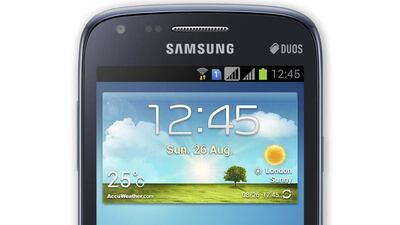
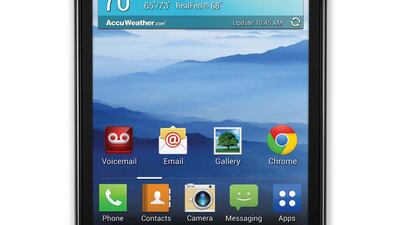
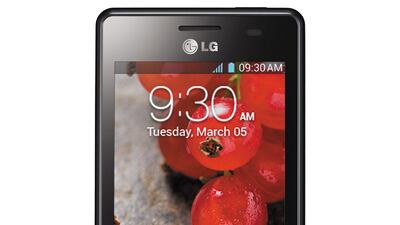
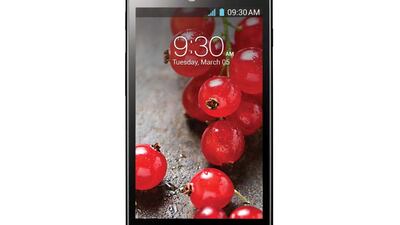
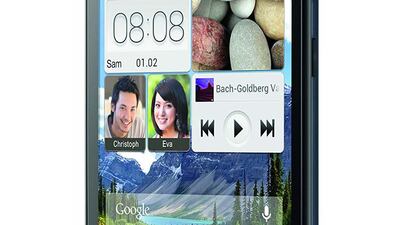
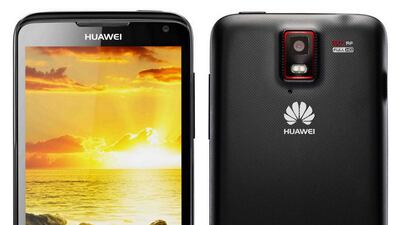
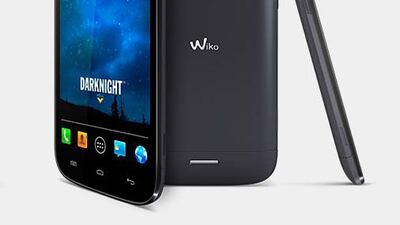
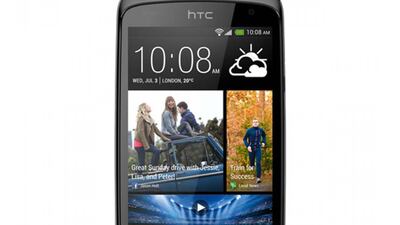
The users of dozens of smartphone models will be unable to use WhatsApp from November 1, when the Facebook-owned platform will stop working on phones that run on systems older than Android OS 4.1, Apple’s iOS 10 and KaiOS 2.5.1, according to its FAQ section.
Which smartphones will no longer support WhatsApp after November 1?
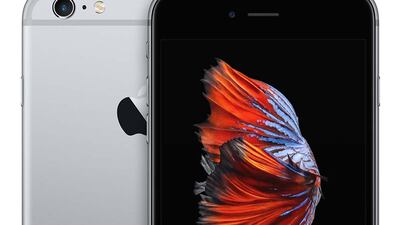
iPhone 6s. Photo: Apple
iPhone 6s Plus. Photo: Apple
Samsung Galaxy Trend Lite. Photo: Samsung
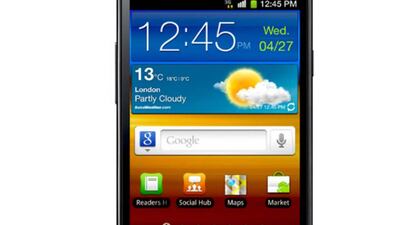
Galaxy S2. Photo: Samsung
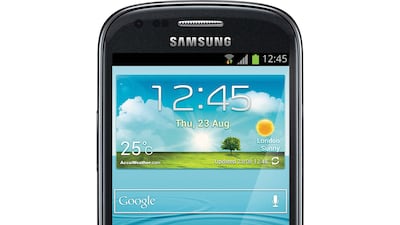
Samsung Galaxy S III Mini. Photo: Samsung
GALAXY Xcover 2. Photo: Samsung
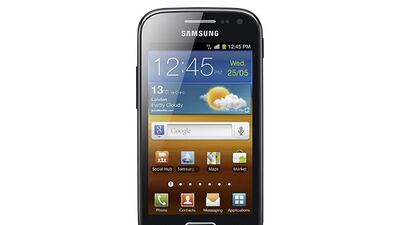
GALAXY Ace 2. Photo: Samsung
Samsung Galaxy Core. Photo: Samsung
LG Lucid 2. Photo: LG
LG Optimus L3 II Dual. Photo: LG
LG Optimus F7. Photo: LG
LG Optimus L7 II. Photo: LG
ZTE Grand S Flex. Photo: ZTE
Huawei Ascend G740. Photo: Huawei
Huawei Ascend D Quad XL. Photo: Huawei
Huawei Ascend D2. Photo: Huawei
Sony Xperia Miro. Photo: Sony
Wiko Darknight. Photo: Wiko
HTC Desire 500. Photo: HTC
Mercer, the investment consulting arm of US services company Marsh & McLennan, expects its wealth division to at least double its assets under management (AUM) in the Middle East as wealth in the region continues to grow despite economic headwinds, a company official said.
Mercer Wealth, which globally has $160 billion in AUM, plans to boost its AUM in the region to $2-$3bn in the next 2-3 years from the present $1bn, said Yasir AbuShaban, a Dubai-based principal with Mercer Wealth.
“Within the next two to three years, we are looking at reaching $2 to $3 billion as a conservative estimate and we do see an opportunity to do so,” said Mr AbuShaban.
Mercer does not directly make investments, but allocates clients’ money they have discretion to, to professional asset managers. They also provide advice to clients.
“We have buying power. We can negotiate on their (client’s) behalf with asset managers to provide them lower fees than they otherwise would have to get on their own,” he added.
Mercer Wealth’s clients include sovereign wealth funds, family offices, and insurance companies among others.
From its office in Dubai, Mercer also looks after Africa, India and Turkey, where they also see opportunity for growth.
Wealth creation in Middle East and Africa (MEA) grew 8.5 per cent to $8.1 trillion last year from $7.5tn in 2015, higher than last year’s global average of 6 per cent and the second-highest growth in a region after Asia-Pacific which grew 9.9 per cent, according to consultancy Boston Consulting Group (BCG). In the region, where wealth grew just 1.9 per cent in 2015 compared with 2014, a pickup in oil prices has helped in wealth generation.
BCG is forecasting MEA wealth will rise to $12tn by 2021, growing at an annual average of 8 per cent.
Drivers of wealth generation in the region will be split evenly between new wealth creation and growth of performance of existing assets, according to BCG.
Another general trend in the region is clients’ looking for a comprehensive approach to investing, according to Mr AbuShaban.
“Institutional investors or some of the families are seeing a slowdown in the available capital they have to invest and in that sense they are looking at optimizing the way they manage their portfolios and making sure they are not investing haphazardly and different parts of their investment are working together,” said Mr AbuShaban.
Some clients also have a higher appetite for risk, given the low interest-rate environment that does not provide enough yield for some institutional investors. These clients are keen to invest in illiquid assets, such as private equity and infrastructure.
“What we have seen is a desire for higher returns in what has been a low-return environment specifically in various fixed income or bonds,” he said.
“In this environment, we have seen a de facto increase in the risk that clients are taking in things like illiquid investments, private equity investments, infrastructure and private debt, those kind of investments were higher illiquidity results in incrementally higher returns.”
The Abu Dhabi Investment Authority, one of the largest sovereign wealth funds, said in its 2016 report that has gradually increased its exposure in direct private equity and private credit transactions, mainly in Asian markets and especially in China and India. The authority’s private equity department focused on structured equities owing to “their defensive characteristics.”
Where to stay: Courtyard by Marriott Titusville Kennedy Space Centre has unparalleled views of the Indian River. Alligators can be spotted from hotel room balconies, as can several rocket launch sites. The hotel also boasts cool space-themed decor.
When to go: Florida is best experienced during the winter months, from November to May, before the humidity kicks in.
How to get there: Emirates currently flies from Dubai to Orlando five times a week.
Springsteen: Deliver Me from Nowhere
Director: Scott Cooper
Starring: Jeremy Allen White, Odessa Young, Jeremy Strong
Rating: 4/5
Lexus LX700h specs
Engine: 3.4-litre twin-turbo V6 plus supplementary electric motor
Power: 464hp at 5,200rpm
Torque: 790Nm from 2,000-3,600rpm
Transmission: 10-speed auto
Fuel consumption: 11.7L/100km
On sale: Now
Price: From Dh590,000
Profile box
Company name: baraka
Started: July 2020
Founders: Feras Jalbout and Kunal Taneja
Based: Dubai and Bahrain
Sector: FinTech
Initial investment: $150,000
Current staff: 12
Stage: Pre-seed capital raising of $1 million
Investors: Class 5 Global, FJ Labs, IMO Ventures, The Community Fund, VentureSouq, Fox Ventures, Dr Abdulla Elyas (private investment)
The specs
Engine: 3.9-litre twin-turbo V8
Power: 640hp
Torque: 760nm
On sale: 2026
Price: Not announced yet
What is Folia?
Prince Khaled bin Alwaleed bin Talal's new plant-based menu will launch at Four Seasons hotels in Dubai this November. A desire to cater to people looking for clean, healthy meals beyond green salad is what inspired Prince Khaled and American celebrity chef Matthew Kenney to create Folia. The word means "from the leaves" in Latin, and the exclusive menu offers fine plant-based cuisine across Four Seasons properties in Los Angeles, Bahrain and, soon, Dubai.
Kenney specialises in vegan cuisine and is the founder of Plant Food Wine and 20 other restaurants worldwide. "I’ve always appreciated Matthew’s work," says the Saudi royal. "He has a singular culinary talent and his approach to plant-based dining is prescient and unrivalled. I was a fan of his long before we established our professional relationship."
Folia first launched at The Four Seasons Hotel Los Angeles at Beverly Hills in July 2018. It is available at the poolside Cabana Restaurant and for in-room dining across the property, as well as in its private event space. The food is vibrant and colourful, full of fresh dishes such as the hearts of palm ceviche with California fruit, vegetables and edible flowers; green hearb tacos filled with roasted squash and king oyster barbacoa; and a savoury coconut cream pie with macadamia crust.
In March 2019, the Folia menu reached Gulf shores, as it was introduced at the Four Seasons Hotel Bahrain Bay, where it is served at the Bay View Lounge. Next, on Tuesday, November 1 – also known as World Vegan Day – it will come to the UAE, to the Four Seasons Resort Dubai at Jumeirah Beach and the Four Seasons DIFC, both properties Prince Khaled has spent "considerable time at and love".
There are also plans to take Folia to several more locations throughout the Middle East and Europe.
While health-conscious diners will be attracted to the concept, Prince Khaled is careful to stress Folia is "not meant for a specific subset of customers. It is meant for everyone who wants a culinary experience without the negative impact that eating out so often comes with."
UAE currency: the story behind the money in your pockets
Mohammed Naveed (captain), Mohamed Usman (vice captain), Ashfaq Ahmed, Chirag Suri, Shaiman Anwar, Mohammed Boota, Ghulam Shabber, Imran Haider, Tahir Mughal, Amir Hayat, Zahoor Khan, Qadeer Ahmed, Fahad Nawaz, Abdul Shakoor, Sultan Ahmed, CP Rizwan
Some of French groups are threatening Friday to continue their journey to Brussels, the capital of Belgium and the European Union, and to meet up with drivers from other countries on Monday.
Belgian authorities joined French police in banning the threatened blockade. A similar lorry cavalcade was planned for Friday in Vienna but cancelled after authorities prohibited it.
the pledge
I pledge to uphold the duty of tolerance
I pledge to take a first stand against hate and injustice
I pledge to respect and accept people whose abilities, beliefs and culture are different from my own
I pledge to wish for others what I wish for myself
I pledge to live in harmony with my community
I pledge to always be open to dialogue and forgiveness
I pledge to do my part to create peace for all
I pledge to exercise benevolence and choose kindness in all my dealings with my community
I pledge to always stand up for these values: Zayed's values for tolerance and human fraternity
Stuart Ritchie, director of wealth advice at AES International, says children cannot learn something overnight, so it helps to have a fun routine that keeps them engaged and interested.
“I explain to my daughter that the money I draw from an ATM or the money on my bank card doesn’t just magically appear – it’s money I have earned from my job. I show her how this works by giving her little chores around the house so she can earn pocket money,” says Mr Ritchie.
His daughter is allowed to spend half of her pocket money, while the other half goes into a bank account. When this money hits a certain milestone, Mr Ritchie rewards his daughter with a small lump sum.
He also recommends books that teach the importance of money management for children, such as The Squirrel Manifesto by Ric Edelman and Jean Edelman.