

The words we use to describe ourselves are important.
Take this week’s word, bashar. Although it means human beings as a group, it can also refer to the individual human being. Aside from referencing humans within the physical and biological context of homo sapiens, it's also used to describe an array of more nuanced meanings associated with being human.
To start, it is used as a characteristic to describe the exceptional abilities and qualities humans possess in comparison with other species. And yet, aside from this literal meaning, bashar is also used to express metaphoric and symbolic ideas about humanity, such as beauty, joy, and good news. It is also a constant theme in poetry and religious text.
Bashar is mentioned several times in the Quran, either referring to humanity or to highlight the creation of human life and God’s power and mercy over all living things.
-
Hob is the Arabic word for love, but can be used in many contexts -

The Arabic word helu translates, in English, to sweet -
Nashef is the Arabic word for dry, but has many connotations, depending on the context in which you use it -

The Arabic word hurriyeh translates to freedom in English -
The Arabic word tayeb can mean delicious or good, depending on the context -
The Arabic word mustaqbal is best expressed as future in English -
Waqaa, the Arabic word for fall, can signify a loss of power, stature, health or grace -
Hudood means borders in English -
The Arabic word rooh translates to spirit or soul in English -

The Arabic word ain means eye in English -
Waraq, the Arabic word of the week means paper in English -

Bahr, the Arabic for sea, has a poetic lilt -
Kareem means generous in English -

Bab means door in English -
Eid means holiday or festival -

Najm means star for the night sky and cosmos, but also has plenty of other meanings, including ambition or fame -
Alwan, the Arabic word for colours, has many shades of meaning -

Akel can refer to home-cooked meals, embezzlement, fire and rust -

Jamal is the Arabic word for beauty, be it literal or figurative -

Herfe translates to profession or craft -

Tabiaa translates to nature and can frame landscapes and portraits -

Sehha is the Arabic word for health -

Ijaza is Arabic for holiday and shines in summer but is not stress-free -

Aamal is the Arabic word for work -
Al dahr translates to time -

Qalb is a word for heart, with poetic roots -

Lugha in Arabic translates to language in English -
Insaan means human being -
Na'eeman is an idiomatic expression used when someone has had a shower or bath, a haircut or had their beard trimmed -
The Arabic word for life touches on eternity, death and accomplishment -

Qamar is the Arabic for moon -

The Arabic word for strength or power is quwwa -

Burj is Arabic for tower -

The Arabic word for sun is shams -
Sabr in English can translate to patience -
Hayba is the Arabic word for prestige -
The Arabic term al shay'e translates as 'the thing' in English -

The Arabic word for road is tareeq -
The Arabic word for read has mystical and scholarly connotations -
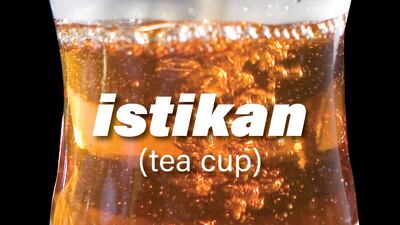
Istikan is the Arabic word for a type of tea cup -

The Arabic word hanan means affection in English -
The Arabic word atlal means ruins in English -

Kura is the Arabic word for ball, in all its forms -
Janaah in Arabic means wing in English -

The Arabic word sana translates to year in English -
Qasida is the Arabic for poem, not poetry -

Ameer, the Arabic word for prince, which influenced another English title -
Nakhla translates to palm tree in English -
Al samt is the Arabic for silence -

Kalimaat translates to words in English -

Markaz is Arabic for centre -
Beshara is the Arabic word for good news -

Bayt is the Arabic for house or home -

Fann is the Arabic word for art, and can be either a verb or an adjective -
Isim, which means name, is made up of three letters, alif, seen and meem -

Dunya is the Arabic word for world -
Nazaafah translates to cleanliness in English -
Many traditions revolve around drinking coffee, including weddings, funerals and business meetings -
Fajr is the Arabic word for dawn -
Maghrib is the Arabic word for sunset -

The Arabic language is filled with idioms, quotes and colloquial quips involving the mirror -
Raei is the Arabic word for opinion -

Wa'ed is a multifaceted word for 'promise', as well as a female name -
Qussa is the Arabic word for story -
Sadaaka is the Arabic word for friendship -
Akhbaar is the Arabic word for news -
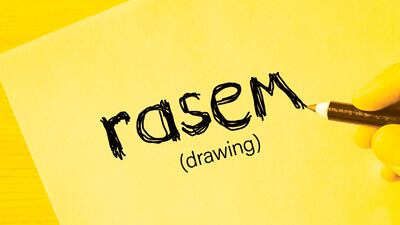
Rasem is made up of the three Arabic letters Rah, Seen and Meem. While it can simply mean a drawing or a sketch it’s also a malleable word whose definition can change depending on context and dialect – particularly between colloquial and classical Arabic. -

As well as finishing a task, khatem denotes a deeper sense of finality -
Commonly translated to blessed, mubarak is used as a popular greeting on auspicious days -

The Arabic word for lighthouse is also a term that has become closely associated with Islam -

Siyaam, the Arabic word for fasting is also connected to silence -

Tawbah, the Arabic word for repentance, is also connected to Ramadan -

Safar, the Arabic Word for travel can also refer to sunny days, a brighter-blazing fire or exile. The National


Bashar is one of the classic fusha Arabic words that is still used today in different colloquial dialects. It is sometimes interchangeable with the word nass, which translates to people.
It’s important to note that while the two words are sometimes used to mean the same thing, they are also different.
Bashar is considered more specific while nass is a more general word. Nass is commonly used in everyday language while bashar is used more often in the context of poetry, religion or matters concerning humanity.
Bashar is derived from the three letters bah, sheen and rah. The origin of the word has the same linguistic derivation as the Hebrew word basar, which means flesh, meat or human body. The word for skin in Arabic is bashara, which shares its roots with bashar.
Also derived from the same root word is beshara, which refers to good news, bringing good news to rejoice at or the start of something new and positive.
The popular 1955 Egyptian film Nahnou Bashar (We Are Human), explores the many facets of humanity through the lives and struggles of everyday people.
Directed by Salah Abouseif, the drama stars the renowned Egyptian actor and screenwriter Mahmoud El Meligy and legendary Egyptian actress and singer Hoda Soltan.
The film tells the story a young man, Rabie, who after leaving juvenile detention becomes involved in the gambling world where he is exposed to the sinister underbelly of society. After eventually leaving and starting a family, Rabie finds himself drawn back to his old habits when his son becomes ill and he faces serious financial issues.
Nahnou Bashar looks at how people from various strata of society are tempted and tortured by the same struggles and aspirations that bind all people – a fitting tribute to just how deep the word bashar truly is.

