


In May 1965, Dubai Airport opened its first asphalt runway.
Until then, the five-year-old airport had a 1,800-metre airstrip of compacted sand that could accommodate only aircraft with a 32-passenger capacity.
The asphalt runway, in comparison, stretched for 2,800 metres and allowed larger planes to land. It marked its opening by greeting the first big jets of Middle East Airlines and Kuwait Airways.
It was a historic moment for Dubai, and would be the first of a series of expansions that would transform the airport into one of the world’s busiest.
-
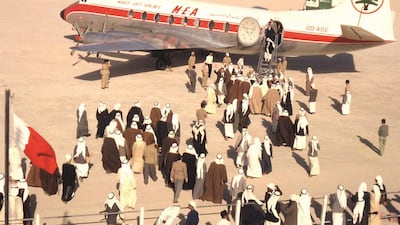
Dubai International Airport celebrated its 60th anniversary in 2020. Here passengers board a plane parked on a sand compacted runway in the 1960s. All photos: Dubai Airports -
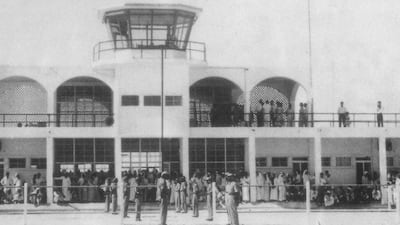
Dubai airport in the 1960s. By 1968 the airport was served by nine international airlines flying to 20 destinations -

Developments in the 1970s included a new three-storey terminal building, control tower, additional taxiways and longer runways -
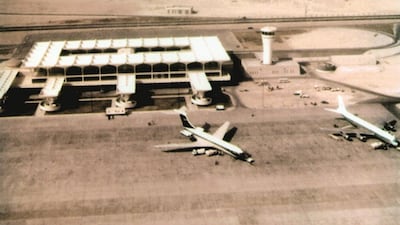
The airport's second runway, equipped with the latest technology, was opened in 1984 -
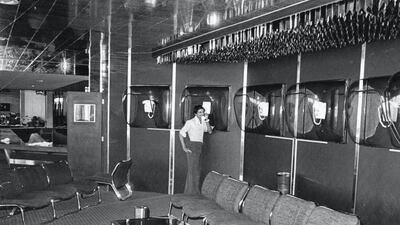
The transit lounge at Dubai International airport in the 1970s -
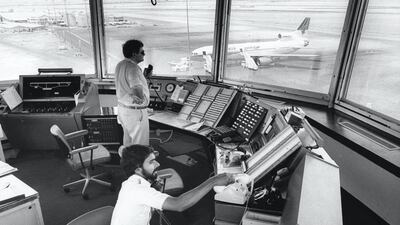
The air traffic control tower at Dubai International airport in the 1970s -
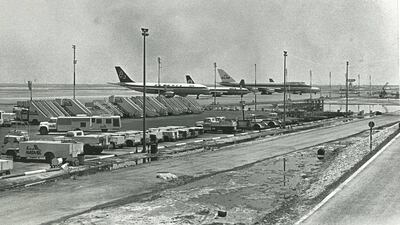
The airport in the 1970s -
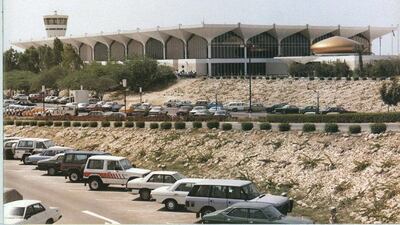
Dubai Duty Free began operations in 1983 and had an annual turnover of $20 million in its first year -

An aerial view of the airport in the 1970s -
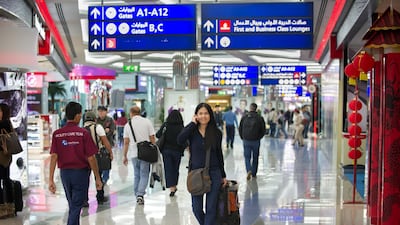
Dubai International Airport has served more than a billion passengers travelling on almost 7.5 million flights since it opened in 1960 -
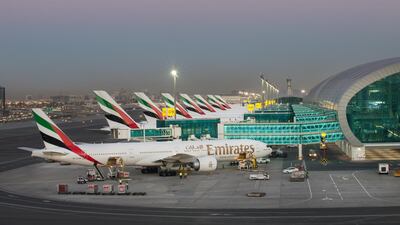
Terminal 3, the exclusive terminal for Emirates airline, was opened in 2008. It is the world’s largest single terminal -
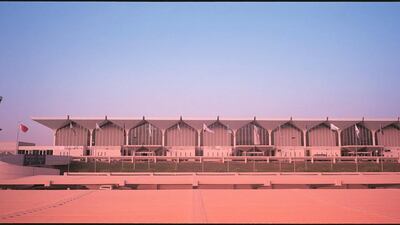
In 2014, Dubai International welcomed 70.4 million passengers, becoming the world’s busiest airport in terms of international passenger traffic -
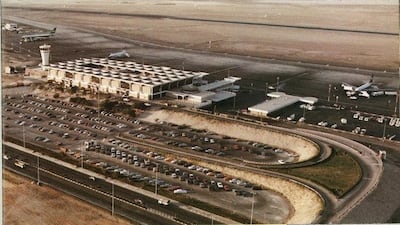
The airport welcomed its one billionth international passenger in 2018 -

It retained its title of the world’s busiest airport for international passengers for the sixth consecutive year in 2019, with 86.4 million passengers -
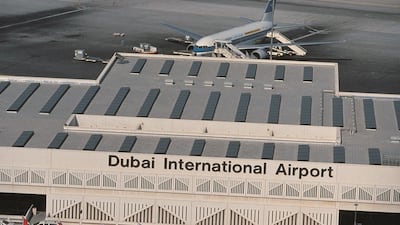
Dubai airport in the 1990s. It was the first to introduce e-gates in 2002. Now, millions of passengers use the smart gates, which require residents to scan their passport or Emirates ID to avoid long queues


May is, in fact, a month replete with landmark moments in the history of aviation in Dubai.
In May 1998, Terminal 2 was inaugurated in response to the traffic overwhelming its main terminal. The new wing could host 2.5 million passengers annually.
In May 2008, a topping-out ceremony was created for Terminal 3. The age-old tradition involves placing the final beam of the project. The terminal became operational five months later, with an Emirates airline flight from Jeddah being the first to land on the flagship runway.
In May 2014, Dubai Airport began a series of airstrip refurbishments and upgrades. The project lasted for 80 days, during which time all the airport’s traffic was operated out of one runway. Upgrades included new LED lighting to replace the old tungsten lights as well as new taxiways.
The airport continued making significant upgrades over the next decade, employing technologies such as smart gates to help streamline traffic. On Wednesday this week, the airport revealed plans to upgrade its control systems with technologies powered by artificial intelligence. The technology aims to make the challenging job of an air traffic controller easier by collating crucial radar and flight data in one place.
In 2022, the airport handled 66.1 million passengers. The statistic was a 127 per cent increase when compared with previous year’s numbers, which had been affected by Covid-19 restrictions.
“This time last year, the outlook was nowhere near as bright as it is now … it's been a very reassuring set of numbers to record after what has been the darkest period in aviation history since 1903,” Paul Griffiths, chief executive of Dubai Airports, told The National in February.
Mr Griffiths said full recovery to pre-pandemic levels on a monthly basis could come by the end of this year or the beginning of 2024, if the monthly passenger figures reach 7.5 million.
Dubai Airports is projecting the number of passengers who will pass through the international hub by the end of this year to reach 78 million, as the UAE prepares to host major international events such as the Dubai Airshow and Cop28.

