WHO chief praises Sheikh Mohamed's humanitarian health initiatives


Neil Halligan
  • English
  • Arabic

Sheikh Mohamed bin Zayed, Crown Prince of Abu Dhabi and Deputy Supreme Commander of the Armed Forces, met Dr Tedros Adhanom Ghebreyesus, director general of the World Health Organisation, at Al Shati Palace in Abu Dhabi on Saturday.

The pair discussed the continuing co-operation between the UAE and the WHO and ways to further develop this relationship.

Sheikh Mohamed was briefed by Dr Tedros about the WHO's work, both regionally and globally, in confronting and eliminating infectious diseases.

He also spoke about recent developments in tackling the spread of Covid-19 pandemic.

Dr Tedros noted that the UAE is one of the WHO's main supporters of its programmes to eliminate epidemics and infectious diseases.

He praised Sheikh Mohamed's humanitarian health initiatives that help eliminate infectious diseases in poorer areas of the world.

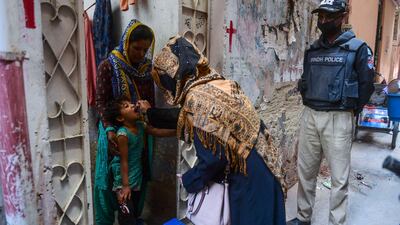
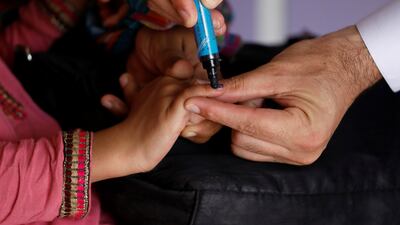
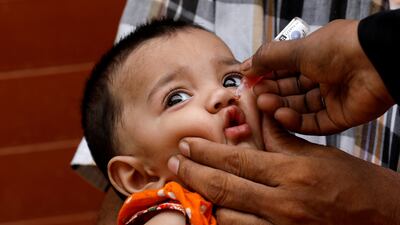
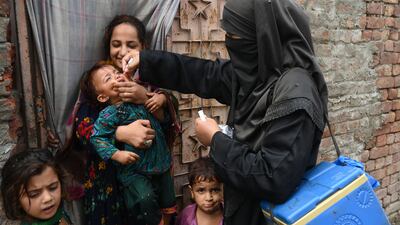
These include the UAE's polio vaccination campaign in Pakistan and the Reaching the Last Mile organisation that has helped to eliminate river blindness – which is spread by flies near fast-flowing rivers – and combat Guinea worm disease.

“His Highness Sheikh Mohamed bin Zayed's keen interest in eliminating communicable diseases and his co-operation with the international organisation have led to key successes in fighting diseases in Africa,” Dr Tedros said.

“The UAE is a key supporter of WHO's programmes and initiatives to eliminate epidemics and communicable diseases.”

Dr Tedros commended the UAE's continuing support for medical staff and frontline workers in countries struggling to deal with the Covid-19 pandemic.

He said the UAE was one of the best countries in the world in dealing with the pandemic, helped by the speed and flexibility of the measures it has taken.

Sheikh Mohamed said the UAE is keen to support the WHO's efforts tackling Covid-19, in addition to supporting efforts to eradicate other diseases and pandemics.

He said the UAE's efficient management of the Covid-19 crisis led to the pandemic’s containment and return to normality.

UAE's polio vaccination campaign in Pakistan - in pictures

  • A health worker administers polio vaccine drops to a child during a door-to-door campaign in Karachi, Pakistan. AFP
    A health worker administers polio vaccine drops to a child during a door-to-door campaign in Karachi, Pakistan. AFP
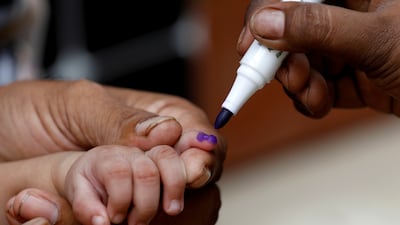
  • A girl gets her finger marked after she is administered polio vaccine drops at a civil dispensary in Peshawar. Reuters
    A girl gets her finger marked after she is administered polio vaccine drops at a civil dispensary in Peshawar. Reuters
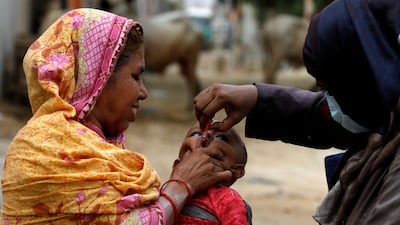
  • A girl receives vaccine drops during an anti-polio campaign in a low-income neighbourhood in Karachi. Reuters
    A girl receives vaccine drops during an anti-polio campaign in a low-income neighbourhood in Karachi. Reuters
  • A health worker administers polio vaccine drops to a child during a polio vaccination campaign at a slum area in Lahore. AFP
    A health worker administers polio vaccine drops to a child during a polio vaccination campaign at a slum area in Lahore. AFP
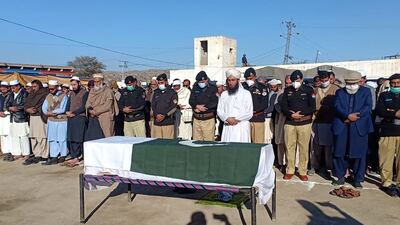
  • Security officials offer funeral prayers for a slain policeman killed in an attack on polio vaccination workers in Karak, a town in Khyber Pakhtunkhwa province. AFP
    Security officials offer funeral prayers for a slain policeman killed in an attack on polio vaccination workers in Karak, a town in Khyber Pakhtunkhwa province. AFP
  • A boy gets his finger marked after he is administered polio vaccine drops in Karachi. Reuters
    A boy gets his finger marked after he is administered polio vaccine drops in Karachi. Reuters
  • A health worker administers polio vaccine drops in Lahore. AFP
    A health worker administers polio vaccine drops in Lahore. AFP
  • A boy receives polio vaccine drops in Karachi. Reuters
    A boy receives polio vaccine drops in Karachi. Reuters
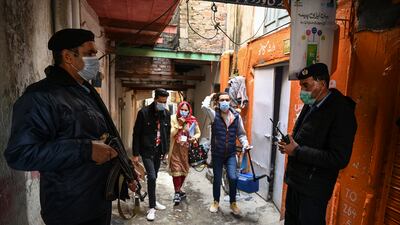
  • Policemen escort health workers during a polio vaccination door-to-door campaign in a slum area in Islamabad. AFP
    Policemen escort health workers during a polio vaccination door-to-door campaign in a slum area in Islamabad. AFP

Mercer, the investment consulting arm of US services company Marsh & McLennan, expects its wealth division to at least double its assets under management (AUM) in the Middle East as wealth in the region continues to grow despite economic headwinds, a company official said.

Mercer Wealth, which globally has $160 billion in AUM, plans to boost its AUM in the region to $2-$3bn in the next 2-3 years from the present $1bn, said Yasir AbuShaban, a Dubai-based principal with Mercer Wealth.

Within the next two to three years, we are looking at reaching $2 to $3 billion as a conservative estimate and we do see an opportunity to do so,” said Mr AbuShaban.

Mercer does not directly make investments, but allocates clients’ money they have discretion to, to professional asset managers. They also provide advice to clients.

“We have buying power. We can negotiate on their (client’s) behalf with asset managers to provide them lower fees than they otherwise would have to get on their own,” he added.

Mercer Wealth’s clients include sovereign wealth funds, family offices, and insurance companies among others.

From its office in Dubai, Mercer also looks after Africa, India and Turkey, where they also see opportunity for growth.

Wealth creation in Middle East and Africa (MEA) grew 8.5 per cent to $8.1 trillion last year from $7.5tn in 2015, higher than last year’s global average of 6 per cent and the second-highest growth in a region after Asia-Pacific which grew 9.9 per cent, according to consultancy Boston Consulting Group (BCG). In the region, where wealth grew just 1.9 per cent in 2015 compared with 2014, a pickup in oil prices has helped in wealth generation.

BCG is forecasting MEA wealth will rise to $12tn by 2021, growing at an annual average of 8 per cent.

Drivers of wealth generation in the region will be split evenly between new wealth creation and growth of performance of existing assets, according to BCG.

Another general trend in the region is clients’ looking for a comprehensive approach to investing, according to Mr AbuShaban.

“Institutional investors or some of the families are seeing a slowdown in the available capital they have to invest and in that sense they are looking at optimizing the way they manage their portfolios and making sure they are not investing haphazardly and different parts of their investment are working together,” said Mr AbuShaban.

Some clients also have a higher appetite for risk, given the low interest-rate environment that does not provide enough yield for some institutional investors. These clients are keen to invest in illiquid assets, such as private equity and infrastructure.

“What we have seen is a desire for higher returns in what has been a low-return environment specifically in various fixed income or bonds,” he said.

“In this environment, we have seen a de facto increase in the risk that clients are taking in things like illiquid investments, private equity investments, infrastructure and private debt, those kind of investments were higher illiquidity results in incrementally higher returns.”

The Abu Dhabi Investment Authority, one of the largest sovereign wealth funds, said in its 2016 report that has gradually increased its exposure in direct private equity and private credit transactions, mainly in Asian markets and especially in China and India. The authority’s private equity department focused on structured equities owing to “their defensive characteristics.”

MOUNTAINHEAD REVIEW

Starring: Ramy Youssef, Steve Carell, Jason Schwartzman

Director: Jesse Armstrong

Rating: 3.5/5

Stamp duty timeline

December 2014: Former UK finance minister George Osbourne reforms stamp duty, replacing the slab system with a blended rate scheme, with the top rate increasing to 12 per cent from 10 per cent:
Up to £125,000 - 0%; £125,000 to £250,000 – 2%; £250,000 to £925,000 – 5%; £925,000 to £1.5m: 10%; Over £1.5m – 12%

April 2016: New 3% surcharge applied to any buy-to-let properties or additional homes purchased.

July 2020: Rishi Sunak unveils SDLT holiday, with no tax to pay on the first £500,000, with buyers saving up to £15,000.

March 2021: Mr Sunak decides the fate of SDLT holiday at his March 3 budget, with expectations he will extend the perk unti June.

April 2021: 2% SDLT surcharge added to property transactions made by overseas buyers.

Polarised public

31% in UK say BBC is biased to left-wing views

19% in UK say BBC is biased to right-wing views

19% in UK say BBC is not biased at all

Source: YouGov

Updated: December 12, 2021, 6:46 AM