



Visa reforms are transforming the workplace of the UAE and creating a gateway to attract top talent from around the world.
As the Emirates prepares to celebrate its Golden Jubilee next month, the march into the next 50 years is well under way with skilled workers acting as the engine room for continued development.
Authorities have rolled out key changes to its visa system in recent years, helping to shed previous views of the county as a short-term, sunshine destination for professionals on their career journey.
Now the UAE – to diversify its economy and build for the future – is helping people to put down roots in the country as well as creating a more agile model in which to do business.
Here, The National looks at the visa rules helping to keep the UAE on the path to prosperity.
Dubai's five-year plan
Sheikh Hamdan bin Mohammed, the Crown Prince of Dubai, on Tuesday announced that Dubai had begun to issue multi-entry, five-year visas to employees of multinational companies based in the emirate.
Sheikh Hamdan said the policy was part of efforts to make Dubai the “best city to work and live in the world".
The visa aims to further simplify application procedures, provide ease of access to the city and extend the duration of stay of international visitors.
“The five-year multi-entry visa is especially beneficial to employees of foreign-owned firms as it enables them to participate in events, conferences, training courses, exhibitions and similar activities hosted in Dubai by these companies,” Dubai Media Office reported.
The new visa has been introduced by the General Directorate of Residency and Foreigners Affairs in partnership with Dubai’s Department of Economy and Tourism.
It allows employees of multinational companies to visit and stay in the UAE for 90 days, with the option of extending this period for another 90 days.
It is just the latest in a series of key changes to visa protocols in the Emirates.
A golden vision for the future
-
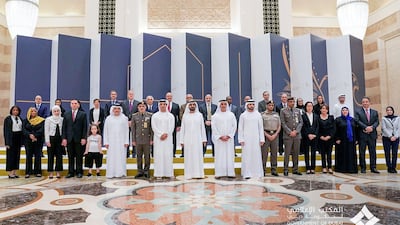
Residents receive special visas at a special ceremony in Abu Dhabi in 2019 attended by Sheikh Mohammed bin Rashid, Sheikh Hamdan bin Mohammed, Sheikh Saif bin Zayed and Sheikh Mansour bin Zayed. Prof Afaf Kamal Eldin (second left), Prof Ghaleb Husseini (fourth from left) and Prof Hassan Arafat (second right) received golden visas. Courtesy: Dubai Media Office -
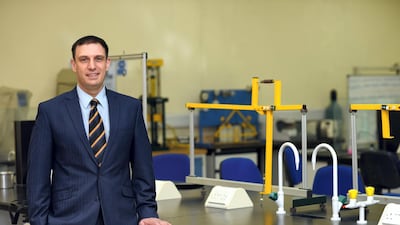
Prof Ghaleb Husseini, a professor of chemical engineering at the American University of Sharjah. He is among the first group of 20 academics granted the golden or long-term visa for the UAE. Prof Husseini’s work includes creating nanocarriers or capsules to transport chemotherapy directly to the site of a cancerous tumour so the patient does not suffer side effects. Courtesy: Prof Ghaleb Husseini -
Prof Ghaleb Husseini teaches chemical engineering at the American University of Sharjah. He is among the first group of 20 academics granted the golden or long-term visa for the UAE. Prof Husseini’s work includes creating nanocarriers or capsules that will transport chemotherapy directly to the site of a cancerous tumour so the patient does not suffer side effects. Courtesy: Prof Ghaleb Husseini -
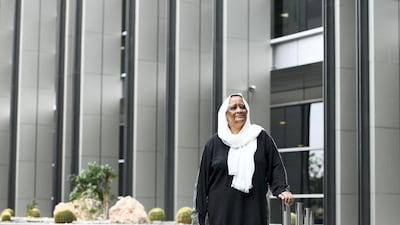
Prof Afaf Kamal Eldin teaches food science at the United Arab Emirates University in Al Ain. She was granted long-term residency and feels closely connected to the UAE and its culture. Khushnum Bhandari for The National -
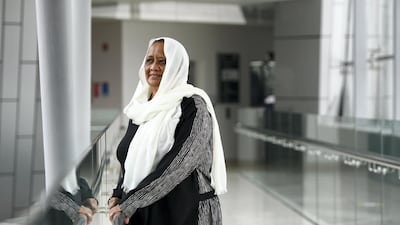
Prof Afaf Kamal Eldin teaches food science at the United Arab Emirates University in Al Ain. She was granted long-term residency and feels closely connected to the UAE and its culture. Khushnum Bhandari for The National -
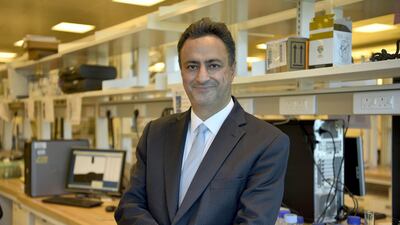
Prof Hassan Arafat teaches chemical engineering at Khalifa University in Abu Dhabi since 2010. Courtesy: Prof Hassan Arafat -

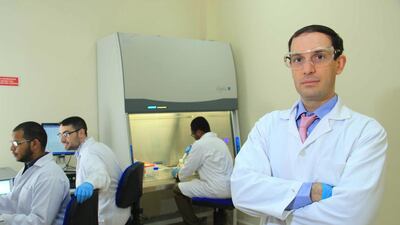
Prof Hassan Arafat, a director at the Centre for Membrane and Advanced Water Technology at Khalifa University in Abu Dhabi, has received UAE citizenship. Here, Prof Arafat is in the laboratory where his research work involves using nanomaterials in the desalination process with the goal of making it cheaper and environmentally friendly. Courtesy: Prof Hassan Arafat


The government took a significant step towards changing life in the UAE when introducing the golden visa.
The new long-term residency scheme was announced by Sheikh Mohammed bin Rashid, Vice President and Ruler of Dubai, in May, 2019.
The 10-year renewable visa – which is also given to the family of the recipient – is aimed at investors, entrepreneurs, chief executives, scientists, frontline workers and outstanding students.
Wealthy investors, entrepreneurs and company owners are sought after. Officials hope they will set down roots, invest in property and make the country their long-term home.
But the wide range of 10 visa types may benefit many residents and people who are looking to make the country home.
There are several visa types that are aimed at these groups, including Golden Visas, which were first approved in late 2020. In the first year, 44,000 visas were issued in Dubai alone.
Thousands of people have already received the visa as part of a plan to retain expertise and encourage more skilled professionals to set up home in the country.
In early 2021, frontline doctors were urged to apply for golden visas in recognition of their significant contribution to health care in the country, particularly during the Covid-19 pandemic.
The UAE also set out a scheme to provide 100,000 golden visas to the best computer programming talent, at home and abroad.
Green is go
The UAE announced the introduction of a 'green visa' in September aimed at business owners, investors and entrepreneurs, which will will offer expanded benefits for sponsoring family members.
It is to cater for people who have their own businesses and are not working for, or sponsored by, an employer.
SME owners and high-performing students will also be eligible under the scheme, unveiled as part of the UAE's 50 projects and initiatives to boost long-term development.
To be eligible, an applicant requires a monthly salary of Dh15,000 along with a bachelor's degree in certain skilled fields, including science, law, education, culture or social sciences, among others.
Someone who currently holds a two or three-year trade licence for freelance work may find this option attractive, but the costs have not yet been set out.
A Green Visa holder can sponsor relatives for residency for five years. Previously, this was typically allowed for two years.
Dr Thani Al Zeyoudi, Minister of State for Foreign Trade, said the new visa was aimed at the "self-dependent" investor who needed to sponsor family members.
"He's not going to be attached to companies. He's going to sponsor his parents, sponsor his children up to 25 – instead of 18 years old, like nowadays," he told The National.
Plan allows teens to enter workplace
Dr Al Zeyoudi, when announcing the green visa, also set out plans to allow children over the age of 15 to work for the first time.
A temporary work permit would allow them to secure a part-time job and get a taste for the workplace, without interrupting their studies.
The decision could be hugely significant and bring about a culture of part-time and temporary work.
"Anyone who's living here, who's above 15 years old, can apply for a temporary job," Dr Al Zeyoudi said.
A remote revolution
-

British Mums staff meet at venues across Dubai to catch up in person every week. Pictured here at the Caya restaurant in Town Square are Jen Crowther, Catherine Broad, Natalie Waugh and Lauren Savill. Chris Whiteoak / The National -

Working from home comes with challenges for people struggling to balance work and home life. Getty Images -

British Mums staff pictured working together at Caya in Town Square, Dubai. Chris Whiteoak / The National -

Working from home has become the norm for millions of people since the beginning of the pandemic. Getty Images -

Lauren Savill, one of the co-owners of British Mums, said working remotely from different venues across Dubai has been a huge success for the company. Chris Whiteoak / The National -

Thomas Mathew, marketing manager with Letswork, said there has been a surge in teams of colleagues looking to meet in cafes and hotels to work together in person since the beginning of the pandemic. Courtesy: Letswork


The rise of the pandemic may have made the world seem smaller for a time, as borders closed and air travel was grounded. Yet it led to the emergence of remote working and opened up the opportunity of carrying out your duties far away from the office – even in a different country from your employer.
In March, the UAE announced the introduction of a residence permit for remote workers.
Sheikh Mohammed bin Rashid, Prime Minister and Ruler of Dubai, said the residency permit meant that "any employee anywhere in the world can reside in the UAE to practise work remotely even if the company is not present in the country".
The one-year visa allows people to enter the UAE from overseas under self-sponsorship and work in line with the terms and conditions issued with the visa.
Last October, Dubai announced a remote-working programme to allow professionals to live in the emirate while employed by companies overseas.
Retiring in the UAE?
-

Dubai Creek today is a popular tourist destination and could now be a place to retire. Reem Mohammed / The National -

Hatta's Hollywood-style sign. Courtesy: Meraas -
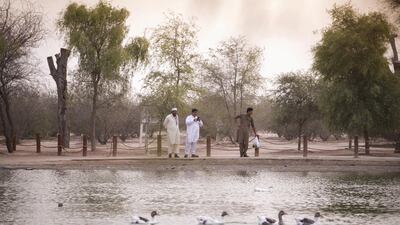
Families at Al Qudra lake. Reem Mohammed / The National -

Ain Dubai at Bluewaters Island. Chris Whiteoak / The National -

Older style villas at Jebel Ali Village, Dubai. Anna Nielsen for The National


The UAE approved plans in 2018 for residents aged 55 or over to secure a five-year retirement visa, if they met certain requirements.
The UAE Cabinet announced further details of the criteria earlier this month.
Under the new conditions approved by the Cabinet, non-citizens with at least one property worth Dh1 million ($272,300), or a bank deposit of no less than Dh1m, or an active annual income of at least Dh180,000, are eligible to apply for the visa.
"Today, we also approved the conditions for granting residency to retired foreigners. Retirees can continue their stay with us in the UAE. We welcome everyone in our country," Sheikh Mohammed said.
This story was updated on April 20, 2022

